This article was written by Kevin Carrillo and by wikiHow staff writer, Hunter Rising. Kevin Carrillo is a Pest Control Specialist and the Senior Project Manager for MMPC, a pest control service and certified Minority-owned Business Enterprise (MBE) based in the New York City area. MMPC is certified by the industry’s leading codes and practices, including the National Pest Management Association (NPMA), QualityPro, GreenPro, and The New York Pest Management Association (NYPMA). MMPC's work has been featured in CNN, NPR, and ABC News.
There are 16 references cited in this article, which can be found at the bottom of the page.
If you like to spend some time relaxing outdoors, the last thing you want to see is a big spider nearby. Even though spiders are really helpful, we know they’re still pretty frightening when they get too close. While you’ll never be able to completely get rid of spiders outside, there are still so many things you can try to keep them away. Keep reading for a ton of helpful ideas for keeping your patio clean and safe!
This article is based off an interview with our MMPC-certified pest control specialist, Kevin Carrillo. Check out the full interview here.
Steps
Method 1
Method 1 of 13:Spray chestnut or mint essential oils in problem areas.
-
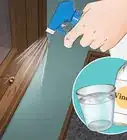
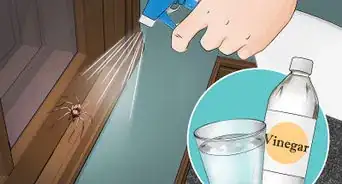
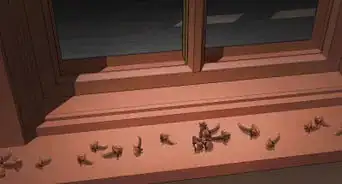
1Strong odors could deter spiders from hiding spots near your patio. Some studies have shown that essential oil works effectively as a natural repellent.[1] Add 5–7 drops of a peppermint or chestnut oil to 2 cups (470 ml) of water in a spray bottle. Spray along the edges of your patio and anywhere else where spiders might like to hide, such as along your home’s foundation or in any dark holes or gaps nearby.[2]
- Rosemary, lavender, eucalyptus, and citrus essential oils may also be effective.
- While there haven't been many scientific studies about vinegar being effective for spiders, it doesn't hurt to try spraying it around your patio's perimeter.
- Citrus and peppermint oils are poisonous to cats, so avoid using them if you have any pets nearby. If you’re concerned about using other essential oils, ask a vet if they’re safe around your pets.[3]

Method 2
Method 2 of 13:Spread diatomaceous earth around your patio.
-
1Diatomaceous earth dries spiders out and kills them on contact. Diatomaceous earth (DE) is a powdery substance that cuts through a spider’s exoskeleton and kills it. Spread some DE around problem areas, like any dark corners or cracks on your patio. Since rain and wind will remove DE, just be sure to reapply it if you have bad weather.[4]
- You can buy DE from your local garden store.
- Diatomaceous could be harmful if it gets on your skin or in your lungs. Wear a mask, safety glasses, and long-sleeved clothing when you apply it.[5]

Method 3
Method 3 of 13:Set out some hedge apples.
-
1The chemicals in these fruits could be enough to turn spiders away. Hedge apples are small green fruits also known as Osage oranges that many people use to deter spiders. Buy some hedge apples from your local garden supply store and set them around your patio. Be sure to keep a few extras on hand so you can replace them if squirrels or chipmunks get to them.[6]
- While some people have had success with hedge apples, there isn’t any scientific research backing up their claims.

Method 4
Method 4 of 13:Knock down spiderwebs when you see them.
-
1Spiders will find a new place to rebuild their webs away from your patio. Spiders tend to build webs in areas where they won’t be disturbed.[7] If you see a web somewhere on your patio, use a broom or vacuum to clean it up right away.[8]
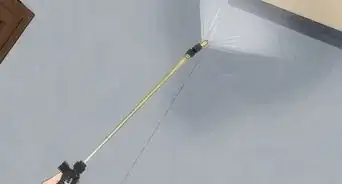
- If the webs are out of your reach, use a hose to spray them down with some water.[9]

Method 5
Method 5 of 13:Destroy any egg sacs you find.
-
1Prevent baby spiders from hatching by crushing or vacuuming the eggs. Egg sacs are ball- or cone-shaped pieces of silk that are either white or tan. Look for egg sacs near webs or hidden in small, dark areas that won’t be disturbed. When you see them, simply crush them with a shoe or newspaper, or use a vacuum to suck them up and get rid of the spiderlings inside.[10]
- Avoid moving egg sacs by hand since baby spiders might have already hatched inside.

Method 6
Method 6 of 13:Move any clutter off your patio.
-
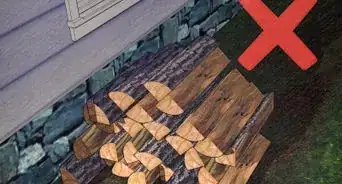
1Spiders won’t have anywhere to hide when you clean your patio. Spiders tend to build their webs or live in areas that are dark and undisturbed, like near construction materials, woodpiles, and rocks. Reposition any large items away from your patio so you’re less likely to see spiders crawling around. If you can, store your items in sealed bins or a shed so spiders can’t even access them.[11]
- Wear gloves and long sleeves when you’re moving your things around just in case there are spiders on them already.

Method 7
Method 7 of 13:Turn off your outdoor lights.
-
1Keep your patio dark to stop attracting other bugs. The main thing drawing spiders toward your patio are other bugs they're trying to hunt.[12] Since exterior lights attract bugs at night, spiders will usually build their webs nearby. Only turn on your outdoor lights when you need to or get motion sensors so they’re not on the entire time.[13]
- If you can’t turn off your lights, try switching to a yellow bulb instead. Bugs aren’t as attracted to yellow lights, which may mean there won’t be as many spiders.
- If you can, reposition any exterior lights on a post that’s away from your home and patio so you keep the spiders away.

Method 8
Method 8 of 13:Clean your patio furniture.
-
1You can knock off spiders and webs before you sit down. Spiders might make their homes in the dark corners of your furniture, so sweep or spray it down with a hose. Be sure to check underneath the furniture and in any tight corners for webs too. Try to clean your furniture once every 2 weeks or so to keep spiders from getting too comfortable.[14]
- If your patio furniture has cushions, try to wash them at least once a month.

Method 9
Method 9 of 13:Trim any plants around your patio.
-
1Pruning your plants discourages spiders from hiding in them. If you have any plants overhanging your patio, you’re more likely to see spiders nearby. Grab a pair of pruning shears and cut back any of your plants that extend past the edge of your patio. Make it a routine to check every few weeks or so for new growths you can trim off.[15]
- You can also transplant any plants that are too close to your patio to move them further away.

Method 10
Method 10 of 13:Mow grass taller than 2 in (5.1 cm).
-
1Tall grass near your patio could attract a lot of spiders. Rather than letting your lawn grow really long, keep it short and under control. Pay special attention to the area of grass around your patio.[16] Make it a point to mow regularly so you’re only removing a third of the growth at a time so your grass stays healthy.[17]

Method 11
Method 11 of 13:Seal cracks and gaps on your home.
-
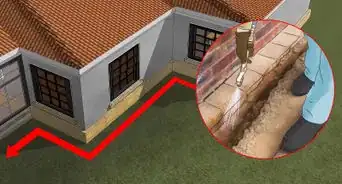
1Caulking prevents spiders from hiding or getting inside your home. Search near the foundation of your home near your patio to see if there are any cracks, holes, or gaps that a spider could be living inside. Get a caulk gun and apply caulk to the damage to create a tight seal that spiders can’t get through. Without any nearby hiding spots, the spiders will try to find a new area to live.[18]
- Replace any damaged window screens or weatherstripping as well if you want to protect your home from spiders too.

Method 12
Method 12 of 13:Control insects that spiders prey on.
-
1Spiders won't be able to feed if there aren't other insects. If you see spider webs near your patio, check them to see if you can find any insects caught in them so you know what pests you need to take care of. If you see any moths or gnats, turn off your outdoor lights at night since they could attract the bugs. If you see flies, try keeping cups of vinegar outside as a natural trap. If there are mosquitoes, get rid of any water sources on your patio or in your yard.[19]

Method 13
Method 13 of 13:Apply pesticides as a last resort.
-
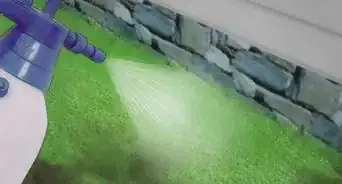
1Residual pesticides can help, but they’re not as effective outdoors. You only need to use chemical pesticides if you have a large spider infestation.[20] Opt for a pyrethroid pesticide that contains bifenthrin, cyfluthrin, permethrin, or tetramethrin since it’s the most effective for killing spiders. Spray the area around your patio with the pesticide, following the instructions on the packaging and focusing on dark holes or cracks where spiders hide.[21]

Warnings
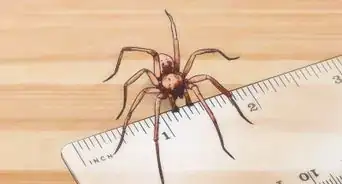
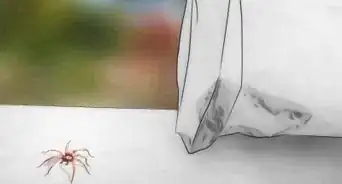
- If you’re bitten by a spider while you're cleaning your patio, try to see what the spider looks like and call a doctor to get advice.[26]Thanks!

References
- ↑ https://pubmed.ncbi.nlm.nih.gov/29309619/
- ↑ https://www.bobvila.com/articles/how-to-get-rid-of-spiders/
- ↑ https://www.nytimes.com/wirecutter/blog/are-essential-oils-safe-for-pets/
- ↑ https://www.bobvila.com/slideshow/9-handy-household-uses-for-diatomaceous-earth-579838
- ↑ http://npic.orst.edu/faq/de.html
- ↑ https://extension.illinois.edu/blogs/nature-journal/2017-01-24-hedge-apples-spiders-and-mice
- ↑ Kevin Carrillo. Pest Control Specialist. Expert Interview. 5 November 2019.
- ↑ http://ipm.ucanr.edu/PMG/PESTNOTES/pn7442.html
- ↑ https://extension.okstate.edu/fact-sheets/spiders-brown-recluse-black-widow-and-other-common-spiders.html
- ↑ https://extension.umn.edu/insect-relatives/spiders
- ↑ https://extension.colostate.edu/topic-areas/insects/spiders-in-the-home-5-512/
- ↑ Kevin Carrillo. Pest Control Specialist. Expert Interview. 5 November 2019.
- ↑ https://extension.umn.edu/insect-relatives/spiders
- ↑ https://sunshineandplay.com/how-to-keep-spiders-out-of-patio-furniture/
- ↑ http://ipm.ucanr.edu/PMG/PESTNOTES/pn7442.html
- ↑ https://extension.umn.edu/insect-relatives/spiders
- ↑ https://extension.colostate.edu/topic-areas/yard-garden/lawn-care-7-202/
- ↑ https://cchp.ucsf.edu/sites/g/files/tkssra181/f/Spiders_FCCH_IPM.pdf
- ↑ https://www.washingtonpost.com/lifestyle/home/pest-free-patio-outdoor-entertaining/2021/04/23/2525e602-a11b-11eb-a774-7b47ceb36ee8_story.html
- ↑ Kevin Carrillo. Pest Control Specialist. Expert Interview. 5 November 2019.
- ↑ https://extension.colostate.edu/topic-areas/insects/spiders-in-the-home-5-512/
- ↑ https://cchp.ucsf.edu/sites/g/files/tkssra181/f/Spiders_FCCH_IPM.pdf
- ↑ Kevin Carrillo. Pest Control Specialist. Expert Interview. 5 November 2019.
- ↑ http://ipm.ucanr.edu/PMG/PESTNOTES/pn7442.html
- ↑ https://lancaster.unl.edu/pest/resources/ultrasonicdevices.shtml
- ↑ https://extension.colostate.edu/topic-areas/insects/spiders-in-the-home-5-512/
About This Article