This article was co-authored by wikiHow Staff. Our trained team of editors and researchers validate articles for accuracy and comprehensiveness. wikiHow's Content Management Team carefully monitors the work from our editorial staff to ensure that each article is backed by trusted research and meets our high quality standards.
This article has been viewed 4,070 times.
Learn more...
Petunias are beautiful flowers that add lovely splashes of color to any flower bed or planter from spring to fall. If you’re new to growing petunias, you might be concerned about how you’re going to keep them blooming through the hot summer months. Luckily, there really isn’t much to it! Petunias are perfectly happy in the hot sun, so they’ll do just fine and keep flowering all summer long with a pretty laid back care and maintenance routine.
Steps
Method 1
Method 1 of 2:Sun, Water, and Fertilizer
-
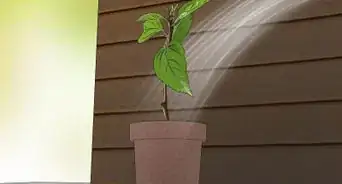
1Grow petunias in full sun to get the most blooms. Full sun is considered to be 6-8 of direct sunlight a day. Plant your petunias in spots where they will receive lots of sunlight all summer long to encourage blooming.[1]
- Note that petunias also do fine in partial sun, which is considered to be 3-6 hours of sunlight per day. However, they just don’t bloom quite as much in partial sun.
- Petunias actually love the sun and handle very high temperatures with no problems, so don’t worry about them getting too much sun during hot summer spells.
-
2Water your petunias when the top 1 in (2.5 cm) of soil gets dry. Check the soil your petunias are planted in daily by sticking a finger about 1 in (2.5 cm) down into it. Give the petunias a thorough watering whenever this top layer of soil feels dry to the touch.[2]
- Petunias planted in the ground might only require watering once a week during summer, while petunias planted in baskets or planters might need water every day or two when it’s hot out. That’s why checking the soil every day is the best way to tell when it’s time to water.
- If the foliage of your petunias ever starts to look yellowish, water less frequently.
- Avoid wetting the blooms themselves. Just water the soil that your petunias are planted in.
-
3Fertilize petunias once a month to support heavy blooming. Use a time-released fertilizer or a balanced mix of organic fertilizer and slow-release fertilizer. Sprinkle a light layer of the fertilizer on top of the soil every month to feed the petunias.[3]
- A basic balanced 10-10-10 fertilizer, or fertilizer that contains 10% nitrogen, 10% phosphate, and 10% potash, does the trick for feeding petunias.
- If your petunias are of the double flowering variety, fertilize every 2 weeks instead of monthly.
- Petunias do fine without feeding, but they don’t bloom as prolifically.


Method 2
Method 2 of 2:Pruning and Maintenance
-
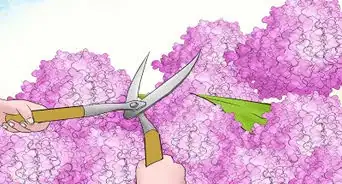
1Deadhead petunias by plucking off fading flowers to boost new blooms. Inspect the flowers of your petunias regularly for ones that are beginning to fade. Pinch or cut each dying flower off at the base of the short stem that connects it to the rest of the plant.[4]
- Deadheading prevents flowers from going to seed, which encourages blooming.
- Many varieties of petunias, such as wave petunias, don’t need to be deadheaded to keep blooming in the summer. However, it still encourages better-looking new flower production.
-
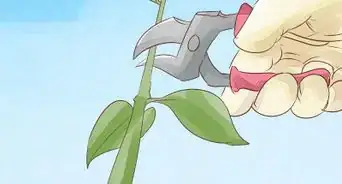
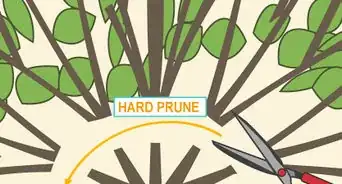
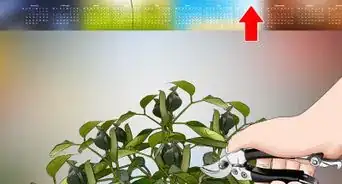
2Prune back stems that are longer than 8 in (20 cm) around midsummer. Inspect your petunias regularly throughout the summer for long stems. Use a pair of garden clippers to cut them down to about half the length, cutting right above a node where the long new growth comes out of. This keeps your petunia blooms nice and tidy and encourages more branching and new flowers.[5]
- These longer stems tend to occur most around midsummer and petunias with this type of growth are referred to as “leggy.”
- Don’t worry if your petunias look a little shaggy after you prune their stems back—they’ll make a comeback with even fuller and more colorful blooms.
- If you notice any dead or dying branches while you're pruning, cut these all the way back to the base of the branch where it grows out of the soil.
-
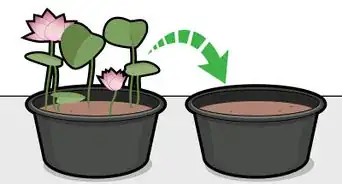
3Replant potted petunias around midsummer if they outgrow their pots. Keep an eye on any potted petunias for signs of distress, like a decrease in new growth and blooming. Repot these petunias in a larger container or plant them directly in the ground to give their roots more room to spread out.[6]
- If the root systems of your petunias get too crowded, or rootbound, they don’t get the nutrients they need to thrive and bloom all summer long. Replanting petunias that show signs of being rootbound rejuvenates them and encourages healthy blooming.


Warnings
- Don’t spray petunia blooms directly with water or they get mushy and clump together.Thanks!





References
- ↑ https://www.gardenoholic.com/how-to-grow-petunias-that-will-bloom-all-summer/
- ↑ https://thisismygarden.com/2019/05/wave-petunias-blooming-2/
- ↑ https://bloomiq.com/gardeningideas/65
- ↑ https://www.bhg.com/gardening/plant-dictionary/annual/petunia/
- ↑ https://www.flowerpatchfarmhouse.com/reviving-potted-petunias/
- ↑ https://thisismygarden.com/2019/05/wave-petunias-blooming-2/
About This Article