This article was co-authored by wikiHow staff writer, Hunter Rising. Hunter Rising is a wikiHow Staff Writer based in Los Angeles. He has more than three years of experience writing for and working with wikiHow. Hunter holds a BFA in Entertainment Design from the University of Wisconsin - Stout and a Minor in English Writing.
There are 11 references cited in this article, which can be found at the bottom of the page.
This article has been viewed 9,778 times.
Learn more...
Hydrangeas are beautiful flowering shrubs that add pops of color to any garden, but they grow really fast and can easily get out of hand. If your hydrangeas are getting a little unruly, there are a few things you can do to help control their size. We’ll go over some basic pruning tips and move on to a few other options to manage your hydrangeas so they continue growing healthy!
Steps
Method 1
Method 1 of 9:Get rid of any unwanted stems.
-
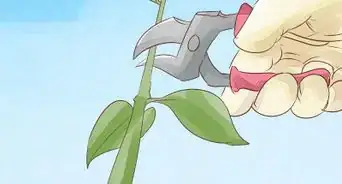
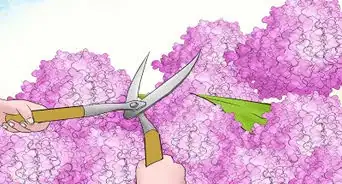
1Cut back any stems that are intrusive or in the way. If your hydrangeas are getting too unruly and blocking walkways or other plants, you can get rid of any stems causing problems. Take a sharp pair of loppers and follow the stem all the way back to the base of the plant. Cut anywhere along the stem and get rid of the branch so it’s no longer in the way.[1]
- You’ll lose some of the blooms whenever you cut back hydrangeas during the growing season, so the shrub may not look as full as it normally does.
- Cutting during the growing season always promotes new growth, so your hydrangeas will grow back to the same size and require regular maintenance.
Advertisement

Method 2
Method 2 of 9:Prune old wood bloomers in late summer.
-
1Thin out some of the old stems after your hydrangeas finish blooming. Hydrangea varieties like Mophead, Big Leaf, Lacecap, and Oakleaf all grow on the woody stems from the previous growing seasons. Right after the flowers bloom and fade in the summer, use hand pruners or loppers to cut stems that look weak or broken down to the ground. Only remove up to ⅓ of the old stems so your hydrangea blooms well in the next year.[2]
- Avoid pruning the stems later in the fall or winter on these varieties since you’ll remove the developing buds and get rid of next year’s blooms.

Method 3
Method 3 of 9:Trim new wood bloomers in the fall.
-
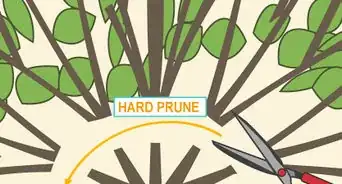
1You can cut down all of the growth on these hydrangea varieties. PeeGee and Annabelle hydrangeas only bloom from wood that grows in the current season and come back every year. Once the blooms die out and fade, take your pruners and cut all of the stems down to the ground. That way, your hydrangeas will completely regrow and you can manage their size a bit better.[3]
- You can leave around 18 inches (46 cm) of the stems coming up from the ground to add support for the next season’s growth.
- Your hydrangeas will develop weaker stems after each time you cut them down to the ground, so you may need to tie the stems to bamboo or wooden stakes as your plants get older for additional support.
Advertisement

Method 4
Method 4 of 9:Pinch the tips of the stems.
-
1Keep new hydrangeas from branching with this quick trick. After you prune your hydrangeas, wait for the stems to grow about 1–2 inches (2.5–5.1 cm). Pinch the tip of the new growth tightly between your fingers to prevent it from growing any longer. If the buds below the pinched tip start branching out to new stems, pinch them as well.[4]
- You probably won’t see many flowers or blooms during the first or second growing season when you’re pinching tips.
- Pinching the tips helps your hydrangeas develop a stronger base so blooms are more full during future growing seasons.

Method 5
Method 5 of 9:Apply less fertilizer.
-
1Too much fertilizer makes your hydrangeas bigger but with fewer blooms. If your hydrangeas are already in rich soil, they don’t need fertilizer to promote new growth.[5] Run a soil test in the growing area to check the nutrient levels of the soil before adding any fertilizer. Usually, just adding organic matter, bark, and peat moss can help enrich your soil enough for hydrangeas to grow healthy without getting oversized.[6]
- If you do need to add fertilizer, use a balanced time-released mix once or twice a year.
- If your hydrangeas have yellowing leaves near the middle of the plant, then apply a fast-acting fertilizer.
Advertisement

Method 6
Method 6 of 9:Spray them with growth retardant.
-
1These chemicals slow down how fast your hydrangeas grow. Get a growth retardant like B-Nine or PP 333 from your local gardening center. Follow the mixing directions on the package and put the solution into a spray bottle. Mist the leaves of your hydrangea with the growth retardant when there are 4–5 pairs of open leaves. Wait another 2 weeks before spraying your hydrangeas again to keep them from growing too fast.[7]
- Growth retardants contain chemicals naturally found in plants that prevent branching and form buds.[8]
- Your hydrangeas will still grow to their full size eventually, but it will take longer for them to develop fully.

Method 7
Method 7 of 9:Divide the roots.
-
1Separate and kill the stems you don’t want to keep anymore. Decide which hydrangea stems you want to keep and what stems you want to get rid of. Push a sharp spade through the base of the plant where you want to separate it and sever the roots, also known as rhizomes. From there, you can either prune the stems you don’t want or apply a vegetation killer to get rid of them.[9]
- Make sure you completely cut through the roots before applying a vegetation killer, or else you could kill the part of your hydrangeas you want to keep.
Advertisement

Method 8
Method 8 of 9:Grow hydrangeas in containers.
-
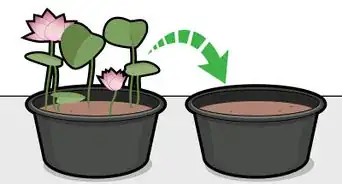
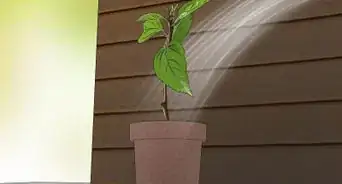
1Hydrangeas won’t be able to spread out as much if they’re in pots. Choose a big container that’s around 14 inches (36 cm) wide and fill it with fresh potting mix.[10] Dig a hole that’s the same size as the hydrangea’s roots and place it inside the pot. Water the soil until you see it drip out of the pot’s drainage holes to help establish your hydrangeas.[11]
- You’ll still need to trim and prune your hydrangeas when they’re in pots to help control their size.

Method 9
Method 9 of 9:Plant a smaller variety of hydrangeas.
-
1Dwarf varieties don’t spread out as much as the standard shrubs. Even though many hydrangeas grow to over 6 feet (1.8 m) tall, there are a few compact species that are easier to manage. Look for Pee Wee, Little Lamb, Tardiva, or White Moth hydrangeas since they’re all smaller and you won’t have to worry about them getting too large and unruly.[12]
- Dwarf hydrangeas look great when you keep them in pots.
Advertisement

Warnings




References
- ↑ https://youtu.be/LNS6HfFZVPk?t=47
- ↑ https://ucanr.edu/datastoreFiles/268-86.pdf
- ↑ https://ucanr.edu/datastoreFiles/268-86.pdf
- ↑ https://www.hortmag.com/smart-gardening/pruning-hydrangea-for-fullness
- ↑ https://www.almanac.com/plant/hydrangeas
- ↑ https://extension.oregonstate.edu/gardening/flowers-shrubs-trees/general-care-hydrangeas
- ↑ https://hortscans.ces.ncsu.edu/uploads/h/y/hydrange_53da85898f6b8.pdf
- ↑ https://extension.tennessee.edu/publications/Documents/W470.pdf
- ↑ https://www.melindamyers.com/articles/hydrangea-is-spreading-out-of-control
- ↑ https://www.southernliving.com/garden/flowers/grow-hydrangea-in-pot
- ↑ https://gardenerspath.com/plants/ornamentals/grow-hydrangea-containers/#Why-Grow-in-a-Container
- ↑ https://www.almanac.com/content/hydrangea-varieties-every-garden
- ↑ https://ucanr.edu/datastoreFiles/268-86.pdf
- ↑ https://www.almanac.com/plant/hydrangeas
About This Article