This article was co-authored by Patrick Evan and by wikiHow staff writer, Hannah Madden. Patrick Evan is the Owner of Patrick Evan Salon, a hair salon in San Francisco, California. He has been a hairstylist for over 25 years and is a Thermal Reconditioning Specialist, dedicated to transforming difficult curls and waves into sleek, straight hair. Patrick Evan Salon was rated the Best Hair Salon in San Francisco by Allure magazine, and Patrick's work has been featured in Woman’s Day, The Examiner, and 7x7.
There are 9 references cited in this article, which can be found at the bottom of the page.
wikiHow marks an article as reader-approved once it receives enough positive feedback. In this case, several readers have written to tell us that this article was helpful to them, earning it our reader-approved status.
This article has been viewed 2,561,347 times.
If you feel like your hair gets greasy faster than normal, you’re not alone—many people deal with oily or greasy hair throughout the day. Fortunately, there are a few ways you can change your washing and styling techniques to keep your hair from getting greasy. Try out some (or all!) of these tips to keep your luscious locks shiny and clean for days to come.
Steps
Method 1
Method 1 of 12:Cut down on how often you wash your hair.
-
1Washing your hair every day can actually make it greasier. Instead, try to go 2 to 3 days in between washes for the best results. It might take a few weeks, but your hair will actually stop producing as many natural oils every day, leading to less greasy hair.[1]
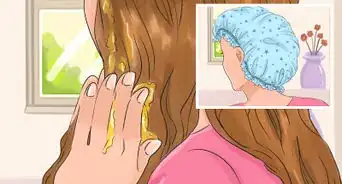
- On days you aren’t washing your hair, wear a shower cap in the shower to keep your hair dry.
- If you sweat a lot, you may have to wash your hair more frequently. Try shampooing more or less often until you find the schedule that works for you.
Advertisement

Method 2
Method 2 of 12:Try a shampoo for oily hair.
-
1These shampoos are milder and cause less buildup in your hair. Look for products that say “for oily hair” “clarifying shampoo” or “less buildup” to find the one that’s right for you. Oily hair shampoos work to gently strip away dirt and grime without irritating your scalp.[2]
- Look for a shampoo with zinc sulfate in it to help cleanse your scalp and control greasy buildup.[3]
- When you wash your hair, try not to scrub your scalp too hard. It won’t make your hair any less greasy, and you could tangle up your luscious locks.
- You don’t need to use a ton of shampoo—a quarter-sized amount is perfect for cleansing your scalp, even if you have super long hair.

Method 3
Method 3 of 12:Use cool or lukewarm water to wash your hair.
-
1Hot water strips your hair of its natural oils. For the best results, keep your shower water as cool as you can, especially when rinsing shampoo and conditioner from your hair. Cool water closes the cuticle of your hair, which will help to keep moisture in.[4]
- Hot water also causes your pores, including the ones on your scalp, to produce more sebum, or thick oil. This thick oil will start traveling down your hair strands from your scalp as soon as you leave your hot shower.
Advertisement

Method 4
Method 4 of 12:Put conditioner on your ends, not your scalp.
-
1Conditioner is very moisturizing, but it can also be greasy. If you already deal with greasy hair, don’t add more to it by putting conditioner on your roots. When you use conditioner after shampooing, apply it starting halfway down your hair and go all the way to your ends.[5]
- Be sure to always rinse conditioner thoroughly from your hair before getting out of the shower.
- If you have curly or wavy hair, use a leave-in conditioner to hydrate your curls without weighing them down throughout the day. Focus the conditioner on your ends to avoid adding extra grease to your scalp area.

Method 5
Method 5 of 12:Use a dry shampoo in between regular shampoos.
-
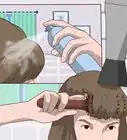
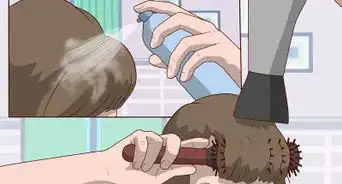
1Dry shampoo helps absorb greasy buildup and build volume in your hair. Spray a small amount of dry shampoo near your roots, then use your fingers to rub it into your scalp. It will absorb the natural oils and leave your hair looking cleaner and shinier.[6]
- If you’re having trouble dispersing the dry shampoo with your fingers, use a hair brush.
- If you have dark hair, be sure to buy invisible dry shampoo so that you avoid getting a greyish tint at your roots from the white powder.
Advertisement

Method 6
Method 6 of 12:Brush your hair once a day.
-
1Over-brushing can actually make your scalp produce more oil. Instead, stick to brushing your hair once before you shower, then using a wide-toothed comb to detangle your hair when it’s wet. Make sure the brush touches your scalp to remove dead skin and make your hair feel clean.[7]
- Be super careful when you comb your hair while it’s damp or wet. Start from the ends and slowly work your way upward to avoid ripping or tearing your hair.
- If you’ve already brushed your hair that day but it gets super messy, don’t worry about giving it a quick brush. Focus on the ends of your hair to smooth them down and make your hair look perfect again.

Method 7
Method 7 of 12:Look for “greaseless” or “oil-free” styling products.
-
1Gels and lotions can actually add grease to your hair. If you use any sort of styling product, make sure you’re not picking the wrong ones. Try to find products that are meant for oily hair to keep them from building up.[8]
- Vegetable glycerin, aloe leaf, and citric acid are common ingredients in oil-free products.[9]
- Heavy styling products can also weigh your hair down and make it look greasier, especially if you have fine or thin hair.
- If you feel like you have a buildup of products in your hair, use a clarifying shampoo to cleanse your scalp.
Advertisement

Method 8
Method 8 of 12:Try not to touch your hair.
-
1The oil from your hands can transfer onto your hair. If you aren’t styling it, try to go hands-free throughout the day. If you need to fix your hair, use a clean brush or comb instead of your fingers.[10]
- If you want to keep your hair in place, try using hairspray or clay so you don’t have to touch it constantly.
- Keep your hair out of your face by using clips or a headband so you don’t have to swipe it out of your eyes.

Method 9
Method 9 of 12:Let your hair air-dry instead of blow drying it.
-
1The heat from the hair dryer can strip your hair of its natural oils. This can cause it to overcompensate, leading to an even greasier scalp. In general, try to let your hair air dry to keep it healthy and grease-free.[11]
- Letting your hair air dry will also keep your hair healthier and reduce your split ends.
- If you do want to heat-dry your hair on occasion, make sure to use a heat protectant spray to avoid potential damage.[12]
- Straightening your hair can also lead to greasy buildup, since it makes your hair lie closer to your scalp.[13] Try to limit your use of heat styling tools to keep your hair and scalp healthy.
Advertisement

Method 10
Method 10 of 12:Clean your styling tools.
-
1Dirty hair brushes or straighteners can redistribute oil onto your hair. If you haven’t cleaned your hair tools in a while (or ever), use a damp cloth with warm water to wipe them down. Let your tools dry thoroughly before you use them again to avoid damaging your hair or your tools.[14]
- You should clean your tools often, especially if you use them every day.

Method 11
Method 11 of 12:Stay away from products for dry or damaged hair.
-
1Products like these can leave a thin film on top of your hair. While this is good for hair that is actually dry or damaged (the thin film makes your hair look shiny and smooth), all it does to hair that’s prone to oiliness is add more weight to the hair and make it look greasier. If you do need to use these products, keep them on the ends of your hair.[15]
- You should also avoid smoothing or glossing products, since those can do the same thing.
Advertisement

Method 12
Method 12 of 12:Take off hats and beanies as soon as possible.
-
1Hats can trap air and heat on your scalp, leading to more grease. If you bundled up in a beanie or a baseball cap, try to take it off as soon as you get home or reach your destination. For the best results, try not to wear a hat unless you plan on washing your hair soon to avoid a grease buildup.[16]
- If you do want to cover your hair, try using a bandana or a scarf instead. The lightweight material will allow airflow and won’t contribute to grease buildup.

Community Q&A
Did you know you can get premium answers for this article?
Unlock premium answers by supporting wikiHow
-
QuestionHow do you properly use dry shampoo?
 Patrick EvanPatrick Evan is the Owner of Patrick Evan Salon, a hair salon in San Francisco, California. He has been a hairstylist for over 25 years and is a Thermal Reconditioning Specialist, dedicated to transforming difficult curls and waves into sleek, straight hair. Patrick Evan Salon was rated the Best Hair Salon in San Francisco by Allure magazine, and Patrick's work has been featured in Woman’s Day, The Examiner, and 7x7.
Professional Hair StylistDry shampoos are a must for the days you are not washing your hair, as they refresh your hair and absorb any excess oils. You just spray them into dry hair, work the product through with your fingers, and then brush it out.
Support wikiHow by unlocking this expert answer.
-
QuestionHow long should I go without washing my hair if it gets oily after 1 day without washing it?
 Ashley AdamsAshley Adams is a Licensed Cosmetologist and Hair Stylist in Illinois. She completed her Cosmetology education at John Amico School of Hair Design in 2016.
Professional Hair StylistConsider shampooing your hair every other day, and then aim to shampoo it only 2-3 times a week. If needed, you can use dry shampoo in between your regular washes to keep your hair less oily. You could even consider wetting your hair and massaging your scalp as if you were going to shampoo it, minus the use of shampoo.Support wikiHow by unlocking this expert answer.
-
QuestionWhat shampoo should I use for oily hair?Ashley AdamsAshley Adams is a Licensed Cosmetologist and Hair Stylist in Illinois. She completed her Cosmetology education at John Amico School of Hair Design in 2016.
Professional Hair StylistConsider using a clarifying or purifying shampoo. It will strip your hair of any grease and oil that it may have. This only needs to be done once a week, and your ends should be conditioned afterwards.Support wikiHow by unlocking this expert answer.
-
QuestionDoes hair mousse make your hair more greasy?
 wikiHow Staff EditorThis answer was written by one of our trained team of researchers who validated it for accuracy and comprehensiveness.
Staff AnswerwikiHow Staff EditorStaff AnswerIf there's a buildup of it in your hair, it can make it look more greasy. Try using a clarifying shampoo to cleanse your hair, then cut back on the amount of mousse you use on a daily basis.Support wikiHow by unlocking this staff-researched answer.
-
QuestionWhy is my hair suddenly getting oiler? Before I could get to about day 3/4 without requiring any dry shampoo, now it is very noticeably oily after only a day.wikiHow Staff EditorThis answer was written by one of our trained team of researchers who validated it for accuracy and comprehensiveness.
Staff AnswerwikiHow Staff EditorStaff AnswerYour hair may have changed because of hormones, age, or stress. If it's suddenly greasier without any explanation, try using a clarifying shampoo to remove any buildup, then use dry shampoo on the days that you don't wash your hair.Support wikiHow by unlocking this staff-researched answer.
-
QuestionMy hair gets greasy after one day of not washing it but if I skip a day or use dry shampoo I get a lot of dandruff. What should I do?wikiHow Staff EditorThis answer was written by one of our trained team of researchers who validated it for accuracy and comprehensiveness.
Staff AnswerwikiHow Staff EditorStaff AnswerTry switching between a dandruff shampoo and a really mild shampoo to avoid irritating your scalp and drying it out more. If the problem continues, you might just have to wash your hair more often to prevent irritation.Support wikiHow by unlocking this staff-researched answer.
-
QuestionDoes brushing my hair 3 to 4 times a day make my hair look greasy?wikiHow Staff EditorThis answer was written by one of our trained team of researchers who validated it for accuracy and comprehensiveness.
Staff AnswerwikiHow Staff EditorStaff AnswerBrushing your hair a lot can bring your scalp's natural oils down onto the ends of your hair, making it look greasier. Try to brush your hair once a day, and use dry shampoo to reduce the oil on your scalp when you don't wash your hair.Support wikiHow by unlocking this staff-researched answer.
-
QuestionDoes dry shampoo make your hair more stiff and greasy looking?wikiHow Staff EditorThis answer was written by one of our trained team of researchers who validated it for accuracy and comprehensiveness.
Staff AnswerwikiHow Staff EditorStaff AnswerNo, dry shampoo absorbs oils and grease to make your hair look cleaner. If you find that dry shampoo makes your hair look stiff, try brushing your hair after you spray it on to evenly distribute it throughout your hair.Support wikiHow by unlocking this staff-researched answer.
-
QuestionI use a Lush shampoo for an oily scalp and no conditioner, but my hair goes greasy after 2 days. What should I do?
 Community AnswerYou should wash your hair every 2 days. This is a pretty normal hair washing frequency. If you'd like to try to ward off the greasiness for an extra day or so, you can try some of the methods in the article or change up the products you use. For example, for some people, using conditioner makes greasiness worse, while for others, not using conditioner is worse because their hair then overcompensates by producing extra oil. Figure out what works better for you. But know that most likely, an extra day or two between washes is as much as you will be able to get. Washing your hair regularly is the most essential step here.
 -
QuestionIs it better to take a bath or a shower?
 Community AnswerFor washing your hair, definitely a shower, as you can really make sure all your hair treatments have been washed out properly and no excess is left behind. Also, in a shower you can change the temperature so at the end you can close the cuticles in your hair with the cold water.


References
- ↑ Patrick Evan. Professional Hair Stylist. Expert Interview. 17 January 2019.
- ↑ https://kidshealth.org/en/teens/hygiene-basics.html
- ↑ https://www.goodhousekeeping.com/beauty-products/g26909189/best-shampoo-for-oily-hair/
- ↑ https://www.goodhousekeeping.com/beauty/a39499/greasy-hair-causes/
- ↑ https://www.aad.org/public/everyday-care/hair-scalp-care/hair/healthy-hair-tips
- ↑ Patrick Evan. Professional Hair Stylist. Expert Interview. 17 January 2019.
- ↑ https://www.goodhousekeeping.com/beauty/a39499/greasy-hair-causes/
- ↑ https://kidshealth.org/en/teens/hygiene-basics.html
- ↑ https://www.naturallycurly.com/curlreading/curl-products/oil-free-curly-hair-products-hi
- ↑ https://www.youtube.com/watch?t=209&v=o8e3qUZubSw&feature=youtu.be
- ↑ https://mibellebiochemistry.com/oily-hair-heres-what-do-about-it
- ↑ Patrick Evan. Professional Hair Stylist. Expert Interview. 17 January 2019.
- ↑ https://www.goodhousekeeping.com/beauty/a39499/greasy-hair-causes/
- ↑ https://www.goodhousekeeping.com/beauty/a39499/greasy-hair-causes/
- ↑ https://www.glamourmagazine.co.uk/article/how-to-stop-greasy-hair-hacks
- ↑ https://mibellebiochemistry.com/oily-hair-heres-what-do-about-it
About This Article

To keep your hair from getting greasy, limit how often you wash it to 2-3 times a week since overwashing your hair can cause it to produce more grease. When you do wash your hair, only condition the ends so you're not making the roots of your hair greasy. Also, wash your hair with a clarifying shampoo once a week, which will make your scalp less oily. You can also prevent grease by brushing your hair less frequently since brushing causes the oils on your scalp to spread to the rest of your hair. To learn how to prevent greasy hair by changing your diet, scroll down!