This article was co-authored by Deanne Pawlisch, CVT, MA. Deanne Pawlisch is a Certified Veterinary Technician, who does corporate training for veterinary practices and has taught at the NAVTA-approved Veterinary Assistant Program at the Harper College in Illinois and in 2011 was elected to the board of the Veterinary Emergency and Critical Care Foundation. Deanne has been a Board Member of the Veterinary Emergency and Critical Care Foundation in San Antonio, Texas since 2011. She holds a BS in Anthropology from Loyola University and an MA in Anthropology from Northern Illinois University.
There are 10 references cited in this article, which can be found at the bottom of the page.
This article has been viewed 8,709 times.
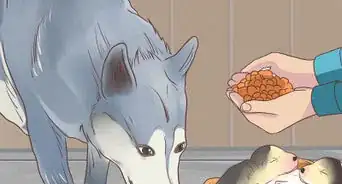
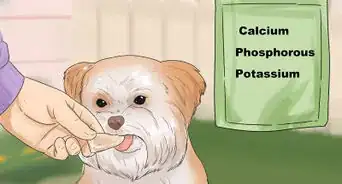
Keeping your dog food fresh is an important part of your dog’s long-term health and happiness. Whether you have dry food, wet food, homemade food, or some combination thereof, it is important to make sure the food is stored properly and that it has not exceeded its expiration date. To keep your dog food fresh, keep it cool, dry, and in airtight containers, and remember to change out food in the bowl every day.
Steps
Method 1
Method 1 of 3:Storing Dry Food
-
1Open the bag carefully. Many dog food bags are made to have food stored directly in them. Open the bag carefully along the top seam or dotted line so that you can fold and roll the bag later. If the bag comes with a zipped top, open carefully above the seal to keep it intact for later.[1]
- Use scissors or a knife to get a clean, consistent opening from the bag.
- Once you have poured food from the open bag, fold in the corners in, compressing out all of the air and roll down the top of the bag until you cannot roll any further. Then, seal with a clip.
-
2Use a bin. Plastic and metal bins or storage containers can also work to keep dog food fresh. Find a bin with an air-tight lid large enough to store a full bag of your preferred dog food.
- Pour the dog food directly from the bag into the bin, and ensure the lid is latched on whenever you are not refilling the bowl.[2]
- To keep excess bacteria from entering the bin, use a scoop to transfer food from the bin to the bowl, instead of scooping directly with the bowl, itself.
- Wash the bin with soap and hot water and dry completely between every bag of food.
-
3Take note of expiration. Dog food has a shelf life just like most any other food. Always check the printed expiration date on your dog’s food bag to ensure the food is fresh. Generally speaking, dry food should be consumed within six weeks after opening.[3]
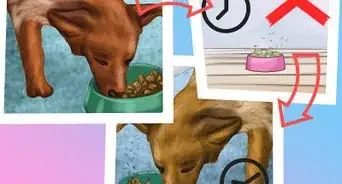
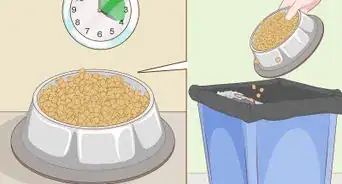
- Once in the bowl, the food should be left for no longer than about 24 hours. Try to feed your dog roughly what they can eat in a day and no more.
-
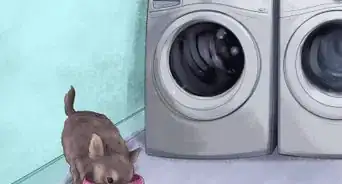
4Keep food cool and dry. Dry food is meant to be kept in a dry environment. Keep your food in a cool, dry area to prevent bacteria and mold growth. If your food does get wet, it should be thrown out and replaced.[4]
- Dog food should be stored at around room temperature, which is generally considered to be 68 to 77°F (20 to 25°C). If the ambient temperature in your usual storage area is outside of this range, try moving the food to the refrigerator, or otherwise warming it before serving your dog.[5]


Method 2
Method 2 of 3:Keeping Wet Food
-
1Cover the can. If you are left with a partial can of wet dog food, the easiest way to keep it fresh is to cover the can and refrigerate it immediately. Use a purpose-made silicone can cover, available at any pet store, to fit over the open can and place in the fridge immediately after opening.[6]
- An open can should be used within 2 days after opening. Any food not consumed by that point should be discarded.
- Do not use aluminum foil or plastic wrap to cover the can, as this does not provide the same seal as a purpose-made can cover.
-
2Freeze the food. If you do not think your dog can go through an entire can of dog food in two to three days, freeze individual portions. Portion out individual servings in freezer-safe plastic containers, and thaw individual portions in the refrigerator as necessary.
- Freezing your dog’s wet food is perfectly safe, but it may change the texture somewhat. If your dog is a picky eater, freezing your wet food might not be the right option.
-
3Keep unopened cans cool. Unopened cans of dog food should be stored in a cool, dry place in a temperature under 85°F (30°C). Always be sure to take note of the best-by date and try not to used canned food that is over a year old, regardless of date.[7]
- Try to use the oldest food first to keep food from expiring.
- Temperatures above 100°F (38°C) can damage cans. If your normal storage area is above this temperature, relocate the cans to the refrigerator or another cool area.


Method 3
Method 3 of 3:Saving Homemade Food
-
1Make small batches. If you make your own food for your dog, make it in small batches or portions. This prevents older food from becoming stale or rotten.[8]
- If you have the ability, make your dog’s food fresh daily. Otherwise, prepare food for no more than three days at a time.
-
2Refrigerate the food. Whether you use raw or cooked food, if you make your dog’s meals ahead of time, refrigerate the food to keep it fresh. If you make more than three day’s worth of food at a time, freeze excess food as individual servings.[9]
- For ease in serving, refrigerate individual portions of food at a time.
- Always freeze individual portions, as constant thawing and refreezing could spoil fresh food by encouraging bacterial growth.
-
3Use air-tight containers. Whether you are storing in the fridge or the freezer, try to use air-tight, freezer-safe containers for all servings of homemade dog food. This offers greater protection than plastic bags for your dog’s food.[10]
- Find freezer-safe, air-tight storage containers at your local grocery store, storage and organization store, or from an online merchant.
- Always wash a container with soap and hot water between uses.




References
- ↑ http://www.petmd.com/blogs/nutritionnuggets/jcoates/2012/apr/how_to_keep_dog_food_fresh-13975
- ↑ https://www.thehonestkitchen.com/blog/6-tips-storing-pet-foods/
- ↑ http://www.petyak.com/dogs/feeding/articles/storing-dog-food/
- ↑ http://www.hillspet.com/en/us/pet-care/nutrition-feeding/cat-and-dog-food-storage-tips
- ↑ https://www.fda.gov/AnimalVeterinary/ResourcesforYou/AnimalHealthLiteracy/ucm423034.htm
- ↑ http://blog.petmeds.com/1800petmeds/how-long-does-opened-canned-pet-food-remain-good/
- ↑ http://www.extension.umn.edu/food/food-safety/preserving/storage/storing-canned-food/
- ↑ http://thebark.com/content/save-money-homemade-dog-food?page=2
- ↑ http://www.quirkycookery.com/2012/01/homemade-dog-food-make-it-portion-it-freeze-it-win.html
About This Article

To keep dry dog food fresh, leave it in the bag it came in, and fold the opening closed to keep air out. Alternatively, you can store the dog food in a plastic or metal bin with an air-tight lid. Either way, you should keep the dog food in a dry, cool place to prevent bacteria and mold from growing. If you want to keep wet dog food fresh, cover the can it came in, and store it in the fridge for up to 2 days. Or, you can transfer the food to a freezer-safe container and store it in the freezer for longer storage. For unopened cans of wet dog food, keep them in a cool, dry place so they last longer. For tips from our Veterinary co-author, like how to store homemade dog food, read on!