This article was co-authored by Chris Parker and by wikiHow staff writer, Hannah Madden. Chris Parker is the Founder of Parker Eco Pest Control, a sustainable pest control service based in Seattle. He is a certified Commercial Pesticide Applicator in Washington State and received his BA from the University of Washington in 2012.
There are 8 references cited in this article, which can be found at the bottom of the page.
This article has been viewed 1,216 times.
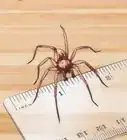
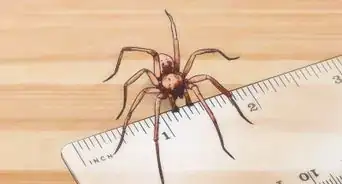
The brown recluse spider is one of the most well-known poisonous spiders in America. From March to October, brown recluses often seek shelter in barns, sheds, and houses. If you live in a region where brown recluse spiders are common, you might be worried about keeping them out of your home and away from your family. Fortunately, there are a few ways you can protect your house from brown recluses and keep them outside where they belong.
Steps
Method 1
Method 1 of 12:Seal openings in your home with silicone caulk.
-
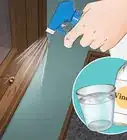
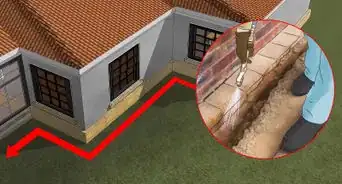
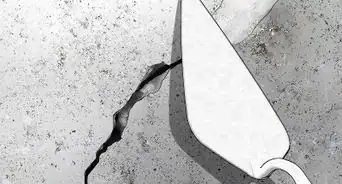
1Spiders love to sneak in through small cracks in your home. Brown recluse spiders, in particular, gravitate toward dark, quiet spaces, like your attic, basement, or crawl space.[1] Check the perimeter of your home for gaps, and fill any that you see with silicone caulk to keep the spiders out.[2]
- You can pick up a tube of silicone caulk at most hardware stores.

Method 2
Method 2 of 12:Install tight window fittings.
-
1Brown recluse spiders can slip in through cracks in your windows. If you live in an older home with older windows, try replacing them with new windows to fill any gaps. If new window fittings aren’t an option, you can just use silicone caulk for now.[3]
- The same thing goes for doorways—if you shut your door and still see gaps, you may need a tighter door fitting.[4]

Method 3
Method 3 of 12:Stack firewood at least 20 in (51 cm) away from your home.
-
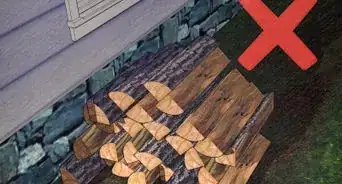
1Brown recluses gravitate toward large piles of wood. If you cut your own firewood, stack it as far away from your home as you can. This goes for other stackable things you might have outside, like outdoor furniture or piles or trash. The further away from your home, the better![5]
- This is the most common place that you’ll find brown recluse spiders.

Method 4
Method 4 of 12:Look for brown recluses in your firewood.
-
1Before you bring it in, take a look at your wood to avoid any spiders. It’s a good idea to wear gloves when you handle your firewood just in case you stumble upon any brown recluses. You may also want to wear pants and long sleeves for the same reason. Brush off any creepy critters if you see them so they don’t get a free ride into your home.[6]

Method 5
Method 5 of 12:Install yellow bulbs at outdoor entrances.
-
1Yellow bulbs are less likely to attract insects. The fewer insects that surround your home, the fewer brown recluses you’ll have coming to eat them. Try replacing your outdoor bulbs with yellow ones to get rid of the recluse’s food source.[7] Plus, yellow bulbs attract fewer mosquitoes, so it’s a good idea all around![8]
- You can find yellow bulbs at most hardware or home supply stores.

Method 6
Method 6 of 12:Shake out old furniture before bringing it inside.
-
1Most brown recluse spiders travel to new homes via old furniture. If you’re picking up some antiques from a friend or you found an awesome score on the side of the road, look it over carefully before bringing it inside. Brown recluses hide in small, dark areas, so shake out drawers and look under couch cushions to find any stowaways.[9]
- If a piece of furniture has been left outside for a while, there’s a good chance that there may be a brown recluse in it somewhere.

Method 7
Method 7 of 12:Break down and dispose of cardboard boxes.
-
1Brown recluse spiders are shy, and they’ll hide in large boxes. If you have any cardboard boxes in your home that you can get rid of, do it! This goes double for anything in your attic, crawl space, or basement. The fewer hiding spots you can give to spiders, the better.[10]
- Airtight bins are a better option for storage areas since spiders can’t get inside.

Method 8
Method 8 of 12:Store loose items in boxes or bins.
-
1Boots, shoes, and hats you don’t wear often can get stored away. Instead of leaving them in a pile or a box (which is the perfect home for a brown recluse spider), seal them in an airtight bin or tub before putting them away. That way, they’re sure to be spider-free the next time you put them on.[11]
- You can also do this for items you might store outside, like gardening gloves or rain boots.

Method 9
Method 9 of 12:Keep clothes and shoes up off the floor.
-
1Spiders love to hide underneath objects on the ground. Try to keep your home clean, and put away shoes, clothing, and gloves so they aren’t on the floor. Shake out your shoes before putting them on to get rid of any unwanted critters, and wash your clothing before wearing it if it’s been sitting on the floor for a while.[12]

Method 10
Method 10 of 12:Dispose of other dead insects in your home.
-
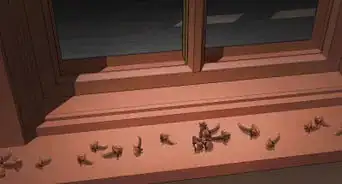
1Brown recluses often eat other dead insects. If you kill any insects in your home, like ants, beetles, or other spiders, make sure you clean them up and throw them away. Otherwise, you’re just leaving out a yummy snack for a brown recluse to come and eat.[13]
- Brown recluses favor dead insects, but they’ll also sometimes go after live prey.

Method 11
Method 11 of 12:Use sticky traps to trap and kill brown recluses.
-
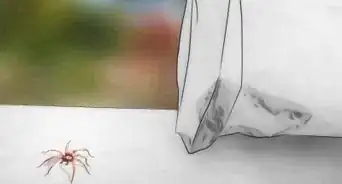
1Set sticky traps in the dark corners of your homes to catch spiders. Sticky traps are non-chemical traps that use sticky tape to trap spiders. Once the spiders are stuck on the tape, they can’t move to go and eat, so they’ll eventually die. You can use this to catch brown recluses and kill them if you think they’re already in your home.[14]
- Spider experts note that sticky traps won’t help much if you’re dealing with an infestation, but they’re a good way to get rid of a handful of brown recluses.

Method 12
Method 12 of 12:Call a professional for severe infestations.
-
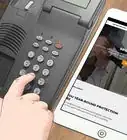
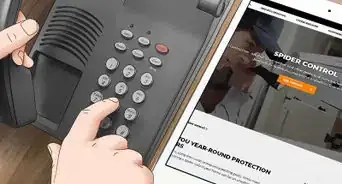
1If you notice a few recluses in your home, there might be an infestation. It’s hard to tell how many spiders are in your home at one time because they’re so good at hiding. However, if you spot more than one brown recluse, there’s probably a lot more somewhere in your house. Call a professional pest control company to find the spiders and get rid of them for you.[15]

Community Q&A
-
QuestionHow can I prevent spiders from entering my house?
 Chris ParkerChris Parker is the Founder of Parker Eco Pest Control, a sustainable pest control service based in Seattle. He is a certified Commercial Pesticide Applicator in Washington State and received his BA from the University of Washington in 2012.
Founder, Parker Eco Pest ControlYou should trim the foliage around your house and keep it at least 1 foot away from the building. Besides this, you can put curtains on your windows so that the light does not attract insects. Spiders eat insects and build their webs on windows where there are insects. -
QuestionHow can I repel spiders?Chris ParkerChris Parker is the Founder of Parker Eco Pest Control, a sustainable pest control service based in Seattle. He is a certified Commercial Pesticide Applicator in Washington State and received his BA from the University of Washington in 2012.
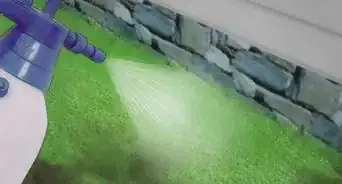
Founder, Parker Eco Pest ControlYou can use bags of cedar chips to repel the spiders naturally. Otherwise, you can use insecticides that make it impossible for the spiders to make webs on certain surfaces. These insecticides are non-toxic in general.
Warnings
- Brown recluse bites don’t always cause a severe reaction, but they can. If you get bitten and experience difficulty breathing, heart palpitations, skin necrosis, or vision problems, seek medical treatment right away.[17]Thanks!
References
- ↑ Chris Parker. Founder, Parker Eco Pest Control. Expert Interview. 18 February 2021.
- ↑ https://www.pestworld.org/pest-guide/spiders/brown-recluse-spiders/
- ↑ http://www.hoosieruplands.org/docs/File/Departments/HomeHealthHospice/Spider.pdf
- ↑ Chris Parker. Founder, Parker Eco Pest Control. Expert Interview. 18 February 2021.
- ↑ https://www.pestworld.org/pest-guide/spiders/brown-recluse-spiders/
- ↑ https://entomology.ca.uky.edu/ef631
- ↑ Chris Parker. Founder, Parker Eco Pest Control. Expert Interview. 18 February 2021.
- ↑ http://www.hoosieruplands.org/docs/File/Departments/HomeHealthHospice/Spider.pdf
- ↑ https://dph.illinois.gov/topics-services/environmental-health-protection/structural-pest-control/brown-recluse-black-widow-spiders
- ↑ https://dph.illinois.gov/topics-services/environmental-health-protection/structural-pest-control/brown-recluse-black-widow-spiders
- ↑ http://ipm.ucanr.edu/PMG/PESTNOTES/pn7468.html
- ↑ http://ipm.ucanr.edu/PMG/PESTNOTES/pn7468.html
- ↑ https://www.sciencedaily.com/releases/2014/04/140424112750.htm
- ↑ https://www.sciencedaily.com/releases/2014/04/140424112750.htm
- ↑ https://www.pestworld.org/pest-guide/spiders/brown-recluse-spiders/
- ↑ https://www.sciencedaily.com/releases/2014/04/140424112750.htm
- ↑ https://my.clevelandclinic.org/health/diseases/16639-spider-bites
About This Article