This article was co-authored by Francisco Gomez and by wikiHow staff writer, Jessica Gibson. Francisco Gomez is the Head Coach at the FIT Potato Gym, a training gym established in 2001 in the San Francisco Bay Area. Francisco is a former competitive runner who helps endurance athletes train for major marathons like the Boston Marathon. Francisco specializes in Injury Rehab, Flexibility, Marathon Training, and Senior Fitness. He has a B.S. in Nutrition and Exercise Physiology & Running.
There are 11 references cited in this article, which can be found at the bottom of the page.
wikiHow marks an article as reader-approved once it receives enough positive feedback. This article has 52 testimonials from our readers, earning it our reader-approved status.
This article has been viewed 3,104,300 times.
Whether you're a seasoned long-distance runner or new to running, you probably know how important cardio endurance is. By bumping up your stamina even a little, you may be able to push on for another mile or run your personal best. If you're ready to take your running to the next level, read on for helpful suggestions.
Steps
Method 1
Method 1 of 13:Eat high-energy foods 2 hours before you run.
-
1Aim for a 300- to 400-calorie meal so you have energy. While it's tempting to fill up before a big run, you'll feel uncomfortable if you eat too much. Eat carbohydrates that are easy to digest. These give your body glycogen, which is like fuel for your muscles. Don't forget to include lean protein in order to build muscle and recover. For instance, eat bananas, berries, carrots, oatmeal, whole-wheat bread, or sliced avocado.[1]
- Skip foods that take a while to digest like beans, broccoli, cheese, and high-fiber fruits.
Advertisement

Method 2
Method 2 of 13:Drink 2 hours before you run so you're hydrated.
-
1Consume 17 to 20 fl oz (500 to 590 ml) of water before you run. Try to drink fluids a few hours before you run so your body has a chance to become hydrated. Then, drink an extra 7 to 10 fl oz (210 to 300 ml) of water every 10 to 20 minutes of your run. Staying hydrated helps your body regulate temperature and deliver energy to your cells. It also protects your joints from impact which is important when you're running.[2]
- If you're slightly dehydrated, don't just fill up on fluids and immediately go for a run. Your body needs some time to rehydrate before you exercise.
- Going on a run that's over 1 hour long? Drink a sports drink instead of water to replace electrolytes and carbohydrates.

Method 3
Method 3 of 13:Run in shoes that fit your needs and give you support.
-
1A great pair of shoes goes a long way in preventing injuries. Go to a local running shoe store and try on several pairs to figure out what's most comfortable for you. Staff should be able to learn what kind of running you do and which shoes work best for it. They may also recommend specific supports so you can comfortably run for longer.[3]
- For example, if your feet have high arches, they may recommend a shoe or insert that gives extra cushioning. These supports can absorb shock, too so you may be able to run for longer without feeling the same impact.
- Replace your worn-out running shoes instead of hanging on to them. New shoes really protect your feet and enhance your running.
Advertisement

Method 4
Method 4 of 13:Focus on good running posture.
-
1Your posture supports your muscles so they're more efficient when you run. Hunching forward or tensing your body can cause damage, so keep your trunk tall when you run. It's fine to lean forward a bit, but raise your torso forward so your lungs can expand. You should also let your arms swing from your sides instead of keeping them crossed in front of your torso. Try to keep your hands and wrists loose as you run.[4]
- Staying relaxed can prevent muscle strain and keep them flexible.
- When you run, remember to plant your heel before you push onto your toes.

Method 5
Method 5 of 13:Practice performance breathing.
-
1By using less oxygen, you can put more energy into running. If you find yourself panting or breathing rapidly after a run, focus on improving your breathing. If you make your breaths deeper and more efficient, you'll be able to send more energy to your muscles. To get you started with performance breathing repeat this cycle:[5]
- Inhale through your nose for 2 counts
- Hold the breath for 2 counts
- Exhale through your nose for 4 counts
Advertisement

Method 6
Method 6 of 13:Run on challenging terrain.
-
1Set your treadmill to intervals and incline or run up hills. These challenge your body and build cardio endurance. Plus, they're harder than running on flat surfaces so if your body gets used to the difficult terrain, you'll have an easier time when you run on the track.[6]
- Remember to do a warm-up and cool-down when you're running. If you're using your treadmill, make sure there's a warm-up and cool-down period programmed into the machine. If not, take a few minutes to get your body ready for the workout and slow it down at the end.

Method 7
Method 7 of 13:Exercise to upbeat music.
-
1Turn on energizing music to see an increase in endurance. This might sound too good to be true, but researchers found that listening to motivational pop or rock music while working out can endurance by 15%! Music can also have a positive effect on your mood, so you feel better about your run or workout.[7]
- Come up with a motivational playlist that you use just for running. This way you can tune in and get going.
Advertisement

Method 8
Method 8 of 13:Come up with a personalized workout plan.
-
1Create a mix of running and exercises that you enjoy. If you like doing a mix of high- and low-intensity workouts, you might do a jog, followed by a moderate run, then a brief sprint on one day. The next day, you may do a moderate run and jumping rope or lifting weights, for instance. Try to choose workouts that you are eager to do so you're more likely to stick to your workout schedule.[8]
- Need some more ideas? Check out the sample workouts we've included at the end of the article.

Method 9
Method 9 of 13:Increase your workout goals by 10% a week.
-
1Aim to improve your running distance or time by up to 10% every week. You might be excited to really push yourself for big gains, but give your body a chance to build new muscles slowly. By gradually extending your workout time or distance, you'll build stamina.[9]
- For example, you may do an interval workout and run 3 miles (4.8 km) for 5 days of the week. Go for a longer run on 1 day to test your endurance and rest the next day. The following week, you may extend your interval workouts by 10 minutes and run an extra 1⁄2 mile (0.80 km) each day to build your endurance.
Advertisement

Method 10
Method 10 of 13:Include interval training in your workouts.
-
1Break your runs into intense and moderate bursts of speed. Interval training sounds complicated, but it's basically alternating between shorts bursts of intense activity that last around 30 seconds with moderate activities that last for 1 to 2 minutes. You'll burn a lot of calories and your aerobic capacity will improve so you can run for longer.[10]
- For example, do a 10 minute warm-up—start with a rapid walk that becomes a slow jog. Then, ease into your regular jog for a few minutes before you spring at top speed for 30 seconds. Go back to a light jog for 1 to 2 minutes before you spring again.
- Play around with the amount of time that you spend in intense activity. Keep in mind that you'll need a little longer recovery time with moderate activity if you're really active.

Method 11
Method 11 of 13:Do plyometrics exercises 3 times a week to work your muscles.
-
1Mix up your workout with exercises like jumping rope or skipping drills. These types of exercises strengthen your muscles so you use them more efficiently. This gives you more energy or endurance for your run. Here are some other great plyometrics to add to your schedule:[11]
- Lunges
- Jump squats
- Clap push-ups
- Bounding
Advertisement

Method 12
Method 12 of 13:Do low-impact activities like walking and swimming.
-
1Running can be rough on your body—you may get impact injuries over time. To build stamina without risking injury, jump in the pool! Swimming works your legs, shoulders, and arms. Walking is another great low-impact exercise that builds endurance. For every 4 to 7 minutes you run, plan on walking for 1 minute.[12]
- To work swimming into your schedule, try swimming as a break after a tough workout or just go swim a few laps when you have time.
- Other low-impact activities include roller skating, jogging in the pool, cycling, yoga, and cross-country skiing.

Method 13
Method 13 of 13:Add pilates to your schedule.
-
1Pilates improves your flexibility and can increase your stamina. You probably think of pilates as a stretching activity, but it's a great way to strengthen your legs, core, and back. Even just an hour or two a week can help you become more flexible, which supports the muscles you're developing. To get you started with helpful pilates exercises, try:[13]
- Side leg kick: Lay flat on your stomach and raise your upper body on your forearms. Bring one leg back toward your butt. Then, lower it and draw back the opposite leg. Do 20 reps.
- Rowing: Sit up straight with your legs stretched in front of you. Wrap a strap around your legs and cross the ends when you hold them. Then, pull the straps up to your torso and release. Repeat this 10 times.
- Kneeling sidekick: Kneel on a mat and tip your upper body to 1 side. Stick your arm down to support you and bring the other arm behind your head. Then, stretch out the opposite leg and lift your leg—you can go up and down or move it in circles. Do this about 10 times before you work the other side.
Advertisement

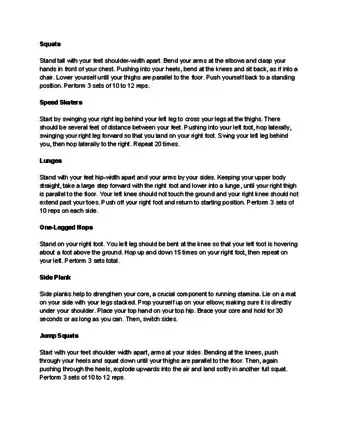
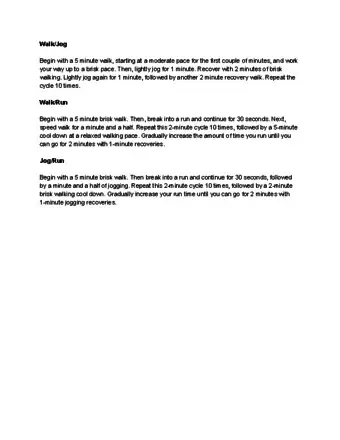
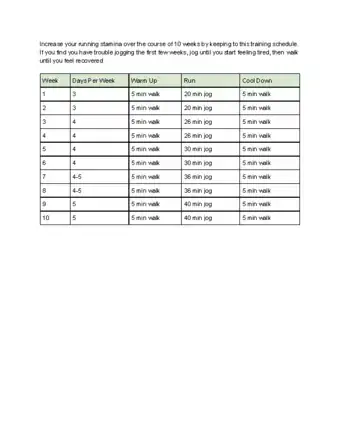
Sample Exercises, Routine, and Schedule
Community Q&A
Did you know you can get expert answers for this article?
Unlock expert answers by supporting wikiHow
-
QuestionHow can I last longer while running?
 Francisco GomezFrancisco Gomez is the Head Coach at the FIT Potato Gym, a training gym established in 2001 in the San Francisco Bay Area. Francisco is a former competitive runner who helps endurance athletes train for major marathons like the Boston Marathon. Francisco specializes in Injury Rehab, Flexibility, Marathon Training, and Senior Fitness. He has a B.S. in Nutrition and Exercise Physiology & Running.
Fitness CoachWhen you're training, try increasing your distance or time by 10% each week to condition yourself.
Support wikiHow by unlocking this expert answer.
-
QuestionWhat foods can I have to increase my stamina?Francisco GomezFrancisco Gomez is the Head Coach at the FIT Potato Gym, a training gym established in 2001 in the San Francisco Bay Area. Francisco is a former competitive runner who helps endurance athletes train for major marathons like the Boston Marathon. Francisco specializes in Injury Rehab, Flexibility, Marathon Training, and Senior Fitness. He has a B.S. in Nutrition and Exercise Physiology & Running.
Fitness CoachHave some complex carbs, like whole wheat bread and pasta or brown rice, the day before you run to help maintain your energy.Support wikiHow by unlocking this expert answer.
-
QuestionWhat should I eat and drink after running?
 Community AnswerTry a banana and a glass of water. When running, your body uses carbohydrates for fuel, and loses water and electrolytes through perspiration. These are the things that you should focus on replacing through post-workout nutrition.
 -
QuestionCan I drink water between the intervals?
 Community AnswerYes. It is recommended for you to drink water when you feel the need to during the exercise. Dehydration can affect your performance and health.
 -
QuestionWhat if I practice once a week? Will this help me increase stamina?
 Community AnswerYou can, but it won't be much of a change. Remember, this takes time, dedication and commitment, so if you try harder, it will be much faster. Once a week isn't enough, as your heart needs more exercise. Training more will train your whole body, not just your heart.
 -
QuestionHow I train for 1600 meters in next 3-4 months?
 LilfrooshCommunity AnswerRun every day. Running more often trains your body and increases the distance you can run within a certain amount of time.
 -
QuestionHow far should I run if I have mild asthma?Community AnswerYou should run as far as you can. Don't put limitations on yourself without even trying just because you have asthma. Start running and stop when your breathing feels too restricted to be comfortable. Try to push yourself to go a little further every day, but don't keep running if you feel like you need to stop.
-
QuestionWhat should I eat and drink before running?
 Bryan RudinCommunity AnswerProtein and water are good options in the hours leading up to running, but don't eat or drink much for about an hour and a half before running, as this can lead to cramps.
 -
QuestionHow do I train in the next one week to run 5km in 20 minutes?Community AnswerSet a target to run every day. For example, 1 km each day. This will get you ready. Eat healthy. Try to go for a jog early morning every day. And finally, in the last few days, start running some more distance. This will get you ready.
-
QuestionIs being fat related to low running stamina?Community AnswerYes, being overweight makes it much more difficult to engage in physical activity.
Warnings
- Listen to your body so that you avoid injury. Make sure to stretch, warm up, and cool down. Also, make sure that your shoes fit properly.Thanks!












References
- ↑ https://www.outsideonline.com/2330591/heres-what-you-should-and-shouldnt-eat-run
- ↑ https://www.acefitness.org/education-and-resources/lifestyle/blog/519/how-do-i-train-for-a-half-marathon/
- ↑ https://www.acefitness.org/education-and-resources/lifestyle/blog/519/how-do-i-train-for-a-half-marathon/
- ↑ https://per.lacity.org/psb/lapd_tips.htm
- ↑ https://www.acefitness.org/certifiednewsarticle/633/want-to-improve-your-performance-breathe/
- ↑ https://www.220triathlon.com/training/run-training/how-hill-running-improves-your-fitness-strength-and-endurance/
- ↑ https://www.sciencedaily.com/releases/2008/10/081001093753.htm
- ↑ https://www.acefitness.org/education-and-resources/lifestyle/blog/519/how-do-i-train-for-a-half-marathon/
- ↑ Francisco Gomez. Fitness Coach. Expert Interview. 24 October 2019.
About This Article

To increase your running stamina, try cross training, such as lifting weights, which will teach your body to use oxygen more efficiently. You can also try intervals on a stationary bike. Just increase the tension on the bike until it's difficult to pedal, stand up, and push hard for half a minute. Then release the tension as you sit down on the bike and catch your breath. These intervals will help you when running hills. Additionally, swimming is a great way to build upper body strength, which many runners lack. To learn more about how to create a training schedule and start a routine, keep reading!