This article was co-authored by wikiHow staff writer, Janice Tieperman. Janice is a professional and creative writer who has worked at wikiHow since 2019. With both a B.A. and M.A. in English from East Stroudsburg University, she has a passion for writing a wide variety of content for anyone and everyone. In her free time, you can find her working on a new crochet pattern, listening to true crime podcasts, or tackling a new creative writing project.
This article has been viewed 1,723 times.
Learn more...
When it comes to violin music, intonation can really set you apart as a musician. After all, good intonation, or playing notes in tune, helps your music sound polished, professional, and beautiful. Not sure where to start? Don’t worry! We’ve got you covered with plenty of tips, tricks, and helpful practice habits that you can try during your next session.
Steps
Method 1
Method 1 of 11:Use a tuner.
-
1Tuners can be a helpful reference during your practice session. Take a look at the tuner as you play each note—are your notes reading as sharp or flat? Play a note on your violin while listening to a tuner. Then, play it without the tuner, so you can really listen and feel the note on your own. At this point, replay the same note while referencing the tuner.[1]
- Your tuner shouldn’t replace your own listening ability. Instead, reference your tuner to figure out what an in-tune note should sound like.

Method 2
Method 2 of 11:Sing the notes before playing them.
-
1Your violin music will sound better if you can pinpoint the melody. Sing out the exact tune of the song you’re practicing; this way, you’ll be able to focus on what you’re playing, and not just how you’re playing it. [2]
- If you sing the notes before playing them, you’ll have a clearer idea of the pitch you need to achieve.

Method 3
Method 3 of 11:Audiate the music.
-
1Sing the music in your head so you have a good sense of pitch. Listen to a commercial track of the song you’re playing on your violin, so you know exactly how it’s supposed to sound. Then, replay the song in your head, without humming or singing any of the notes aloud. As you practice, get in the habit of “playing” the tune in your head, so you have a good sense of pitch for each note.[3]
- It’s okay if you have some trouble audiating at first! This skill can be difficult to nail down, and may require a lot of practice.

Method 4
Method 4 of 11:Record yourself playing.
-
1Play back videos of your music to get a sense of your intonation. Try to record yourself play in stereo, with decent-quality equipment. If the video or audio is low quality, it might make your notes sound out-of-tune. Then, listen to the recording and see how your violin intonation sounds.[4]

Method 5
Method 5 of 11:Play every note in tune during practice.
-
1Hold yourself to a high standard whenever you practice your violin music. Focus on the individual notes in each song, instead of playing the music quickly. Check that each note is in tune on your violin, so you get in the habit of playing each note clearly and professionally.[5]
- Arpeggios, etudes, patterns, and scales are great exercises to help you hone in on your intonation.[6]

Method 6
Method 6 of 11:Keep your fingers flexible.
-
1Your fingers help control the intonation of each note on your violin. Practice playing a single note, and sliding your fingers until you find the perfect pitch. If your fingers are too rigid, you might have trouble creating the right notes.[7]

Method 7
Method 7 of 11:Play notes slowly.
-
1Give yourself time to really listen to the pitch of each note. It can be tough to hone in on your pitch on your violin if you play each note too quickly. Instead, play through a song slowly, so your fingers have time to form each note correctly and accurately.[8]
- When you play too quickly, your fingers might not hit the notes precisely.

Method 8
Method 8 of 11:Remove any vibrato.
-
1Don’t play with vibrato unless you have a clear sense of the note’s pitch. It can be hard to nail down the music at first. That’s okay! As you really pinpoint the pitch of each note, remove any extra vibrato from your violin.[9]
- Once you can confidently play each note in tune, feel free to add the vibrato back in.

Method 9
Method 9 of 11:Play songs in different keys and tonalities.
-
1Don’t rely on just 1 key as you improve your intonation. Instead, take a song you’re familiar with and try playing it in a new key on your violin. This way, you’ll be familiar with the melody as you tweak and adjust the tune of each note.[10]
- Changing keys is pretty simple! Just use the original fingering and play it on a different string.

Method 10
Method 10 of 11:Study your intonation habits.
-
1Focus on the way you correct notes that are out of tune. A common pitfall many violinists run into is playing an out-of-tune note, then sliding their finger to correct the pitch. The next time, you play an incorrect note, stop playing altogether. Then, recreate the note until you can play it without making any adjustments.[11]
- This can be a bit time-consuming, but it’s a great way to improve your intonation in the long run.

Method 11
Method 11 of 11:Improvise as you practice.
-
1Challenge yourself with different chords and patterns. Play different note patterns and rhythms during your practice sessions. As you play these new notes, adjust your fingers along the strings until you’ve nailed down the proper tone for each note. Thinking on your feet can help you build confidence in your violin intonation skills.[12]
- For instance, you might craft your own harmony for a song you’re working on, perfecting the tone of each note as you go.

Warnings
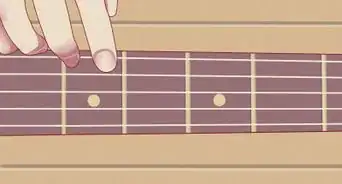
- Don’t use any dots or tape on your fingerboard as a reference. Instead, really focus on memorizing how each note sounds. This helps you master good intonation in the long run![15]Thanks!





References
- ↑ https://www.violinist.com/blog/hbroadbent/20139/15057/
- ↑ https://stringsmagazine.com/14-steps-toward-improved-intonation/
- ↑ https://m.youtube.com/watch?v=QFVM1m1A48s&t=0m30s
- ↑ https://www.thestrad.com/playing/8-ways-to-improve-your-intonation/169.article
- ↑ https://www.violinist.com/blog/laurie/20188/27424/
- ↑ https://www.violinist.com/blog/laurie/20188/27424/
- ↑ https://stringsmagazine.com/14-steps-toward-improved-intonation/
- ↑ https://www.thestrad.com/playing/8-ways-to-improve-your-intonation/169.article
- ↑ https://www.thestrad.com/playing/8-ways-to-improve-your-intonation/169.article
- ↑ https://stringsmagazine.com/14-steps-toward-improved-intonation/
- ↑ https://www.violinist.com/blog/laurie/20188/27424/
- ↑ https://stringsmagazine.com/14-steps-toward-improved-intonation/
- ↑ https://www.violinist.com/blog/hbroadbent/20139/15057/
- ↑ https://stringsmagazine.com/14-steps-toward-improved-intonation/
- ↑ https://stringsmagazine.com/14-steps-toward-improved-intonation/
About This Article