This article was co-authored by Daron Cam and by wikiHow staff writer, Hannah Madden. Daron Cam is an Academic Tutor and the Founder of Bay Area Tutors, Inc., a San Francisco Bay Area-based tutoring service that provides tutoring in mathematics, science, and overall academic confidence building. Daron has over eight years of teaching math in classrooms and over nine years of one-on-one tutoring experience. He teaches all levels of math including calculus, pre-algebra, algebra I, geometry, and SAT/ACT math prep. Daron holds a BA from the University of California, Berkeley and a math teaching credential from St. Mary's College.
There are 7 references cited in this article, which can be found at the bottom of the page.
wikiHow marks an article as reader-approved once it receives enough positive feedback. This article received 28 testimonials and 85% of readers who voted found it helpful, earning it our reader-approved status.
This article has been viewed 314,427 times.
There’s no doubt about it: math is tough. As a result, a lot of kids (and adults!) struggle with math at some point in their lives. By building up your skills and practicing every day, you can make math a little less frustrating and have a higher chance of success. Use these tips and tricks during school, while you’re studying, and when you’re out and about to break down and complete math problems easily.
Steps
Method 1
Method 1 of 10:Play math games.
-
1Build up your skills while having some fun! Look for online games that match your age and education level for the best experience. You can get computer games online or download apps on your phone to play games on the go. Try sites like:[1]
- DragonBox 5+ which lets you gradually build your algebra skills until you’re able to master more and more advanced equations.
- Prodigy, a game targeted at elementary-school students, that integrates math practice into a role-playing game that allows players to use math to make their way through an appealing fantasy world.
- Polyup, a calculator-based math game for more advanced high school and college students.
Advertisement

Method 2
Method 2 of 10:Practice math in everyday scenarios.
-
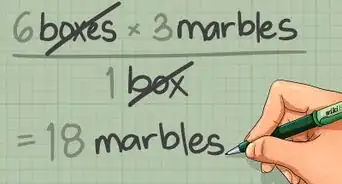
1Make math part of your daily life to practice it without even thinking. For example, if a sweater that’s regularly $38 is on sale for 30% off, what is the sale price? ($26.60). Or if you need to double a recipe that calls for 3/4 cup of flour, how much flour will you need? (1.5 cups).[2]
- Or, if you plan to hike a new trail that’s 7 miles long and it takes you 20 minutes to walk a mile, how long should you plan for your hike to take? (2 hours and 36 minutes).

Method 3
Method 3 of 10:Use mental math if you can.
-
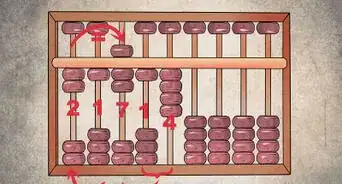
1Doing math in your head can help you remember key concepts. Some problems, like geometry or calculus, require a pencil and paper to get started; however, math basics like addition, subtraction, multiplication, and division are ones you can do in your head. If you come across an easy problem, do it in your mind first before resorting to a calculator.[3]
- If you’re worried about your mental math skills, you can always double check your answer on your phone or computer.
Advertisement

Method 4
Method 4 of 10:Review math concepts every day.
-
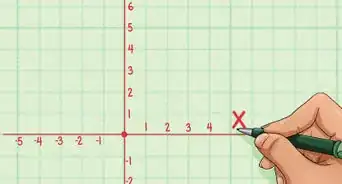
1Practice makes perfect, and math is no exception. Set a study schedule for yourself and try to review your math problems for 15 to 20 minutes per day (or more if a test is coming up). Your skills will build up over time with not much effort on your part![4]
- Make note cards. Write out important concepts and formulas on note cards so that you can easily refer to them while doing problems and use them for study guides before exams.
- Study in a quiet place. Distractions, whether aural or visual, will detract both from your ability to pay attention and to retain information.
- Study when you’re alert and rested. Don’t try to force yourself to study late at night or when you’re sleep-deprived.

Method 5
Method 5 of 10:Show your work, not just your answers.
-
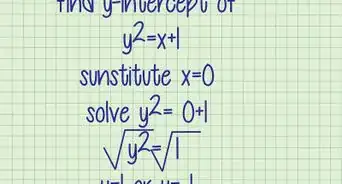
1Writing it all out can help you spot mistakes. As you work through a problem, use a pencil to write out what you did and how you did it. Some teachers require you to show your work anyway, so it shouldn’t be too much of a hassle.[5]
- Showing your work can also help you check your answers on homework and test problems.
- Don’t solve math problems with a pen! Use a pencil so you can erase and correct mistakes if they happen.
Advertisement

Method 6
Method 6 of 10:Sketch out word problems to give yourself a visual.
-
1Word problems are usually tougher than straight math problems. If you’re struggling with picturing the problem on the page, grab a pencil and get to drawing. You don’t have to be an artist—make a few circles to represent pies or some stick figures to stand in for people. Use your visuals to help you solve the problem as you work through it.[6]
- For example, a problem might say, “If you have 4 pieces of candy split evenly into 2 bags, how many pieces of candy are in each bag?” You could draw 2 squares to represent the bags, then fill in 4 circles split between them to represent the candy.

Method 7
Method 7 of 10:Practice with example problems.
-
1You can find tons of example problems online. If you’re going over a concept, look it up and try 2 to 3 problems on your own. Check the answers to figure out if you got them right, and study the concept again if you didn’t.[7]
- Your teacher might also be able to give you some extra example problems if you ask for them.
- Using example problems is a great way to practice for a test.
- Identify which skills and concepts you’ll need to solve the problem. This will give you an overall sense of what you’ll need to do to find the solution.[8]
Advertisement

Method 8
Method 8 of 10:Look up lessons online.
-
1Sometimes you need a little more explanation to really understand. If you’re having trouble and you don’t have class for a few days, try looking up a math lesson online. There are tons of resources for math students out there, including:[9]
- PatrickJMT on YouTube, a college math professor
- Khan Academy, a website with video lessons and interactive study guides
- Breaking Math, a podcast for math concepts

Method 9
Method 9 of 10:Master one concept before moving onto the next.
-
1In math, each topic builds upon the last one. It’s super hard to move forward if you don’t understand the previous lesson. If there’s something you aren’t quite getting, spend some extra time studying it or doing homework problems to really cement it into your mind.[10]
- If you’re struggling with a particular idea or concept, don’t skip it and move ahead. Instead, seek help from the instructor or a tutor until you’ve mastered the idea.[11]
Advertisement

Method 10
Method 10 of 10:Teach math problem or concept to someone else.
-
1Learning by teaching someone is a great way to solidify concepts. Invite a friend or family member over and explain to them what you’re doing and how you’re doing it. If you get stuck, review your notes or textbook again until you can explain it clearly and concisely.[12]
- Have your friend or family member ask you questions, too. Try to answer them as best you can to really practice.

Community Q&A
Did you know you can get premium answers for this article?
Unlock premium answers by supporting wikiHow
-
QuestionHow can I learn math for fun?
 Daron CamDaron Cam is an Academic Tutor and the Founder of Bay Area Tutors, Inc., a San Francisco Bay Area-based tutoring service that provides tutoring in mathematics, science, and overall academic confidence building. Daron has over eight years of teaching math in classrooms and over nine years of one-on-one tutoring experience. He teaches all levels of math including calculus, pre-algebra, algebra I, geometry, and SAT/ACT math prep. Daron holds a BA from the University of California, Berkeley and a math teaching credential from St. Mary's College.
Math TutorTry playing online math games for a fun way to learn and practice math. You can find a lot of free math games.
Support wikiHow by unlocking this expert answer.
-
QuestionHow does math relate to daily life?Daron CamDaron Cam is an Academic Tutor and the Founder of Bay Area Tutors, Inc., a San Francisco Bay Area-based tutoring service that provides tutoring in mathematics, science, and overall academic confidence building. Daron has over eight years of teaching math in classrooms and over nine years of one-on-one tutoring experience. He teaches all levels of math including calculus, pre-algebra, algebra I, geometry, and SAT/ACT math prep. Daron holds a BA from the University of California, Berkeley and a math teaching credential from St. Mary's College.
Math TutorYou probably use math more than you realize! Math is super important. Try to relate the math concepts you're learning in class to things that are happening in your real life to help you understand.Support wikiHow by unlocking this expert answer.
-
QuestionWhy do I struggle in math?Daron CamDaron Cam is an Academic Tutor and the Founder of Bay Area Tutors, Inc., a San Francisco Bay Area-based tutoring service that provides tutoring in mathematics, science, and overall academic confidence building. Daron has over eight years of teaching math in classrooms and over nine years of one-on-one tutoring experience. He teaches all levels of math including calculus, pre-algebra, algebra I, geometry, and SAT/ACT math prep. Daron holds a BA from the University of California, Berkeley and a math teaching credential from St. Mary's College.
Math TutorMath can be challenging for anyone! The different concepts of math are structured like a pyramid, so. if you don't understand the more basic math skills it can be really hard to learn more complicated stuff at the top of the pyramid. I would recommend asking your teacher for help. If you're still struggling, consider hiring a private tutor. They'll be able to address the topics you still need help with so you can become a strong math student.Support wikiHow by unlocking this expert answer.
-
QuestionMath is becoming harder by day. What can I do?
 wikiHow Staff EditorThis answer was written by one of our trained team of researchers who validated it for accuracy and comprehensiveness.
Staff AnswerwikiHow Staff EditorStaff AnswerIf you feel yourself falling behind, talk to your teacher. They can help you go over the concepts that you don't understand so you can keep learning effectively. Try to really solidify your understanding of basic concepts before you move on.Support wikiHow by unlocking this staff-researched answer.
-
QuestionMy mother want me to have full marks in maths and I am little weak in maths. What should I do?wikiHow Staff EditorThis answer was written by one of our trained team of researchers who validated it for accuracy and comprehensiveness.
Staff AnswerwikiHow Staff EditorStaff AnswerIf you're having trouble in math, consider getting a tutor. They can help you get your grades up and practice key concepts to improve your overall understanding. Talk to your mom about hiring someone or go to a math help center at your university or community center.Support wikiHow by unlocking this staff-researched answer.
-
QuestionWhat is the best way to study for a math test?
 Community AnswerWork on some problems, including past assignments. Math is a very practice oriented thing. The more you practice, the better prepared you will be.
 -
QuestionHow can I improve if I am a very weak student?
 Community AnswerGo over your previous test results and look at where you made mistakes. Look at the correct solution and compare the two. Make a list of the concepts and/or formulas you do not understand and review them. Ask a teacher or peer for help if there is something specific you're having trouble with.
 -
QuestionI know the formulas but have trouble applying my knowledge. What can I do?Community AnswerIf you understand the formulas, then create practice tests with problems using those formulas, with questions ranging from easy to hard. Then try solving those problems.
-
QuestionHow can I focus on my work when there are distractions everywhere?Community AnswerCheck out this article: how to avoid distractions while studying.
-
QuestionHow do I avoid silly mistakes?
 Community AnswerMake sure you're documenting every step of the problem as you solve it and make sure to check your work, go over every problem a second time before you turn in an assignment.
-Step-9-Version-3.webp)






References
- ↑ Daron Cam. Academic Tutor. Expert Interview. 29 May 2020.
- ↑ http://www.schoolfamily.com/school-family-articles/article/10785-mastering-math
- ↑ http://internet.savannah.chatham.k12.ga.us/Family/Pages/TopTenWaystoImproveMathSkills.aspx
- ↑ https://www.edutopia.org/article/5-tips-improving-students-success-math
- ↑ https://math.osu.edu/undergrad/non-majors/resources/study-math-college
- ↑ https://www.youtube.com/watch?t=96&v=aIRh_15O2S0&feature=youtu.be
- ↑ https://www.mathgoodies.com/articles/improve_your_grades
- ↑ Daron Cam. Academic Tutor. Expert Interview. 29 May 2020.
- ↑ http://internet.savannah.chatham.k12.ga.us/Family/Pages/TopTenWaystoImproveMathSkills.aspx
- ↑ https://math.osu.edu/undergrad/non-majors/resources/study-math-college
- ↑ Daron Cam. Academic Tutor. Expert Interview. 29 May 2020.
- ↑ https://www.mathgoodies.com/articles/improve_your_grades
- ↑ Daron Cam. Academic Tutor. Expert Interview. 29 May 2020.
About This Article

To improve your math skills, start by taking good notes in class and asking lots of questions to understand the material. Then, schedule time each day to study from your notes and do your homework. When you study, do practice problems to cement your comprehension of the math. In addition to studying, try playing math games online, such as DragonBox 5+ or Prodigy, which will help hone your math skills in a fun way. For ways to incorporate math into your everyday life, read on!


-Step-9-Version-3.webp)