This article was co-authored by Adam Dorsay, PsyD and by wikiHow staff writer, Hunter Rising. Dr. Adam Dorsay is a licensed psychologist in private practice in San Jose, CA, and the co-creator of Project Reciprocity, an international program at Facebook's Headquarters, and a consultant with Digital Ocean’s Safety Team. He specializes in assisting high-achieving adults with relationship issues, stress reduction, anxiety, and attaining more happiness in their lives. In 2016 he gave a well-watched TEDx talk about men and emotions. Dr. Dorsay has a M.A. in Counseling from Santa Clara University and received his doctorate in Clinical Psychology in 2008.
There are 7 references cited in this article, which can be found at the bottom of the page.
wikiHow marks an article as reader-approved once it receives enough positive feedback. This article received 26 testimonials and 100% of readers who voted found it helpful, earning it our reader-approved status.
This article has been viewed 937,062 times.
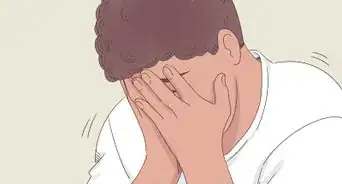
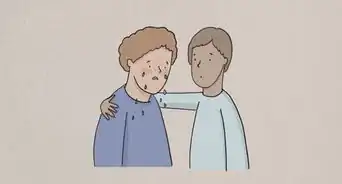
Even though crying is completely normal and natural, there may be times where you don’t want to have tears in your eyes. Luckily, there are a lot of tricks you can try to control your emotions and stop yourself from crying. This article will cover several quick and subtle ways to prevent tears, before moving onto some other strategies to help you calm down.
Here are 13 effective ways to hold back tears when you don’t want to cry.
Steps
Method 1
Method 1 of 13:Breathe deeply.
-
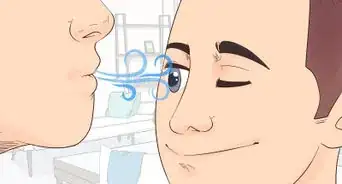
1Take a few big, long breaths to regain your composure. When you get overwhelmed with emotion, you sometimes forget to breathe.[1] When you feel like you’re about to cry, pay attention to your breathing rather than your emotions. Breathe in through your nose and exhale through your mouth. Take 3–10 breaths until you feel like you’re less stressed out.[2]
- You can also try 4-7-8 breathing. Breathe in through your nose for 4 counts, hold your breath for 7 counts, and slowly exhale for 8 counts.
- Keep your hand on your belly while you’re breathing. As you inhale, keep your chest still and let your belly push your hand out.
Advertisement

Method 2
Method 2 of 13:Pinch the webbing between your fingers.
-
1Distract yourself from your other emotions with this quick trick. Grab the webbing between your thumb and index finger with 2 fingers. Pinch hard enough where you can feel the tension but not so much that it causes you pain. Since you’re distracted by and more focused on the new sensation, your tears are more likely to stop on their own.[3]
- Alternatively, you can try pinching the bridge of your nose, but this is less discrete.

Method 3
Method 3 of 13:Drink cold water.
-
1Water cools you down when you feel emotions take over. If you’re putting yourself in an emotional situation, keep a glass of ice water nearby. When you feel tears coming on, take a long slow sip of the water. Since your body temperature usually goes up when you’re emotional, it can help you regulate how you’re feeling so you’re more relaxed.[4]
- As an added benefit, water also clears up the lump in the back of your throat that you may feel when you’re stressed out or crying.
Advertisement

Method 4
Method 4 of 13:Squeeze a stress ball.
-
1Fiddle with something in your hands to release physical tension. Keep a squishy stress ball, medallion, or worry stone in your pocket or your hand. When you start feeling frustrated or sad, don’t hold the tension in your body. Instead, squeeze the object tightly in your hand or rub it between your fingers to stay calm. Since you’re refocusing your stress, you’re less likely to start crying.[5]
- If you find yourself getting stressed at work, keep an object on your desk so it’s easy to reach.
- If you don’t have anything with you for stress relief, you might be able to overcome tears just from grasping tightly onto a pen.

Method 5
Method 5 of 13:Tense up your muscles.
-
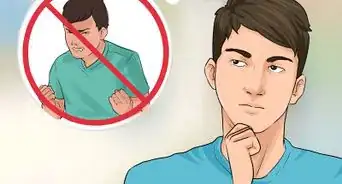
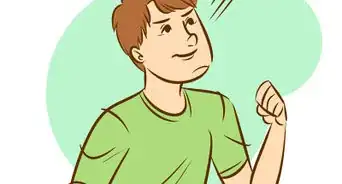
1Clench your fist to regain a feeling of self-control. When you start feeling sad or full of emotion, it can be hard to control what you’re doing. While you can’t always control when you cry, refocus your attention onto parts of your body you can control. Squeeze your hands into tight fists, tense up your legs, or activate your core to stay discrete.[6]
- Avoid tensing up the muscles in your face since it might make you cry more easily.
Advertisement

Method 6
Method 6 of 13:Imagine your happy place.
-
1Think of something positive to redirect your focus. Avoid getting self-conscious about the thing that’s making you cry. Take a second to close your eyes and visualize the things that make you happy. Try reflecting back on the happiest moment of your life, picturing yourself on a dream vacation, or imagining the person you love most wearing something silly.[7]
- Even if you do cry, imagining something happy will bring you out of a bad mood.

Method 7
Method 7 of 13:Try a 5-4-3-2-1 technique.
-
1Mentally list the objects in your surroundings to ground yourself. As soon as you feel your emotions coming on, stop and look around the room. In your head, name 5 things you can see, 4 things you feel, 3 things you hear, 2 things you can smell, and 1 thing you can taste. This helps you calm down and become more aware of how you’re feeling.[8]
- Alternatively, try pointing out all the things that are the same color or start with the same letter in the room.
Advertisement

Method 8
Method 8 of 13:Tilt your head back.
-
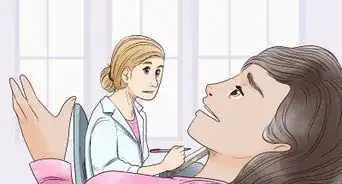
1Keep tears from rolling down your cheeks with this simple fix. If you already feel tears welling in your eyes, lean back and look straight up. While you’re tilted back, try taking a few deep breaths or visualizing something positive to help you calm down. When you feel like you have better control over your emotions, tilt your head back down.[9]
- You may notice a few tears if you don’t lean your head back far enough.

Method 9
Method 9 of 13:Relax your face.
-
1Rest your muscles to prevent tears from falling. When you cry, you usually tense up your face and make tears roll down your cheeks. Instead, relax eyebrows and forehead so they’re not scrunched up. Take a few deep breaths as you loosen your muscles. As you do, you’ll “lock” your tears up so you’re less likely to cry.[10]Advertisement

Method 10
Method 10 of 13:Watch or listen to something funny.
-
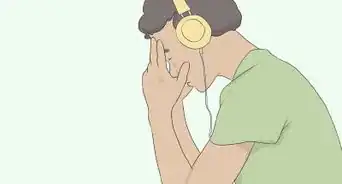
1Lighten the mood with your favorite song or video. Rather than staying sad, search through your music and put on something happy or silly that always makes you smile or dance. Browse YouTube for funny video clips so you don’t feel as down. Ease yourself into a more positive and happy mindset so you can regain your composure.[11]
- Make a playlist of songs or videos that make you feel better so you have quick access when you need them.
- Be careful not to deny how you’re feeling if you’re sad or upset. When you’re in a better mood and don’t feel like you’re going to cry anymore, revisit those thoughts and address them.

Method 11
Method 11 of 13:Step away from the situation.
-
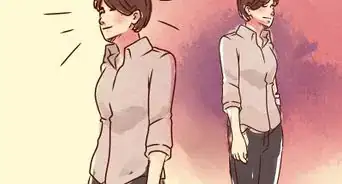
1Put some distance between you and the thing making you cry. If you can, step away from your desk or out of the room for a couple of minutes. Find a change of scenery, get some water, or go outside so you don’t feel as stressed about the situation. When you feel like the tears have passed, take a couple of deep breaths and come back to handle the situation again.[12]
- If you’re at work, politely ask if you can step out before leaving so you stay professional.
Advertisement

Method 12
Method 12 of 13:Hold something cold under your eyes.
-
1Alleviate puffy eyes with some cold water. If you have access to a sink, splash some cold water under your eyes to hide that you’re about to cry. If you want to be a little more discrete, just wet your fingers and gently pat underneath your eyes. The cold water helps restrict blood flow so you don’t have puffy eyes or tears.[13]
- You could instead use an eye mask or a bag of frozen vegetables if you’re at home.

Method 13
Method 13 of 13:Practice self-care for long-term relief.
-
1Find activities to release stress and anxiety in your daily life. If you find that you’re close to tears frequently, there are so many things you can do to help change your mindset. Handling your emotions all comes from self-compassion and managing your stress in your daily life. Some things you can try to bring more awareness to how you’re feeling include:[14]
- Exercising regularly
- Meditation
- Eating a healthy, balanced diet
- Getting a good night’s sleep
Advertisement

Community Q&A
Did you know you can get expert answers for this article?
Unlock expert answers by supporting wikiHow
-
QuestionHow do I stop being so emotional?
 Adam Dorsay, PsyDDr. Adam Dorsay is a licensed psychologist in private practice in San Jose, CA, and the co-creator of Project Reciprocity, an international program at Facebook's Headquarters, and a consultant with Digital Ocean’s Safety Team. He specializes in assisting high-achieving adults with relationship issues, stress reduction, anxiety, and attaining more happiness in their lives. In 2016 he gave a well-watched TEDx talk about men and emotions. Dr. Dorsay has a M.A. in Counseling from Santa Clara University and received his doctorate in Clinical Psychology in 2008.
Licensed Psychologist & TEDx SpeakerHuman beings are emotional beings. Rather than becoming unemotional, try working on becoming more emotionally intelligent. If you're feeling something that needs processing, give your feelings some air time and see if there's anything to be learned from them. Be patient with yourself and try to handle your emotions in a gentle and honest way. Remember that everyone is a little bit clumsy with their emotions as they learn to understand them.
Support wikiHow by unlocking this expert answer.
-
QuestionHow can I avoid crying when I run into the person that hurt me?
 Marsha Durkin, RNMarsha Durkin is a Registered Nurse and Laboratory Information Specialist for Mercy Hospital and Medical Center in Illinois. She received her Associates Degree in Nursing from Olney Central College in 1987.
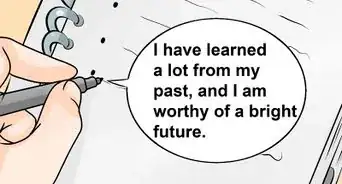
Registered NurseTry using positive self-talk to calm yourself down. Practice this at home so that you will be prepared to think positive thoughts when you see the person. It will uplift and support you when you need it most.Support wikiHow by unlocking this expert answer.
-
QuestionWhy do I cry when I'm mad?Marsha Durkin, RNMarsha Durkin is a Registered Nurse and Laboratory Information Specialist for Mercy Hospital and Medical Center in Illinois. She received her Associates Degree in Nursing from Olney Central College in 1987.
Registered NurseMany people cry when they are angry. It is one way to diffuse the situation.Support wikiHow by unlocking this expert answer.
-
QuestionHow do you avoid sounding choked up while you're holding back tears?
 Community AnswerThe "lump in your throat" feeling is partly due to stress, and partly to lack of air. Pull back your shoulders, relax them, and take deep breaths. This is easier if you identify situations that might make you cry, and start preparing before the feeling overtakes you.
 -
QuestionWhy do I feel bad when crying? As if I have done something wrong but I didn't?
 Community AnswerCrying is a form of releasing emotions and it is also draining. You probably feel bad because it tires you and releases a lot of emotional gunk. You may also have a hangup about thinking that crying isn't right, in which case you will feel that having cried is wrong. The thing is, it isn't wrong to cry, so don't feel as if you did anything wrong by crying.
 -
QuestionWhat do I do if my face is red after I cry?
 Community AnswerWhile you're crying, try to take deep, even breaths. This will prevent some of the redness. After crying, splash cold water on your face, especially on puffy eyes. If your face and eyes get very red, carry concealer and decongestant eye drops. Only use the eye drops occasionally, since overuse can make your eyes red and dry.
 -
QuestionHow can I make people stop hurting me?Community AnswerDon't let other people's teasing, insults and taunting bother you. The reason people hurt you is because you show emotion by way of tears, which is a desired reaction from them. If you don't show emotion they'll stop because they know your not being bothered by them. But more important is to learn internally to not be bothered, so that their insults really don't affect you because you understand that they're projecting their own insecurities rather than making valid points about you. You are the creator and nurturer of your own self worth and nobody can destroy that unless you let them.
-
QuestionHow do I try to look calm when I have a lump in my throat, and when I can already feel the tears at the back of my eyes?
 Community AnswerTake a deep breath repeatedly, about five to ten times in a row. If this doesn't work, you can go talk to your teacher or you can ask to be excused from class. You can always get a drink of water or even splash your face lightly with water.
 -
QuestionWhat if I've already started crying and want to stop?Community AnswerMost people find this difficult. Some people succeed by drinking a glass of water, or pinching themselves.
-
QuestionWhat if I am going to cry in class and I just don't the other students to see?Community AnswerTry asking the teacher if you can leave because you don't feel well. Or, you could ask to go to the toilet, or just try being honest and own your tears. Everyone cries, and the more people who embrace this reality, the better for everyone.



References
- ↑ http://www.thepathmag.com/follow-these-tips-to-stop-yourself-from-crying/
- ↑ https://www.uofmhealth.org/health-library/uz2255
- ↑ https://www.sbs.com.au/topics/voices/culture/article/2016/08/12/how-stop-yourself-crying
- ↑ https://www.forbes.com/sites/melodywilding/2021/03/15/how-to-stop-yourself-from-crying-at-work/?sh=5790254014f3
- ↑ https://www.forbes.com/sites/melodywilding/2021/03/15/how-to-stop-yourself-from-crying-at-work/?sh=5790254014f3
- ↑ https://www.sbs.com.au/topics/voices/culture/article/2016/08/12/how-stop-yourself-crying
- ↑ https://www.forbes.com/sites/melodywilding/2021/03/15/how-to-stop-yourself-from-crying-at-work/?sh=5790254014f3
- ↑ https://www.self.com/story/how-to-stop-crying
- ↑ https://www.self.com/story/how-to-stop-crying
- ↑ https://www.nytimes.com/2018/10/14/well/mind/how-to-stop-yourself-from-crying.html
- ↑ https://www.self.com/story/how-to-stop-crying
- ↑ https://www.forbes.com/sites/melodywilding/2021/03/15/how-to-stop-yourself-from-crying-at-work/?sh=5790254014f3
- ↑ https://www.nytimes.com/2018/10/14/well/mind/how-to-stop-yourself-from-crying.html
- ↑ https://www.self.com/story/how-to-stop-crying
- ↑ https://www.nytimes.com/2018/10/14/well/mind/how-to-stop-yourself-from-crying.html
- ↑ https://www.pennmedicine.org/updates/blogs/health-and-wellness/2016/november/health-benefits-of-crying
About This Article

Medical Disclaimer
The content of this article is not intended to be a substitute for professional medical advice, examination, diagnosis, or treatment. You should always contact your doctor or other qualified healthcare professional before starting, changing, or stopping any kind of health treatment.
To hold back tears, distract yourself with a physical sensation. If you feel tears coming on, try focusing on the sensation of breathing in your nose or abdomen. Alternatively, do something on your phone like scrolling through a website or watching a funny video. If that doesn’t work, try pinching yourself somewhere sensitive, like the bridge of your nose, the flesh between your fingers, or the inside of your arm. The pain should focus your attention away from whatever’s making you upset. If you can leave the room, go for a short walk to the bathroom or water cooler. The change of scenery and movement should distract you from crying. For more tips from our co-author, including how to use self-talk to stay positive when you feel like crying, read on!