This article was co-authored by Belgin Altundag. Belgin Altundag is a Certified Dog Trainer and the Owner of Happy Doggies Day Care/Day Camp in West Hollywood, California. A passionate animal lover, Belgin is knowledgeable about multiple training styles, including obedience training, problem-solving, activity training, and behavior modification. In addition to being an Animal Behavior College’s Certified Dog Trainer (ABCDT), Belgin has also completed the Training Cesar's Way Fundamentals of Dog Behavior and Training Programs 1 and 2 and is certified by the American Red Cross in Cat and Dog First-Aid.
There are 7 references cited in this article, which can be found at the bottom of the page.
This article has been viewed 3,838 times.
Physical therapy has become an increasingly important part of veterinary medicine. It has many benefits for dogs, including pain reduction, improvement in muscle strength, and an overall improvement in quality of life. Physical therapy helps dogs that have orthopedic problems (joint pain, bone injuries) or neurologic issues. If your dog needs physical therapy, you can help it by performing physical therapy at home and being involved in its therapy at a canine rehabilitation center.
Steps
Method 1
Method 1 of 2:Performing At-Home Physical Therapy
-
1Discuss at-home physical therapy options with your vet. Physical therapy may be hard for your dog, so you will need to help your dog through its therapy. Performing at-home physical therapy can help your dog feel better and get back to its normal activities. When your vet prescribes physical therapy, they will give you different at-home exercises to perform on your dog.
- At-home physical therapy includes passive range-of-motion (PROM) exercises and massage therapy.
- For PROM exercises, you are doing the exercises for your dog.
-
2Perform PROM exercises on your dog. PROM exercises involve gently and slowly moving joints (ankle, knee, hips) through their natural ranges of motion. They can help reduce pain, improve blood flow, and increase flexibility.[1] Your vet will recommend specific exercises according to which of your dog’s joints need physical therapy:
- With your dog laying on the floor, place a pillow between your dog’s legs. The pillow will ensure your dog’s body is properly aligned before beginning the exercises.
- Repeat each exercise 5 to 10 times, two to three times a day (or, as your vet prescribed).[2]
- Consider giving your dog a treat at the end of each physical therapy session as a reward for good behavior.
- Do not move your dog's joints outside of their natural ranges of motion. For example, if you need to work on your dog's elbow, only flex and extend it, rather than trying to rotate it.[3]
Advertisement -
3Massage your dog. Massage therapy may sound like nothing more than pampering. However, massage therapy can give your dog just what it needs to get through its physical therapy. It has many benefits, including pain reduction and improved blood flow.[4] Many types of massage therapy are available to help your dog, such as direct pressure and petrissage (kneading or rolling).[5]
- Depending on your dog’s overall physical therapy needs, your vet will recommend the ideal type of massage therapy for your dog.
- Create a comfortable, quiet massage area in your home: play some soft music and place a few layers of blankets on the floor.[6]
- Always use gentle movements when massaging your dog. If your dog is really stiff or has a lot of pain, you do not want to make the stiffness or pain worse by making forceful massage movements with your hands.
Advertisement


Method 2
Method 2 of 2:Taking Your Dog to a Physical Therapist
-
1Create a physical therapy schedule with the physical therapist. Helping your dog through physical therapy may also involve taking your dog to a canine rehabilitation center.[7] At the initial appointment, the physical therapist will do a thorough evaluation of your dog’s condition and recommend a physical therapy treatment plan.
- The treatment plan involve several physical therapy sessions a week, so create a schedule that will work best for you.
- At a canine rehabilitation center, your dog will probably do some active range-of-motion exercises. These are exercises where your dog will be doing the work, rather than having the work done for it.
-
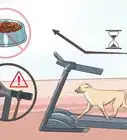
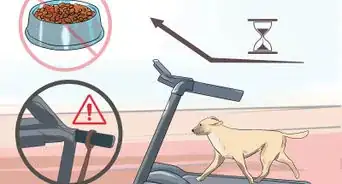
2Discuss your dog’s limitations for certain exercises. Many types of equipment are available at canine rehabilitation centers, including treadmills, stairs, and even pools. However, even the best equipment won’t help your dog if your dog is unable or unwilling to use them. For example, if your dog doesn’t like the water, then water exercises could be a challenge.
- During the evaluation, the physical therapist will assess your dog’s pain level.[8] If your dog is in extreme pain, some exercises or pieces of equipment will be off limits until your dog’s pain improves.
- Let the physical therapist know if your dog has any fears or dislikes, such as water or stairs. The therapist can tailor the treatment plan according to what your dog is most comfortable with.
-
3Stay with your dog. Ask the physical therapist if you can stay with your dog during physical therapy sessions. Having you there may help your dog feel more at ease with going through physical therapy. If you can stay, give your dog lots of positive encouragement, such as:
- Verbal praise: “Good dog!” “You’re doing great!”
- Treats when your dog successfully performs a physical therapy exercise.
- Petting.
Advertisement


Expert Q&A
-
QuestionIs playing with your dog good exercise?
 Belgin AltundagBelgin Altundag is a Certified Dog Trainer and the Owner of Happy Doggies Day Care/Day Camp in West Hollywood, California. A passionate animal lover, Belgin is knowledgeable about multiple training styles, including obedience training, problem-solving, activity training, and behavior modification. In addition to being an Animal Behavior College’s Certified Dog Trainer (ABCDT), Belgin has also completed the Training Cesar's Way Fundamentals of Dog Behavior and Training Programs 1 and 2 and is certified by the American Red Cross in Cat and Dog First-Aid.
Certified Dog TrainerDepending on the dog's injury, light play and walks can be helpful exercises. I don't recommend rough playing, though, as the animal can injure itself further. -
QuestionDoes water therapy help dogs?Belgin AltundagBelgin Altundag is a Certified Dog Trainer and the Owner of Happy Doggies Day Care/Day Camp in West Hollywood, California. A passionate animal lover, Belgin is knowledgeable about multiple training styles, including obedience training, problem-solving, activity training, and behavior modification. In addition to being an Animal Behavior College’s Certified Dog Trainer (ABCDT), Belgin has also completed the Training Cesar's Way Fundamentals of Dog Behavior and Training Programs 1 and 2 and is certified by the American Red Cross in Cat and Dog First-Aid.
Certified Dog TrainerFor sure! It always depend on the injury and the diagnosis, but water therapy can surely help you pet. I often swim with dogs, especially if they're a little slow, as they can use all their muscles without putting weight or pressure on their legs.
Warnings
- Too much physical therapy can be harmful. Work with your vet and your dog’s physical therapist to make sure your dog gets just enough, but not too much, physical therapy.Thanks!


References
- ↑ http://www.cliniciansbrief.com/article/how-passive-range-motion-exercises
- ↑ http://www.veterinarians.com/articles/how-to-care-for-your-dogs-joints.html
- ↑ http://www.veterinarians.com/articles/how-to-care-for-your-dogs-joints.html
- ↑ http://dogtime.com/dog-health/general/124-massage
- ↑ http://todaysveterinarypractice.navc.com/rehab-rx-early-rehabilitation-modalities-and-exercises/
- ↑ http://www.dogingtonpost.com/doggie-massage-basics/
- ↑ Belgin Altundag. Certified Dog Trainer. Expert Interview. 11 August 2021
- ↑ https://www.dvm360.com/view/underwater-treadmill-therapy-veterinary-practice-benefits-and-considerations
- ↑ Belgin Altundag. Certified Dog Trainer. Expert Interview. 11 August 2021
About This Article

To help your dog through physical therapy, first decide if you want to try at-home physical therapy or if you'd rather take your dog to a canine rehabilitation center. If you opt for physical therapy at home, ask your vet whether you should do massage therapy, which involves applying pressure to the affected area by kneading and rolling, or passive range-of-motion exercises. To do these types of exercises, have your dog lay on the floor with a pillow between its legs before slowly and gently moving joints, like ankles or hips, through a full range of motion. For more tips from our Veterinary reviewer, like what to expect if you take your dog to see a physical therapist, read on!