This article was co-authored by Payam Daneshrad, MD. Dr. Payam Daneshrad is a board certified Otolaryngologist, a board eligible Facial Plastic Surgeon, and the Owner and Director of Daneshrad Clinic in Los Angeles, California. With over 19 years of experience, Dr. Daneshrad specializes in adult and pediatric Otolaryngology-head and neck surgery, packing-less nasal surgery, minimally invasive sinus surgery, and snoring treatment. He also uses the newest surgical ENT techniques for tonsillectomy, adenoidectomy, thyroidectomy, and parathyroidectomy. Dr. Daneshrad graduated with a BS and the highest honors from the University of California, Berkeley. He earned his Doctor of Medicine (MD) from Tulane University School of Medicine, where he was accepted into the AOA, the medical honor's society, and the Tulane University School of Public Health. Dr. Daneshrad received his medical training from the University of Southern California, where he currently serves as an Associate Clinical Professor. Dr. Daneshrad is the Otolaryngologist and Facial Plastic Surgeon for the Los Angeles Sparks and the athletic teams of Loyola Marymount University.
There are 9 references cited in this article, which can be found at the bottom of the page.
This article has been viewed 1,458 times.
If you have tinnitus, then you probably know all about that familiar and frustrating ringing in your ears. That ringing can be especially troublesome at night when you’re trying to sleep, since it’s quiet and there’s nothing to distract you. Luckily, there’s a lot you can do to get a good-night’s sleep. Sound masking techniques help cover the ringing in your ear, while some relaxing nighttime tips can lull you into a relaxing sleep.
Steps
Method 1
Method 1 of 3:Sound Masking Tricks
-
1Run a sound noise machine while you’re in bed. Sound machines produce white noise or a selection of other relaxing sounds, like rain or a waterfall. Even gentle noises like these can cover up the ringing from your tinnitus, which tends to be most obvious when everything around you is quiet. Try getting one of these machines and setting it up to distract you at night.[1]
- Some noise machines have lots of sound options to pick from, so experiment and find the one you like best.
- Most home goods stores have at least one type of sound machine. You can find more options online.
- You can still enjoy a sound machine even if you don’t have tinnitus. Lots of people use them every night to sleep better.
-
2Try an app that makes relaxing sounds. You don’t have to buy a sound machine to get the same benefits—there are apps that can generate some of the same sounds! The sound might not be as good, but it can do the trick if you’re on a budget. Check the app store for some tools that can mimic a noise machine and help you get to sleep.[2]
- The White Noise Lite app is a popular one. There is also Ambiance and a number of others that make nature sounds.
- If you use an app, be sure to keep your phone plugged in. The battery probably won’t last through the night.
Advertisement -
3Set up an indoor waterfall or fish tank. Running water is an especially relaxing sound that can help you get to sleep. Some popular sources for this noise are a small, electric waterfall that you can keep on your night table and a fish tank in your bedroom.[3]
- Caring for a fish tank is a lot of work, so don’t pick this option unless you actually want fish. A small waterfall is much easier.
- A lot of sound machines also make water noises, if you prefer that option.
-
4Keep a fan on a low setting at night. A ceiling fan or floor fan will work fine. Turn it on low so it just makes a bit of noise. This might be enough to mask the ringing in your ears.[4]
- If it’s warm, running your AC will also help mask tinnitus ringing.
-
5Avoid wearing earplugs at night. You might think that earplugs will help, but they can actually make the problem worse. Earplugs block out external sounds, but tinnitus comes from inside your ears. That means you’ll probably hear the ringing even more than usual. Skip the earplugs when you’re trying to sleep.[5]
- Earplugs are still an important part of managing tinnitus. Wear them around machinery or loud noises so your symptoms don’t get worse.
-
6Wear a hearing aid if you have hearing loss. While tinnitus doesn't necessarily mean you're going to have any loss of hearing, hearing loss is the biggest cause of tinnitus. If that's the case, talk to your doctor about being fitted for a hearing aid. The added sounds may cover up the ringing in your ears.[6]Advertisement




Method 2
Method 2 of 3:Tinnitus Treatments
-
1See your doctor if tinnitus interferes with your daily life. In most cases, you can't treat tinnitus yourself at home. If the consistent ringing in your ears is causing trouble in your everyday life, like preventing you from concentrating at work, then it's time to see your doctor. They can recommend the best treatment options to help you.[7]
- Also be sure to tell your doctor if tinnitus is making it hard for you to sleep. They might have some more specific suggestions or treatment options for you.
-
2Wear ear protection whenever you're around loud noises. Protecting your hearing is essential to prevent your tinnitus from getting worse. Whenever you're using power tools, working around machinery, at a concert, or near any other loud noises, always wear earplugs or protective earmuffs. This also won't cure your tinnitus, but it'll prevent it from getting worse.[8]
- Being around loud noises without protection can actually make the ringing worse for a few days, which might make it harder to sleep.
-
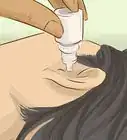
3Have your doctor remove any impacted wax from your ear. Trapped earwax could actually make the ringing in your ears worse, which could make it harder for you to sleep at night. Your doctor can use special tools to remove all of this wax. This won't cure your tinnitus, but it can make it much easier to live with.[9]
- Don't try to remove earwax yourself. Without the correct tools, you could actually make the problem worse and even damage your hearing.
-
4Try massage therapy to loosen tight neck and jaw muscles. In some cases, law and neck tightness can make tinnitus worse, especially if you have TMJ. Massage therapy can loosen those tense muscles. Attend physical or massage therapy and let the therapist work on those tight spots.[10]
- Also try gently rubbing your jaw joints to loosen them up.
- Reducing stress and periodically reminding yourself to unclench your jaw are also good for treating TMJ and tinnitus.
Advertisement


Method 3
Method 3 of 3:Healthy Sleep Habits
-
1Practice good sleep hygiene so you fall asleep easier. Sleep hygiene is your bedtime routine and how well it sets you up for sleep. Good sleep hygiene relaxes you and helps you sleep easier, even with tinnitus, but bad sleep hygiene will make it harder to fall asleep. Try some of these tips to improve your sleep hygiene:[11]
- Go to bed and get up at the same times each day so you’re tired at bedtime.
- Do something relaxing before bed, like taking a bath or reading. Avoid stressful activities like work or bills.
- Keep your room dark and cool.
-
2Reduce stress with relaxation exercises. Tinnitus is frustrating, but stressing over it can actually make it worse. Stress makes you clench your jaw and neck muscles, which could trigger the ringing in your ears. Taking positive steps to reduce your stress can improve your symptoms and help you sleep easier at night.[12]
- Relaxation exercises like meditation, deep breathing, and progressive muscle relaxation really help release tension. You could even make them a part of your bedtime routine so you’re nice and relaxed.
- Practicing your hobbies is also great for cutting down on stress.
- If you’re having trouble reducing your stress, speaking with a counselor or therapist can be a big help for you.
-
3Exercise throughout the day so you can sleep better. Staying active throughout the day is great for your health and makes it easier for you to sleep at night. Try to get some exercise regularly, on at least 5 days during the week, for the best results.[13]
-
4Avoid drinking alcohol within a few hours of bedtime. Drinking alcohol before bed might make you feel relaxed, but it actually disrupts your sleep. Worse, it can trigger your tinnitus by opening up the blood vessels in your ears, so you might have even more trouble sleeping. If you drink alcohol, don’t have any drinks in the evening to avoid disrupting your sleep.[16]
- Drinking alcohol at any time actually makes your tinnitus worse, so it’s best to quit altogether.
-
5Try some aromatherapy while you’re in bed. Aromatherapy uses pleasant smells to help you relax. It doesn’t actually treat your tinnitus, but it might make falling asleep a little easier. Try using a diffuser while you’re sleeping to see if this helps you.[17]
- Any scent that you like will work, but some scents associated with relaxation are chamomile, jasmine, lavender, bergamot, and rose.
- Don’t use candles for aromatherapy while you’re sleeping. This is a fire hazard.
-
6Avoid taking aspirin or NSAIDs before bed. These medications can actually trigger tinnitus or make it worse. Taking them before bed might make it harder for you to sleep.[18]
- If you do have pain and need to take a pain reliever, ask your doctor about the best one for you.
Advertisement


Expert Q&A
Did you know you can get expert answers for this article?
Unlock expert answers by supporting wikiHow
-
QuestionHow can I prevent tinnitus?
 Payam Daneshrad, MDDr. Payam Daneshrad is a board certified Otolaryngologist, a board eligible Facial Plastic Surgeon, and the Owner and Director of Daneshrad Clinic in Los Angeles, California. With over 19 years of experience, Dr. Daneshrad specializes in adult and pediatric Otolaryngology-head and neck surgery, packing-less nasal surgery, minimally invasive sinus surgery, and snoring treatment. He also uses the newest surgical ENT techniques for tonsillectomy, adenoidectomy, thyroidectomy, and parathyroidectomy. Dr. Daneshrad graduated with a BS and the highest honors from the University of California, Berkeley. He earned his Doctor of Medicine (MD) from Tulane University School of Medicine, where he was accepted into the AOA, the medical honor's society, and the Tulane University School of Public Health. Dr. Daneshrad received his medical training from the University of Southern California, where he currently serves as an Associate Clinical Professor. Dr. Daneshrad is the Otolaryngologist and Facial Plastic Surgeon for the Los Angeles Sparks and the athletic teams of Loyola Marymount University.
Board Certified OtolaryngologistThe number one reason people get tinnitus is because of hearing loss. The best way to avoid hearing loss is to protect your ears from loud noises, like wearing ear plugs in a loud work environment. Keep your music volume down too, especially if you're using headphones. You might not realize how much damage this does until it's too late.
Support wikiHow by unlocking this expert answer.
-
QuestionWhat is tinnitus?Payam Daneshrad, MDDr. Payam Daneshrad is a board certified Otolaryngologist, a board eligible Facial Plastic Surgeon, and the Owner and Director of Daneshrad Clinic in Los Angeles, California. With over 19 years of experience, Dr. Daneshrad specializes in adult and pediatric Otolaryngology-head and neck surgery, packing-less nasal surgery, minimally invasive sinus surgery, and snoring treatment. He also uses the newest surgical ENT techniques for tonsillectomy, adenoidectomy, thyroidectomy, and parathyroidectomy. Dr. Daneshrad graduated with a BS and the highest honors from the University of California, Berkeley. He earned his Doctor of Medicine (MD) from Tulane University School of Medicine, where he was accepted into the AOA, the medical honor's society, and the Tulane University School of Public Health. Dr. Daneshrad received his medical training from the University of Southern California, where he currently serves as an Associate Clinical Professor. Dr. Daneshrad is the Otolaryngologist and Facial Plastic Surgeon for the Los Angeles Sparks and the athletic teams of Loyola Marymount University.
Board Certified OtolaryngologistTinnitus is a subjective ringing in the ears. It's very common—1 out of every 6 people in the United States has it. The number one reason people get tinnitus is hearing loss, although it's not necessarily a symptom on its own.Support wikiHow by unlocking this expert answer.







References
- ↑ Payam Daneshrad, MD. Board Certified Otolaryngologist. Expert Interview. 30 September 2020.
- ↑ https://www.asha.org/public/hearing/tinnitus/
- ↑ https://www.asha.org/public/hearing/tinnitus/
- ↑ https://www.ata.org/managing-your-tinnitus/treatment-options/sound-therapies
- ↑ https://www.psychologytoday.com/us/blog/sleep-newzzz/201811/try-these-7-helpful-tips-help-tinnitus-and-sleep
- ↑ Payam Daneshrad, MD. Board Certified Otolaryngologist. Expert Interview. 30 September 2020.
- ↑ https://www.mayoclinic.org/diseases-conditions/tinnitus/symptoms-causes/syc-20350156
- ↑ Payam Daneshrad, MD. Board Certified Otolaryngologist. Expert Interview. 30 September 2020.
- ↑ https://www.mayoclinic.org/diseases-conditions/tinnitus/diagnosis-treatment/drc-20350162
- ↑ https://www.health.harvard.edu/diseases-and-conditions/tinnitus-ringing-in-the-ears-and-what-to-do-about-it
- ↑ https://www.tinnitus.org.uk/tinnitus-and-sleep
- ↑ https://www.psychologytoday.com/us/blog/sleep-newzzz/201811/try-these-7-helpful-tips-help-tinnitus-and-sleep
- ↑ https://www.tinnitus.org.uk/tinnitus-and-sleep
- ↑ https://www.mayoclinic.org/diseases-conditions/tinnitus/diagnosis-treatment/drc-20350162
- ↑ https://www.sleepfoundation.org/articles/best-time-day-exercise-quality-zzzs
- ↑ https://www.mayoclinic.org/diseases-conditions/tinnitus/diagnosis-treatment/drc-20350162
- ↑ https://www.psychologytoday.com/us/blog/sleep-newzzz/201811/try-these-7-helpful-tips-help-tinnitus-and-sleep
- ↑ https://www.health.harvard.edu/diseases-and-conditions/tinnitus-ringing-in-the-ears-and-what-to-do-about-it













































Medical Disclaimer
The content of this article is not intended to be a substitute for professional medical advice, examination, diagnosis, or treatment. You should always contact your doctor or other qualified healthcare professional before starting, changing, or stopping any kind of health treatment.
Read More...