This article was co-authored by wikiHow staff writer, Hannah Madden. Hannah Madden is a writer, editor, and artist currently living in Portland, Oregon. In 2018, she graduated from Portland State University with a B.S. in Environmental Studies. Hannah enjoys writing articles about conservation, sustainability, and eco-friendly products. When she isn’t writing, you can find Hannah working on hand embroidery projects and listening to music.
There are 8 references cited in this article, which can be found at the bottom of the page.
Learn more...
In August of 2021, a severe tropical storm moved across North Carolina, causing flooding and destruction in its wake. Whether you live in the area or you’ve heard about the disaster on the news, you might be looking for ways you can help those who have been affected by the floods. We’ve compiled a list of trustworthy organizations you can donate your money, supplies, or time to no matter where you live.
Steps
Method 1
Method 1 of 10:Donate money to organizations on the ground.
-
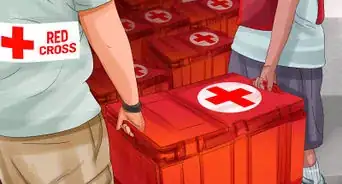
1Both international and local organizations have been helping victims. The Salvation Army and the Red Cross are both international relief organizations, while the NC Disaster Relief Fund is a state-run organization. They’ve been on the ground in North Carolina since the disaster, providing food, water, and shelter to those in need. If you’d like to help them buy supplies and fund search and rescue missions, you can donate to them on their website.[1]
- To donate to the Salvation Army, visit https://give.helpsalvationarmy.org/give/166081/#!/donation/checkout.
- To donate to the Red Cross, visit https://www.redcross.org/donate/donation.html/.
- Make a donation to the NC Disaster Relief Fund by visiting https://www.nc.gov/volunteer/donate#how-can-i-donate-to-the-fund.

Method 2
Method 2 of 10:Give food and goods to donation centers.
-
1If you’re in or around NC, you can drop off food, water, and clothes. These donation centers are also taking unopened toiletries to distribute to victims. If you do decide to donate, be sure to call ahead to make sure the donation centers are open. You can drop off items at:[2]
- Bethel Baptist Church: 5868 Pigeon Road, Canton, NC 28716
- First Baptist Church: 74 Academy St., Canton, NC 28716
- Faith Community Church: 289 Industrial Park Drive, Waynesville, NC 28786
- Cruso Community Center: 13186 Cruso Road, Canton, NC 28716
- United Way of Haywood County: 81 Elmwood Way, Suite 140, Waynesville, NC 28786

Method 3
Method 3 of 10:Volunteer your time if you’re nearby.
-
1The state of North Carolina is organizing volunteers for relief. When you volunteer, you might be handing out food and water, giving out supplies, or going to pick up people who have been stranded by the flood. If you live in or around North Carolina, you can volunteer your time up until September 3rd, 2021.[3]
- To register as a volunteer, visit https://www.nc.gov/volunteer/volunteer-opportunities#hurricane-volunteers.

Method 4
Method 4 of 10:Help clean up debris through Crisis Cleanup.
-
1The flood in North Carolina destroyed entire buildings and roadways. If you’re in the area and you’d like to aid in cleanup help, you can sign up for the Crisis Cleanup hotline as a volunteer. Keep in mind that you will be doing heavy manual labor, so it may not be a position for everyone.[4]
- To sign up for the Crisis Cleanup, call them at: (828) 222-3975.
- Or, check out their website at https://www.crisiscleanup.org/about.

Method 5
Method 5 of 10:Rebuild structures in the area.
-
1Many homes and buildings were devastated by floods. If you have any trade skills, put them to good use by helping out the victims of the flood. You can contact leaders through the Crisis Cleanup line to see what they need and how you can help.[5]
- Visit the Crisis Cleanup website by clicking: https://www.crisiscleanup.org/about.

Method 6
Method 6 of 10:Provide extra assistance via the helpline.
-
1North Carolina has a helpline that victims can call for assistance. If you’re in the area or you have the means to help out, you can call the hotline to lend a hand and see what people need. Dial 828-356-2022 to help direct donations or send volunteers to those in-need.[6]
- If you’ve been affected by the North Carolina floods and you need help, you can call the helpline for assistance.

Method 7
Method 7 of 10:Offer up a place to stay with Airbnb.
-
1You can sign up to house displaced victims of the NC floods. Head to Airbnb’s website and go to their Open Homes program. If you have an extra bedroom, apartment, or accessory dwelling unit (ADU), you can let victims of the flood stay there free of charge. You don’t have to have an Airbnb account already to sign up.[7]
- Sign up for the program by visiting https://www.airbnb.org/get-involved.

Method 8
Method 8 of 10:Take in animals through the Humane Society.
-
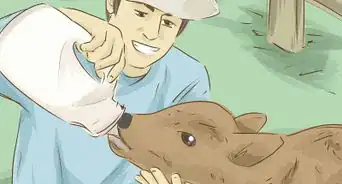
1Many pets and farm animals were left without homes. If you have the space, you can sign up for emergency animal foster care through the Humane Society. If there are any animals in your area, you’ll be contacted by an employee to see what kind of animals you can take and how many.[8]
- To sign up for emergency foster care, visit https://www.ashevillehumane.org/foster.
- You can also make a donation to the Humane Society on their website.

Method 9
Method 9 of 10:Look for specific stories on GoFundMe.
-
1If you want to donate directly to victims, head to this site. Here, victims can write about what happened to them in the floods and how much money they need to rebuild or pay for medical bills. You can search “North Carolina floods” on GoFundMe’s website to look for victims to donate to.[9]
- Keep in mind that GoFundMe stories aren’t checked for accuracy or truth, so use your best judgment when choosing who to donate to. Make sure the stories are as specific as possible, and don’t donate money if you have any doubts about its authenticity.
- If you think someone has created a scam page on GoFundMe, report it through the website to get the page taken down.[10]

Method 10
Method 10 of 10:Raise awareness on social media.
-
1Facebook, Instagram, and Twitter can connect victims to aid. If you don’t live in the area but you still want to spread the word, make a post on social media and direct people toward donation sites. Many victims have been helped via Facebook groups, and they can use all the awareness they can get.[11]
- You can copy and paste links to donation sites, give out addresses to donation centers, or post a link to GoFundMe accounts.
- If you’re going to repost anything on social media, make sure you look into it first, especially if it’s someone looking for a donation. Make sure they can provide a specific address for where they live in North Carolina and exactly how much money they need.










References
- ↑ https://disaster.salvationarmyusa.org/news/2021/08/19/salvation-army-serving-in-western-north-carolina-after-flash-flooding-from-td-fred
- ↑ https://www.citizen-times.com/story/news/2021/08/19/how-help-canton-haywood-county-nc-flooding-victims/8194647002/
- ↑ https://www.nc.gov/volunteer/volunteer-opportunities#hurricane-volunteers
- ↑ https://www.citizen-times.com/story/news/2021/08/19/how-help-canton-haywood-county-nc-flooding-victims/8194647002/
- ↑ https://www.citizen-times.com/story/news/2021/08/19/how-help-canton-haywood-county-nc-flooding-victims/8194647002/
- ↑ https://www.citizen-times.com/story/news/2021/08/19/how-help-canton-haywood-county-nc-flooding-victims/8194647002/
- ↑ https://www.airbnb.org/get-involved
- ↑ https://www.oregonhumane.org/emergency-foster-care/
- ↑ https://www.gofundme.com/c/blog/disaster-relief-guide
About This Article