This article was co-authored by Natalie Punt, DVM and by wikiHow staff writer, Hannah Madden. Dr. Natalie Punt is a Veterinarian and the Founder and CEO of mPet. She specializes in small animal emergency and general medicine and veterinary practice economics. Dr. Punt holds a BS in Biochemistry and Molecular Biology from The University of California, Davis, an MS in Biochemistry from The University at Buffalo, and a DVM from Western University of Health Sciences.
There are 19 references cited in this article, which can be found at the bottom of the page.
This article has been viewed 3,053 times.
Homeless animals are usually left without a permanent residence when their owner gives them up or they’re found on the street. With millions of animals living in shelters every year, there aren’t enough people to take them in, so many animals don’t get the love and care that they need. If you’d like to help homeless animals, there are tons of ways you can spread awareness through your community and support your local shelters. If you have the time and the space, consider adopting a homeless animal for yourself to give them a permanent home.
Steps
Method 1
Method 1 of 6:Donations
-
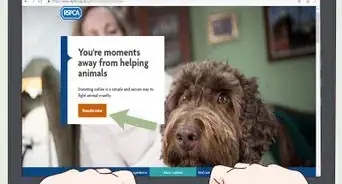
1Set up a regular payment to a shelter/rescue group. Instead of a one-time donation (which is great too!) you can donate once a month to your favorite shelter or rescue group. Visit their website to set up a recurring payment so you can donate all year round.[1]
- Most sites ask for donations as little as $5 to $10 per month, but you can decide how much you’d like to donate.
-
2Ask for birthday donations. Instead of asking your friends and family members for gifts on your birthday, request a donation in your honor instead. Point them to your local shelter or rescue group and link them to the donation page.[2]
- If you have a Facebook account, you can set up a fundraiser on your birthday that links directly to the shelter or rescue group’s website. Search for the shelter name on Facebook, then click “Share.”[3]
Advertisement -
3Set up a workplace giving program. Many workplaces will match employee donations to a cause. Talk to your boss or manager about asking for employee donations, and get your company to match them if you can.[4]
- You could put a donation box in your breakroom to collect cash donations from your fellow employees.
- Or, send out an email with a little tidbit about the shelter or rescue group you’ve chosen with a link to donate.
-
4Sponsor a pet to donate money specifically to them. If you’ve found an animal at a shelter that you love but can’t adopt, offer to sponsor them with your donations. Your money will go directly to that pet’s care, buying them food, toys, and treats.[5]
- You’ll also get updates on how that pet is doing and if/when they get adopted.
-
5Give supplies and food to a shelter or rescue group. If you have extra food, treats, toys, or cages, see if your local shelter needs any donations. If they do, drop them off at the door to give the animals inside some supplies.[6]Advertisement


Method 2
Method 2 of 6:DIY Donations
-
1Pack an emergency rescue kit for homeless animals. Rescue kits are full of supplies and food that can help a homeless animal in need. Put together a kit with a carrier, a leash, a towel or blanket, gloves, a can of wet food, treats, and gauze bandages.[7]
- You can donate rescue kits directly to your local shelter or rescue group.
-
2Sew blankets and pillows to keep animals comfortable. If you’re handy with a sewing machine, you can make blankets, pillows, bedding, or even aprons for volunteers at the shelter. Use cozy, soft fabric, like cotton or fleece, to keep the animals comfortable while they’re at the shelter.[8]
- You could even sew little bandanas or vests that say “Adopt Me!” for the animals.
-
3Mix up natural, pet-safe cleaners to donate to animal shelters. Animal shelters have to be super clean, but they can’t use harsh chemicals around animals. Put together a few natural cleaners made from white vinegar or baking soda, then donate them to an animal shelter near you.[9]
- Make a natural all-purpose cleaner by combining 2 cups (470 mL) of distilled water, 1 c (240 mL) of white vinegar, 10 drops of lemon essential oil, and 5 drops of thyme essential oil.
- Mix up a natural laundry detergent with 7 L (30 c) of hot water, 1 cup (128 g) of baking soda, 1 c (240 mL) of unscented liquid castile soap, 3 cups (384 g) of coarse salt, and 20 drops of lavender essential oil.
- Make sure you always dilute essential oils! They can be harmful to animals in large quantities.
-
4Bake animal-safe food and treats. Check with your local shelter to see if they’ll accept homemade treats. If they do, you can whip up a few batches easily by combining:[10]
- 1/2 cup (64 g) of cornmeal, 6 US tbsp (89 mL) of oil, 2 cups (256 g) of whole wheat flour, and 2⁄3 c (160 mL) of water or broth.
- Spread the dough out on a cookie sheet and bake the treats for 35 to 40 minutes at 350 °F (177 °C).
-
5Use old shirts to make toys for animals. If you have an old T-shirt or kitchen towel, cut it into 1 in (2.5 cm) strips and then braid them together. Knot the loose ends to keep your toy intact and use it as a fun tug of war rope.[11]
- You could also donate old yarn scraps to make fun toys for cats in the shelter.
Advertisement


Method 3
Method 3 of 6:Volunteer Work
-
1Help clean and stock shelters or rescue groups. Most shelters and rescue groups are low on staff and need volunteers. Reach out to the ones in your area to see if you can help with cleaning cages, stocking supplies, or walking animals.[12]
- If you have any experience with animals, like grooming or bathing, you could also volunteer your services that way.
-
2Donate your professional skills to a shelter or rescue group. If you work in legal, accounting, copywriting, editing, website design, or photography, you could help out at a shelter or rescue group. Talk to the head of the shelter to see what they need and how you can help.[13]
- You could also volunteer to run the shelter’s social media page and spread awareness via the web.
- Some shelters even need translators to speak with members of the public when they come in to adopt a pet.
-
3Take homeless animals from the vet to a shelter. Many veterinarians take in homeless pets. Talk to your local vet to see if they need help transporting animals from the vet to your local shelter.[14]
- You’ll need a reliable vehicle with room to fit an animal cage inside.
-
4Socialize animals and get them used to humans. Many homeless animals are nervous around humans. Reach out to your local shelter and see if they need people to come in and socialize the animals by playing with them or taking them on walks.[15]
- Keep in mind that some animals may be slightly aggressive. While shelters won’t usually pair volunteers with aggressive animals, there is a chance they could get spooked while you’re working with them.
-
5Train dogs or cats to make them more adoptable. Animals that are potty trained and that can follow basic commands are more likely to be adopted out. If you have experience training animals, volunteer your time to teach dogs (or cats) basic commands.[16]
- Things like “sit,” “roll over,” and “heel” are great for dogs to know.
-
6Run a fundraising drive or event for shelters. Ask your teachers, coworkers, friends, and family members to donate things like blankets, toys, beds, and animal food. Collect everything from the donation and drop it off at your local animal shelter.[17]
- If you aren’t sure what to collect, ask your local shelter what they need first. They might be low on supplies in one area but have an abundance in another.
-
7Foster animals in your home until they can be adopted. If you have the space, offer to foster an animal in your home and get them accustomed to family life. The shelter will set you up with their basic needs, but it will be up to you to take care of them on a daily basis.[18]
- You should only foster animals if you have the time and the space.
Advertisement


Method 4
Method 4 of 6:Awareness
-
1Celebrate International Homeless Animals Day on August 18th. You can celebrate by posting on social media, talking to your friends and family, or hosting a donation drive. Make a special effort on this day to help local animals in your area.[19]
- Some shelters in your area might be hosting special events, too. Reach out to see if they need volunteers or supplies as it gets closer.
-
2Contact your local government about helping animals. Check the legislation in your area to see what the spay and neuter ordinances are. If there aren’t any ordinances or your city doesn’t have restrictions on breeding, contact your local decision makers via email or phone call.[20]
- To find out what the ordinances are in your area, visit https://www.peta.org/issues/animal-companion-issues/overpopulation/spay-neuter/model-spay-neuter-ordinances/.
-
3Host an animal shelter talk at your school or workplace. Animal shelter workers love to talk about the work that they do. Reach out to the management at your school or workplace and ask if you can invite a worker from your local shelter to host an informational talk in the near future.[21]
- This is a great way to get kids involved with animals, too.
- They might even bring along some cute animals!
-
4Sign up for an advocacy brigade. The American Society for the Prevention of Cruelty to Animals, or ASPCA, hosts advocacy brigade groups to keep people informed about animal rights. Sign up for the brigade in your area to stay up to date on all information about homeless animals and what you can do to help them.[22]
- You can sign up by visiting https://secure.aspca.org/take-action/join-the-advocacy-brigade.
Advertisement


Method 5
Method 5 of 6:Adoption
-
1Adopt an animal from a shelter or rescue group. Animals in shelters are looking for their forever homes. If you have the space and the time, consider adopting an animal to save them from being homeless.[23]
- Not everyone has the time or the space to adopt an animal, and that’s okay! If you can’t adopt one right now, there are tons of other things you can do to help homeless animals.
- Most shelters and rescue groups have a small adoption fee that’s usually around $100.
-
2Encourage others to adopt instead of buying from a breeder. If you have a friend or family member looking for a pet, send them a link to your local shelter. Adopting an animal from a shelter will help get a homeless animal off the street.[24]
- Animals in pet stores usually come from breeders.
-
3Spay or neuter your pets. If you have animals of your own, get them fixed so they can’t get pregnant (or get another animal pregnant). Since there’s a surplus of animals, adding your own to the mix will only overload the system even more.[25] [26]
- Many shelters will spay or neuter animals before adopting them out.
- You should also avoid breeding your own animals.
Advertisement


Method 6
Method 6 of 6:Community Intervention
-
1Look for lost pets so they don’t become homeless. If anyone in your neighborhood has lost their pet, spend some time walking or driving around to look for them. Put up lost pet fliers to hopefully get the pet home safely.[27]
- You can also post on social media or make a listing on your neighborhood group, like NextDoor.
-
2Host off-site adoption events. Programs like these help connect community members with pets while they’re out and about. Talk to your local shelter about hosting a booth with information about homeless animals and adoption.[28]
- You could host a booth like this at your local zoo, at a dog or cat show, near a pet hospital, or near a pet store.
-
3Help strays if you come across them. If you’re out and about and you see a stray animal, try to lure them into your car with food or treats. If that doesn’t work, call your local animal rescue team or the police.[29]
- You should only try to help a stray pet if you feel safe! If the animal looks aggressive or they’re in a dangerous area, leave it up to the professionals.
- Once you get the stray in your car, you can take them to a vet (if they look hurt or injured) or your local animal shelter.
- If you’re traveling, you may come across stray pets in an unfamiliar area. Do your best to find a no-kill shelter nearby and transport the pet there before moving on.[30]
-
4Assist homeless people with their pets. This might include getting them animal food, taking the animal to the vet, providing emergency boarding, or arranging care for the animal if the homeless person needs to be hospitalized. You can connect with a local organization to help homeless people with their pets, like Paws for a Purpose or the Royal Society for the Prevention of Cruelty to Animals (RSPCA).[31]
- Pets provide a lot of emotional and mental support. You should try to keep the animal with the person experiencing homelessness as long as it seems safe to do so.
Advertisement


Community Q&A
-
QuestionWhat is the best way to help stray animals?
 Natalie Punt, DVMDr. Natalie Punt is a Veterinarian and the Founder and CEO of mPet. She specializes in small animal emergency and general medicine and veterinary practice economics. Dr. Punt holds a BS in Biochemistry and Molecular Biology from The University of California, Davis, an MS in Biochemistry from The University at Buffalo, and a DVM from Western University of Health Sciences.
VeterinarianI think the best way is to take them to a vet. Spay and neuter these pets, decreasing the number of pets that won't have good homes. -
QuestionHow can we protect street animals?Natalie Punt, DVMDr. Natalie Punt is a Veterinarian and the Founder and CEO of mPet. She specializes in small animal emergency and general medicine and veterinary practice economics. Dr. Punt holds a BS in Biochemistry and Molecular Biology from The University of California, Davis, an MS in Biochemistry from The University at Buffalo, and a DVM from Western University of Health Sciences.
VeterinarianTry to make sure they go to a good home, be it your place, be it another house. If you need help, do not hesitate to contact a no-kill shelter or a rescue organization.
Warnings
- Never approach a homeless animal if they look aggressive or they’re in a dangerous area.[32]Thanks!











References
- ↑ https://bestfriends.org/stories-blog-videos/latest-news/5-ways-save-homeless-pets
- ↑ https://www.aspca.org/blog/five-ways-help-local-homeless-animals-when-adoption-not-option
- ↑ https://www.facebook.com/help/1910205189301966
- ↑ https://www.inquirer.com/life/how-to-help-homeless-pets-20200318.html
- ↑ https://bestfriends.org/donate/sponsor-animal
- ↑ https://bestfriends.org/stories-blog-videos/latest-news/5-ways-save-homeless-pets
- ↑ https://www.peta.org/action/diy-animal-rescue-kit/
- ↑ https://www.snugglesproject.org/about/the-project/index.html
- ↑ https://animalwellnessmagazine.com/household-cleaners-safe-pets/
- ↑ https://www.doinggoodtogether.org/bhf/bake-dog-biscuits
- ↑ https://www.peta.org/teachkind/humane-classroom/shelter-animal-student-activities/
- ↑ https://www.petsafe.net/learn/10-ways-to-help-homeless-pets
- ↑ https://ny.bestfriends.org/get-involved/volunteer
- ↑ https://www.aspca.org/blog/five-ways-help-local-homeless-animals-when-adoption-not-option
- ↑ https://www.peta.org/teachkind/humane-classroom/shelter-animal-student-activities/
- ↑ https://www.aspca.org/blog/five-ways-help-local-homeless-animals-when-adoption-not-option
- ↑ https://www.peta.org/teachkind/humane-classroom/shelter-animal-student-activities/
- ↑ https://www.aspca.org/blog/five-ways-help-local-homeless-animals-when-adoption-not-option
- ↑ https://www.psychologytoday.com/us/blog/animal-emotions/201208/saving-sentience-homeless-animals-need-all-the-help-they-can-get
- ↑ https://www.peta.org/teachkind/humane-classroom/shelter-animal-student-activities/
- ↑ https://www.peta.org/teachkind/humane-classroom/shelter-animal-student-activities/
- ↑ https://secure.aspca.org/take-action/join-the-advocacy-brigade
- ↑ https://bestfriends.org/stories-blog-videos/latest-news/5-ways-save-homeless-pets
- ↑ https://www.psychologytoday.com/us/blog/animal-emotions/201208/saving-sentience-homeless-animals-need-all-the-help-they-can-get
- ↑ https://www.petsafe.net/learn/10-ways-to-help-homeless-pets
- ↑ Natalie Punt, DVM. Veterinarian. Expert Interview. 14 September 2021.
- ↑ https://www.bettercitiesforpets.com/resource/collaboration-saves-homeless-pets/
- ↑ https://www.petfinder.com/pro/for-shelters/partnering-offsite-adoptions/
- ↑ https://www.humanesociety.org/resources/how-help-stray-pet
- ↑ Natalie Punt, DVM. Veterinarian. Expert Interview. 14 September 2021.
- ↑ https://www.pawsforapurpose.org/helping-homeless-with-pets.html
- ↑ https://www.humanesociety.org/resources/how-help-stray-pet
About This Article