This article was co-authored by wikiHow Staff. Our trained team of editors and researchers validate articles for accuracy and comprehensiveness. wikiHow's Content Management Team carefully monitors the work from our editorial staff to ensure that each article is backed by trusted research and meets our high quality standards.
There are 16 references cited in this article, which can be found at the bottom of the page.
This article has been viewed 2,446 times.
Learn more...
Many people in Cuba live in poverty and are in need of help, especially when a natural disaster strikes. You can offer help firsthand by traveling to Cuba and spending your money there, or by using your skills to volunteer in the country. Or, you can simply donate money to organizations that send help directly to the country.
Steps
Method 1
Method 1 of 3:Helping from Home
-
1Give to Medical Education Cooperation with Cuba (MEDICC). This organization is based in California, and they work to send medical supplies to Cuba. They only send what is requested, meaning money doesn't get wasted on unnecessary supplies. Plus, the organization has the blessing of the U.S. Government, which means your donation is legal and will be put to good use.[1]
- You can donate at https://donatenow.networkforgood.org/mediccglobal?code=Website+Donations.
-
2Donate to Friends of Caritas Cubana. This organization is based in Boston and provides support for basic needs in Cuba. While this organization began as a Catholic organization, it's now a separate nonprofit. They go to Cuba at least twice a year and work with both the U.S. Government and the Cuban Government.Advertisement
-
3Give to individuals traveling to Cuba. If you can't go to Cuba yourself, support someone who can. You can support individuals through crowdfunding sites like IndieGoGo or GoFundMe, or you can support someone you know personally. Supporting someone will give them a chance to make a difference, as well as provide more money to purchase supplies to take with them.
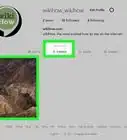
- To ensure the campaign is legitimate, support someone you know. If that's not possible, peruse the person's social media accounts, which are usually attached to their campaign. Check for profile pictures and an about me area. Look to see if they've shared their campaign on social media.
-
4Donate to other organizations that provide support to Cuba. Organizations like Care.org provide support to Cuba, but they don't exclusively work with Cuba. Donating to them will help Cuba, but it will also help other countries in need, too.[2]
- Care.org works to alleviate poverty in countries around the world. They help provide things like clean drinking water, food sources, and education.
- To find other organizations, look for ones that provide worldwide support for poverty. Check their list of projects and countries to see if they support Cuba.
-
5Learn about the embargo and decide if you can help. The United State's embargo on Cuba hurts the Cuban economy, as the average American can't travel to Cuba and spend money there.[3] On the other hand, lifting the embargo may provide more financial support to Cuba's regime, hurting the Cuban people.
- If you feel the embargo needs to be lifted, call or contact your representatives, and ask them to consider lifting it.
- You can find your representatives at https://www.usa.gov/elected-officials.
- You can also use resources such as texting "RESIST" to 50409. Known as the "Resistbot," this texting service helps you contact your representatives.[4]
Advertisement


Method 2
Method 2 of 3:Traveling Responsibly
-
1Apply for a visa. To travel to Cuba, you must apply for a visa first. Travel from the US is still restricted for tourists, so you must have a reason to travel to Cuba. You can't just travel as a tourist.[5]
- The main reasons you'll be allowed to travel to Cuba are educational purposes, humanitarian purposes, research, public performances, athletic competitions, and journalistic activities.
- While travel is still restricted in Cuba, traveling in the country helps inject money into the economy. Therefore, if you can visit Cuba, you'll be helping just by spending money in the area.
-
2Consider taking a tour. If you don't want to set up a trip yourself, try taking a tour through an established company. That way, you can get the experience without having to worry about the details of the trip.[6]
-
3Look into staying at casa particulars instead of hotels. Casa particulars are basically rooms in people's homes that they rent out to travelers. You usually get a room to yourself, and by renting from a family, you support that family instead of a state-run hotel. Plus, you get more out of the experience, as you get to spend time with the family, including eating meals. Often, they'll act as your guide around the area, too.[7]
- Typically, a casa particular costs about $20 USD a night. Meals are usually extra.
- Websites like Airbnb, Booking, and Hostels Club all have listings for casa particulars.
-
4Stay only in legitimate casa particulars. As long as you book with a legitimate casa particular, you should be fine. Just try to read a few reviews first. It's also a good idea to book ahead of time, as the owner will often meet you at the bus station. Ask that they carry a sign with your name on it when meeting you. That way, you won't be conned by other people trying to lure tourists to their home stay instead.[8]
- It's a good idea to carry valuables with you at all times, including your passport, instead of leaving it where you're staying.
-
5Spend money wisely to help locals. When eating, go to paladares. They are the restaurant equivalent of a casa particular, so eating there benefits workers. Also, support local businesses, and hire taxis when you can. You can even hire taxis for 3 to 4 hour trips, though it's best to split up the costs if you can.[9] You can also hire local guides, and stay at or visit places to support causes you care about, such as the eco-village Las Terrazas.[10]
- Try to avoid spending money at military-owned businesses. You can check which businesses and hotels are banned by the U.S. Government on this list: https://www.state.gov/e/eb/tfs/spi/cuba/cubarestrictedlist/275331.htm.
-
6Carry the essentials with you. You'll need paper maps of Cuba, as mobile apps still aren't as up-to-date as you'd probably like, and you may not be able to use your phone anyway. Another essential is a Spanish phrasebook, though it would be even better to brush up on your Spanish before visiting. Additionally, make sure you carry enough cash with you, as you won't be able to use your credit and debit cards. You can exchange dollars and euros at most hotels, though.[11]
- Keep in mind that water in Cuba isn't considered safe to drink. Drink bottled water, or bring something like a Life Straw to filter the water for you.[12]
-
7Be vigilant. Traveling in Cuba isn't necessarily any more dangerous than traveling anywhere else. However, it's a good idea to be aware of your surroundings and to avoid taking any unnecessary risks. Just like any country, there will be people who will try to con or game you just because you're a tourist.[13]
-
8Purchase travel medical insurance. When traveling in Cuba, you must purchase travel medical insurance that will cover the cost of being evacuated by air. You will need to show proof of this insurance when you enter the country, so have a copy on hand.[14]
- You can purchase this insurance through any travel insurance company that covers travel to Cuba.
Advertisement


Method 3
Method 3 of 3:Volunteering in Cuba
-
1Use your skills to volunteer. A wide variety of skills are useful when it comes to providing service in Cuba. You can teach English, build houses, work with the elderly or children, help farmers, or help landscape parks, just to name a few. Whatever skill you have, you can put it to good use.[15] You can also travel to Cuba for hurricane cleanup to assist with cleanup and repairs.
- Volunteer with organizations such as Cuba-One and Give2Cuba, and they will send you to areas that need help. However, you'll need to pay for your trip or get friends and family to sponsor you.
- The benefit of traveling with an organization is they can help you organize your home stays and where you're going to volunteer.[16]
-
2Prepare to travel ahead of time. When traveling to Cuba, you'll need to get a visa that states you're traveling for humanitarian reasons.[17] You'll also need travel medical insurance.[18] Only drink bottled water or carry a filter with you, and take the essentials with you, such as sunscreen, all the money in cash you'll need while there, maps, and a Spanish phrasebook.[19]
- Even though Cuba is not any less safe than other travel destinations, it's still a good idea to be vigilant while traveling. As a traveler, you may be targeted for scams and pick-pocketing.
- Also, keep your valuables on you at all times. Don't leave things like your passport or your cash in your room.
-
3Take needed supplies with you. If Cuba has had a recent crisis, research what kind of supplies the country needs. For instance, after hurricanes, food is a large need, and the government may refuse outside aid by larger organizations. Therefore, food must be carried in by people traveling to Cuba.[20]
- Check on this website for critical supplies: http://marimundo.com/critical-items-to-gift-or-donate-to-cubans/.
- Some items that are commonly needed are over-the-counter medications, bandages, toilet paper, hygiene items, towels, shoes, feminine products, and toys.[21]
Advertisement












References
- ↑ https://globalexchange.org/2017/09/19/5-ways-you-can-help-cuba-after-hurricane-irma/
- ↑ https://www.care.org/country/cuba
- ↑ https://www.reuters.com/article/us-usa-cuba-un/u-n-calls-again-for-end-of-u-s-embargo-on-cuba-idUSKBN1D15EM
- ↑ https://www.teenvogue.com/story/resistbot-faxes-texts-to-senators
- ↑ https://cu.usembassy.gov/u-s-citizen-services/local-resources-of-u-s-citizens/traveling-to-cuba/
- ↑ https://globalexchange.org/realitytours/upcoming-reality-tours/#q=&tour%5Bview%5D=&tour%5Bcountry%5D=CU&tour%5BPeace+%26+Conflict%5D=0&tour%5BEnvironme
- ↑ https://www.goatsontheroad.com/all-you-need-to-know-about-casa-particulares-in-cuba-with-video/
- ↑ https://www.goatsontheroad.com/all-you-need-to-know-about-casa-particulares-in-cuba-with-video/
- ↑ https://expertvagabond.com/travel-to-cuba-for-americans/
- ↑ https://matadornetwork.com/life/6-ways-actually-help-local-people-travel-cuba/
- ↑ http://time.com/4245768/cuba-vacation-advice/
- ↑ https://expertvagabond.com/travel-to-cuba-for-americans/
- ↑ http://time.com/4245768/cuba-vacation-advice/
- ↑ https://www.theguardian.com/money/2010/apr/29/travel-insurance-warning-cuba-visitors
- ↑ https://www.gooverseas.com/volunteer-abroad/cuba/global-volunteers/69903
- ↑ http://cubaone.org/irma-relief/
- ↑ https://cu.usembassy.gov/u-s-citizen-services/local-resources-of-u-s-citizens/traveling-to-cuba/
- ↑ https://www.theguardian.com/money/2010/apr/29/travel-insurance-warning-cuba-visitors
- ↑ http://time.com/4245768/cuba-vacation-advice/
- ↑ http://www.tampabay.com/news/weather/hurricanes/sending-help-to-hurricane-irma-ravaged-cuba-is-difficult/2337839
- ↑ http://marimundo.com/critical-items-to-gift-or-donate-to-cubans/
About This Article