This article was medically reviewed by Luba Lee, FNP-BC, MS. Luba Lee, FNP-BC is a board certified Family Nurse Practitioner (FNP) and educator in Tennessee with over a decade of clinical experience. Luba has certifications in Pediatric Advanced Life Support (PALS), Emergency Medicine, Advanced Cardiac Life Support (ACLS), Team Building, and Critical Care Nursing. She received her Master of Science in Nursing (MSN) from the University of Tennessee in 2006.
wikiHow marks an article as reader-approved once it receives enough positive feedback. In this case, 81% of readers who voted found the article helpful, earning it our reader-approved status.
This article has been viewed 97,349 times.
Scabs naturally form over cuts, scrapes, and wounds while they’re healing to protect your wounds. Even though they’re important for keeping bacteria, germs, and dirt out of your wound, there are still ways to speed up the healing process so you don’t have a scar. Sometimes scabs can itch and they may appear unsightly on your skin. To heal a scab, you can apply vaseline, honey, or oil as well as food products like onion and garlic. Choose one method at a time rather than using a combination of products.
Steps
Method 1
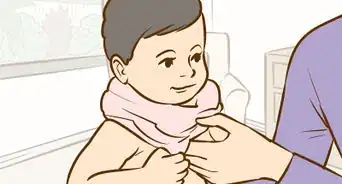
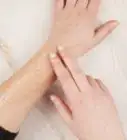
Method 1 of 14:Place a warm compress on the scab.

Method 2
Method 2 of 14:Soak the scab in a salt bath.
-
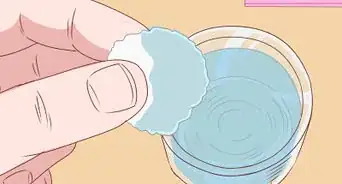
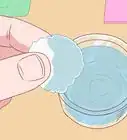
1Epsom salts are great for healing and reducing tenderness around the scab. Fill a bucket or the bath with warm water and ¼ cup Epsom salts. Then, soak the injured area with the scab in the salt bath for an hour. Pat the area dry.[1]
- Soak the scab once to twice a day until it starts to heal.

Method 3
Method 3 of 14:Put a non-stick dressing on the scab.

Method 4
Method 4 of 14:Put Vaseline on the scab.
-
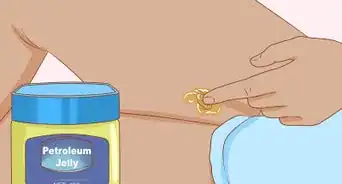
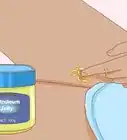
1Vaseline is a good way to keep the scab moist and keep any bacteria out. The moisture will help the scab to soften and allow new skin to grow over the scab, healing the wound and the scab.
- Dab a small amount of Vaseline on the scab throughout the day to keep it moist. Over a few days, it should soften and fade away or peel off on its own.

Method 5
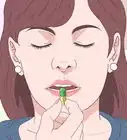
Method 5 of 14:Try applying honey to the scab.

Method 6
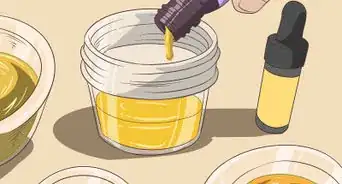
Method 6 of 14:Apply tea tree oil to the scab.
-
1Tea tree oil is a great natural oil for treating scabs. It can speed up the healing process and prevent the scab from leaving a scar. Apply tea tree oil to the scab once to twice a day.[2]
- You can find tea tree oil at your local health food store or online.

Method 7
Method 7 of 14:Use garlic on the scab.
-
1Garlic is antibacterial and antiseptic, so it’s a good natural way to heal a scab. Blend or mix two to three cloves of garlic with one cup of wine. Then, let the mixture sit for two to three hours. Apply the mixture to the scab with a cotton ball.[3]
- Rinse the garlic wine mixture off after 10-15 minutes with warm water. If the garlic causes your skin to itch, remove it right away.
Advertisement

Method 8
Method 8 of 14:Put onion on the scab.
-
1Onion contains antibacterial properties. It is good at healing wounds and scabs as well as preventing infection. Chop up the onion and make a paste with honey. Then, apply the paste to the scab and let it sit for 10-15 minutes. Rinse the paste off with warm water.[4]
- You can apply the onion honey paste up to four times a day.

Method 9
Method 9 of 14:Apply a baking soda paste to the scab.
-
1Baking soda is a mild antiseptic and good for removing scabs. Mix 10 grams (0.35 oz) of baking soda with 100 milliliters (3.4 fl oz) water to make a paste. Then, apply the paste over the scab. Let it sit for 10-15 minutes and then wash it off with warm water.[5]
- You can apply the baking soda paste two to three times a week.
Advertisement

Method 10
Method 10 of 14:Put aloe vera on the scab.
-
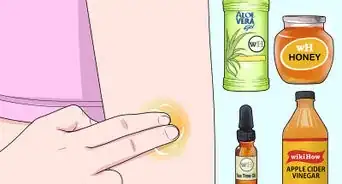
1Aloe vera is a great natural substance that can help speed up healing. Put aloe vera on the scab and let it sit for five minutes. Then, rinse it off with warm water. Do this three to four times a day.[6]
- You can find aloe vera in gel form online or at your local health store.
- If you have access to an aloe vera plant, you can squeeze the juice from the plant onto the scab.

Method 11
Method 11 of 14:Allow the scab to dry.

Method 12
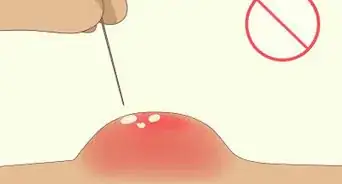
Method 12 of 14:Try not to pick off the scab.

Method 13
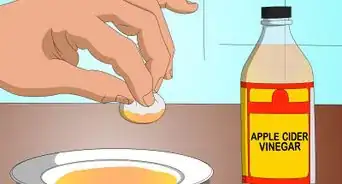
Method 13 of 14:Avoid applying antiseptics to the scab for cleaning.

Method 14
Method 14 of 14:See a doctor if the scab appears infected.
-
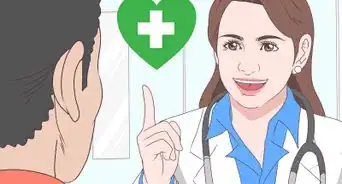
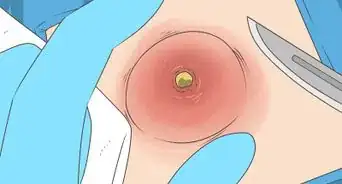
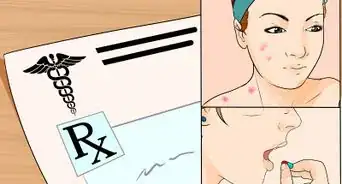
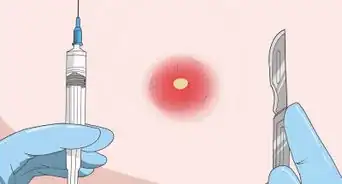
1If the scab starts to swell, feels hot, or leaks pus or fluid, it may be infected. Go see a doctor right away so they can diagnose the issue and prescribe the right treatment. A scab that is infected and untreated can take a long time to heal or lead to other health issues.
- This is especially true in patients that have leg scars, as well as people that are diabetic or immunocompromised. Small scabs can lead to ulceration.

Expert Q&A
-
QuestionHow can you help a pimple scab heal faster?
 Mohiba Tareen, MDMohiba Tareen is a board certified Dermatologist and the founder of Tareen Dermatology located in Roseville, Maplewood and Faribault, Minnesota. Dr. Tareen completed medical school at the University of Michigan in Ann Arbor, where she was inducted into the prestigious Alpha Omega Alpha honor society. While a dermatology resident at Columbia University in New York City, she won the Conrad Stritzler award of the New York Dermatologic Society and was published in The New England Journal of Medicine. Dr. Tareen then completed a procedural fellowship which focused on dermatologic surgery, laser, and cosmetic dermatology.
FAAD Board Certified DermatologistIf your skin is inflamed, you do not want to exfoliate it. That will cause more breaks in the skin, leading to more bacteria and inflammation. Benzoyl peroxide spot treatment can be helpful. Oral antibiotics or Accutane can help if it’s really bad. -
QuestionHow can I make a scab heal faster?
 Luba Lee, FNP-BC, MSLuba Lee, FNP-BC is a board certified Family Nurse Practitioner (FNP) and educator in Tennessee with over a decade of clinical experience. Luba has certifications in Pediatric Advanced Life Support (PALS), Emergency Medicine, Advanced Cardiac Life Support (ACLS), Team Building, and Critical Care Nursing. She received her Master of Science in Nursing (MSN) from the University of Tennessee in 2006.
Master's Degree, Nursing, University of Tennessee KnoxvilleKeep the scab clean, apply petroleum jelly, and cover it up during the day. Change the dressing at least twice a day. It also helps if you eat nutritious, low glycemic index foods, stay hydrated, make smoothies with collagen, and maintain moderate physical activity to speed up the healing.


References
- ↑ http://www.newhealthadvisor.com/How-to-Heal-Scabs-Fast.html
- ↑ http://www.newhealthadvisor.com/How-to-Heal-Scabs-Fast.html
- ↑ http://www.newhealthadvisor.com/How-to-Heal-Scabs-Fast.html
- ↑ http://www.newhealthadvisor.com/How-to-Heal-Scabs-Fast.html
- ↑ http://www.newhealthadvisor.com/How-to-Heal-Scabs-Fast.html
- ↑ http://www.newhealthadvisor.com/How-to-Heal-Scabs-Fast.html
- ↑ https://www.aafp.org/afp/2004/0601/p2647.html
- ↑ https://www.ucihealth.org/blog/2018/10/wound-care
- ↑ https://www.webmd.com/first-aid/ss/slideshow-wound-care-dos-and-donts
About This Article
To heal a scab, try your best to avoid picking it, since picking will only slow down the healing process and increase your chances of getting an infection. Instead, leave it exposed so it can dry out, which will help it heal faster. If you want your scab to heal even quicker, try applying a warm compress, like a wet cloth or towel, to it a few times a day. Alternatively, soak in an Epsom salt bath, which helps to reduce tenderness around the scab. You can also apply Vaseline to the scab to keep it moist and stop bacteria getting inside. If you don’t have Vaseline, try applying a small amount of honey to your scab, which has antibacterial properties and can help speed up the healing process. For more tips from our Medical co-author, including how to help a scab heal with aloe vera, read on!




























Medical Disclaimer
The content of this article is not intended to be a substitute for professional medical advice, examination, diagnosis, or treatment. You should always contact your doctor or other qualified healthcare professional before starting, changing, or stopping any kind of health treatment.
Read More...