X
wikiHow is a “wiki,” similar to Wikipedia, which means that many of our articles are co-written by multiple authors. To create this article, volunteer authors worked to edit and improve it over time.
There are 11 references cited in this article, which can be found at the bottom of the page.
Learn more...
With how easy it is to grow and the amount of home remedies it’s used in, it’s no surprise chamomile is as popular as it is! Whether you’re hoping to begin your own chamomile farm or just want to do something with the flowers growing in your yard, we’ve harvested the answers to your most common questions about harvesting this versatile plant.
Steps
Question 1
Question 1 of 7:How do I identify a chamomile plant?
Question 1
-
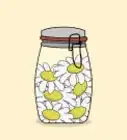
1Check its stems or look for flowers resembling daisies. In chamomile plants, the stems will either look similar to ferns or have an overall “feathery” appearance. During spring and summer, when the chamomile plant typically blooms, its flowers will have white petals and a yellow center shaped like a cone. These can easily be mistaken for daisies at a glance.[1]
- You’ll probably harvest either Roman chamomile or German chamomile. German chamomile more closely resembles a fern, with thinner leaves and one flower per stem; Roman chamomile, the more “feathery” of the two, has thicker leaves and multiple flowers per stem. The flowers themselves, though, are virtually identical.[2]
- Watch out for so-called stinking chamomile! They may share a name and appearance, but stinking chamomile (also known as mayweed chamomile or dog fennel) is a separate, foul-smelling plant. Crushed Roman or German chamomile will have a pleasant smell; if the plant’s leaves or flowers smell awful when crushed, you’re dealing with stinking chamomile.[3]

Question 2
Question 2 of 7:What part of the chamomile plant do I harvest?
Question 2
-
1You’ll almost always be using the flowers, so pick those. Chamomile flowers contain most of the oil in the plant, and have a sweeter flavor than the stem or roots. Therefore, you can usually pick the flowers, and leave the rest of the plant alone.[4]
- If you want to grow more chamomile later, you can also harvest seeds from flowers with downwards-facing petals.[5]

Question 3
Question 3 of 7:When is chamomile ready to harvest?
Question 3
-
1You should harvest chamomile once the flower petals are horizontal. Chamomile is at its best when the flowers have opened up, and the petals are horizontal or tilted slightly downwards. That’s when the chamomile oil within the flower is at its most intense.[6]

Question 4
Question 4 of 7:What’s the best time of day to pick chamomile?
Question 4
-
1It’s best to gather chamomile during the morning, when it’s sunny out. If you harvest chamomile before the sun is up, the flowers will have dew on them and may not dry very well. Past noon, however, and it’s likely the heat will have dried up some of the chamomile oil. By gathering the flowers in the morning, you’ll avoid both these problems.[9]
- If it’s been raining, wait a few days so the flowers can dry out. Otherwise, they can grow mold.[10]

Question 5
Question 5 of 7:How do I harvest the flowers?
Question 5
-
1Pull the flowers off using your fingers. Take the stem between your fingers and pinch directly under the flowerhead. Then, gently pull upwards to detach the flower from the stem and pull the flower loose. Leave the stem attached to the plant so that it can continue to flower.[11]
- If the stem comes off with the flower, tug gently on the stem to remove it.
- You can also use scissors or pruning shears to clip the flower off of the plant. Put the blades directly under the flowerhead, and snip the flower off.[12]

Question 6
Question 6 of 7:Do I need to clean the flowers afterwards?
Question 6
-
1Yes, since the flowers may have brought in things from outdoors. Bugs or dirt can sometimes hide in the petals, so once you’ve taken your chamomile inside, you’ll want to lightly shake the flowers to dislodge them.[13]
- If there’s something stuck to a flower, try transferring the flowers to a strainer and running cold water over them. Afterwards, move them to a towel and pat them softly to dry them.[14]

Question 7
Question 7 of 7:What can I do with the flowers I’ve harvested?
Question 7
-
1Try using fresh flowers in meals. If you’ve harvested a large batch of flowers, it might seem like a waste to dry out all of them. Fortunately, these flowers are edible, so you can use them straight away if you want! They can be eaten on their own, or added to other dishes like salads for a summery look and taste.[15] [16]
-
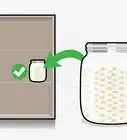
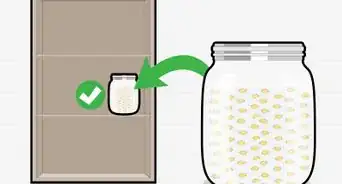
2Dry some flowers for later use. You’ll probably want to dry your chamomile if you want to make traditional recipes or home remedies. Put the flowers on a flat surface, like a baking tray or plate, and make sure the flowers don’t overlap. Then, place the tray in a warm area out of direct sunlight. The flowers should be fully dried within a week or two - they’ll dry faster in dry climates than humid ones.[18]


Warnings
- Be cautious when handling chamomile if you have allergies to related plants, such as ragwood, daisies, or marigold.[22]Thanks!

References
- ↑ https://www.ediblewildfood.com/chamomile.aspx
- ↑ https://gardenerspath.com/plants/flowers/english-german-chamomile/
- ↑ http://ipm.ucanr.edu/PMG/WEEDS/mayweed_chamomile.html
- ↑ https://www.kitchencounterchronicle.com/how-to-harvest-chamomile/
- ↑ https://www.gettystewart.com/how-and-when-to-harvest-chamomile/
- ↑ https://www.kitchencounterchronicle.com/how-to-harvest-chamomile/
- ↑ https://www.gettystewart.com/how-and-when-to-harvest-chamomile/
- ↑ https://www.gettystewart.com/how-and-when-to-harvest-chamomile/
- ↑ https://gardentherapy.ca/herbal-guide-to-chamomile/
- ↑ https://www.kitchencounterchronicle.com/how-to-harvest-chamomile/
- ↑ https://www.kitchencounterchronicle.com/how-to-harvest-chamomile/
- ↑ https://growagoodlife.com/growing-chamomile-for-tea/
- ↑ https://www.gettystewart.com/how-and-when-to-harvest-chamomile/
- ↑ https://gardentherapy.ca/herbal-guide-to-chamomile/
- ↑ https://www.gettystewart.com/how-and-when-to-harvest-chamomile/
- ↑ https://www.hobbyfarms.com/how-to-harvest-chamomile-3/
- ↑ https://gardenerspath.com/plants/flowers/grow-chamomile/
- ↑ https://growagoodlife.com/growing-chamomile-for-tea/
- ↑ https://gardentherapy.ca/herbal-guide-to-chamomile/
- ↑ https://gardentherapy.ca/herbal-guide-to-chamomile/
- ↑ https://www.villagevoice.com/2015/04/16/how-to-use-fresh-chamomile-leaves-seasonal-in-spring/
- ↑ https://www.nccih.nih.gov/health/chamomile