This article was co-authored by wikiHow Staff. Our trained team of editors and researchers validate articles for accuracy and comprehensiveness. wikiHow's Content Management Team carefully monitors the work from our editorial staff to ensure that each article is backed by trusted research and meets our high quality standards.
There are 16 references cited in this article, which can be found at the bottom of the page.
wikiHow marks an article as reader-approved once it receives enough positive feedback. In this case, several readers have written to tell us that this article was helpful to them, earning it our reader-approved status.
This article has been viewed 50,323 times.
Learn more...
One reason carrots are such a great choice for a home garden is their flexibility. You can keep planting these easygoing roots every few weeks for most of spring, summer, and autumn, so you always have some ready to harvest in your garden. Your carrots' flavor will change depending on the weather and how long you've let them grow.[1] You could harvest one carrot every couple days to see how the taste changes, but there are easier ways to tell when your carrot is most likely ready to eat.
Steps
Question 1
Question 1 of 8:How long does it take from the time carrots are planted until they are harvested?
-
1Most carrots take 3 to 4 months to grow. Check your seed packets for a more accurate estimate—depending on the variety and your climate, this can take as few as 55 days, or more than 100. Don't worry too much if you threw out the seed packet, though. Carrots have a wide harvesting window, so this isn't an exact science.[2]
- Carrot seeds sprout faster in warmer weather, so spring-planted carrots can take a bit longer to get going than summer crops.[3]

Question 2
Question 2 of 8:How do you know when carrots are ready to pick?
-
1Most carrots are ready to harvest when they're as wide as your thumb. For small, sweet carrots, harvest when the top of the carrot is about 1⁄2 inch (1.3 cm) across.[4] For larger, less sweet carrots, wait until the top is 1 to 1.5 inches (2.5 to 3.8 cm) across.[5]
- At this stage, the carrots often poke through the top of the soil. If not, just brush away the dirt until you can see the top of the carrot.[6]
- There are also tiny mini-carrots and giant Imperator varieties. These aren't as common in home gardens, but you can always look up your variety name online to be sure.[7]
-
2You can wait until the first frost or two for autumn carrots. Carrots get sweeter after a freeze (and can survive a light frost just fine).[8] If a frost is coming up, go ahead and wait before harvesting, even if they're at their peak width of 1 to 1.5 inches (2.5 to 3.8 cm). Just don't wait more than 2 to 3 weeks past this point, or the carrots could get fibrous.[9]
- If you want to keep growing carrots after the heavy frosts begin, put a thick layer of shredded leaves over the carrot tops. About 18 inches (46 cm) should stop the ground from freezing.[10]


Question 3
Question 3 of 8:How tall should carrots be before harvesting?
-
1The leaf height doesn't matter—go by root size instead. A mature carrot top can be anywhere from 4 to 18 inches (10 to 46 cm) tall, and even slightly different strains with the same variety name can be different sizes.[11] It's better to go by the width of the carrot root at soil level. Harvest when they're 1⁄2 inch (1.3 cm) across to get small, sweet carrots.[12] Harvest at 1 to 1.5 inches (2.5 to 3.8 cm) across for large carrots.[13]

Question 4
Question 4 of 8:What month do you harvest carrots?
-
1You can harvest carrots from midsummer to midwinter, if you plant in stages. The earliest, spring-planted crop will be ready around midsummer (June in the Northern Hemisphere). The last, autumn-planted crop will be ready to harvest around midwinter (December).[14]
-
2Check a local farmer's almanac for the best harvest month. If you want more exact dates, look up a guide for your area that tells you the typical week-by-week temperatures. You can plant spring carrots as soon as the last frost has passed and temperatures reach 45 °F (7 °C).[15] Plant autumn carrots before temperatures drop below this level, and protect them from the cold if the almanac predicts frozen ground.[16]


Question 5
Question 5 of 8:What is the best way to harvest carrots?
-
1
-
2Stick a garden fork into the soil next to the carrot. When you're ready to harvest, push your garden fork down into the soil to help loosen it and to break apart side roots.[19]
-
3Push the carrot to the side, then pull up. With the garden fork still in the soil, use your free hand to reach down and push the carrot root from side to side. Once it's not stuck to the soil anymore, pull the carrot gently up out of the ground, holding onto the root or the base of the greens.[20] Twist gently if the carrot is still stuck.[21]


Question 6
Question 6 of 8:How do you store carrots after harvesting?
-
1Brush off the dirt, then air dry them. There's no need to wash the carrots until you're ready to eat them. If you've harvested more carrots than you can eat in the next few days, just brush off the dirt by hand, then let them air dry for a few hours in the sun.[22]
- You can cut the greens off the carrots at this point.
-
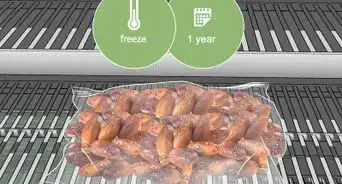
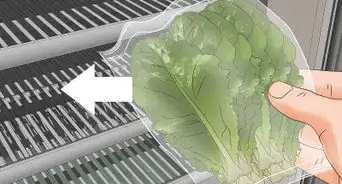
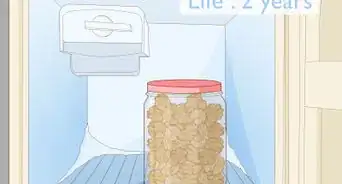
2Store your carrots in a plastic bag in a humid fridge compartment. For best results, add some holes to the bag and put a slightly damp paper towel at the bottom of the drawer (not inside the bag). Kept this way, carrots can last at least 2 or 3 months.[23] In ideal conditions, carrots can keep for 5 months or even longer.[24]
- The warmer your fridge is, the more likely it is that your carrots will sprout. If you can, adjust your fridge to a low temperature setting, as close to freezing as it can get.[25]


Question 7
Question 7 of 8:Can you leave carrots in the ground too long?
-
1Yes, but only during the growing season. Harvest summer carrots no more than 2 or 3 weeks after the top of the root reaches a width of 1 to 1.5 inches (2.5 to 3.8 cm) for some varieties), or they'll end up fibrous.[26] You can leave autumn carrots in the ground into early winter, harvesting them as needed.[27]
- If you have fairly mild winters, you can even keep the carrots in the ground the whole winter season.[28] Put 18 inches (46 cm) of straw or shredded leaves over the carrots to keep the ground thawed and make digging them up easier.[29]
- Too much water can make your carrots crack. If there's a big rainstorm coming up, it's probably better to bring your mature carrots inside.[30]

Question 8
Question 8 of 8:Do carrots regrow after harvest?
-
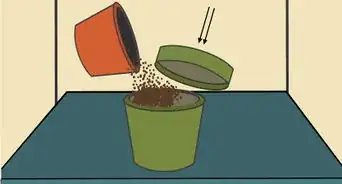
1No, but unharvested carrots will seed next year. Once a carrot is dug up, that plant is gone. If you leave some carrots in your garden, the greens will flower and drop seeds next year.[31]
- If you want to grow carrots without buying new seeds each year, choose an open-pollinated variety (not a hybrid). Keep it away from Queen's Anne lace and other carrot varieties to prevent cross-pollination.[32]

Community Q&A
-
QuestionWhat if my carrots aren't orange when I pull them up. Will they ripen?
 NinoxTop AnswererNo, the color won't change. There are many colors of carrots; some can be yellow or purple.
 -
QuestionHow long can I keep carrots in a cool place like a refrigerator before using ?NinoxTop AnswererYou can keep the carrots 8 days in the refrigerator before using. You can extend the life if you pack the carrots in a bag, a towel or with newspaper.


References
- ↑ https://orgprints.org/id/eprint/25315/1/Quality%20of%20carrots%20as%20affected%20by%20pre-%20and%20postharvest%20factors%20and%20processing.pdf
- ↑ https://www.canr.msu.edu/resources/how_to_grow_carrots
- ↑ https://www.tenthacrefarm.com/growing-carrots-year-round/
- ↑ https://www.almanac.com/plant/carrots
- ↑ https://www.canr.msu.edu/resources/how_to_grow_carrots
- ↑ https://gardenerspath.com/how-to/containers/grow-carrots-containers/#Harvesting
- ↑ https://www.grow-it-organically.com/carrot-varieties.html
- ↑ https://www.almanac.com/plant/carrots
- ↑ https://www.grow-it-organically.com/harvesting-carrots.html
- ↑ https://www.almanac.com/plant/carrots
- ↑ https://seedalliance.org/publications/results-california-carrot-organic-variety-trials-2014-2017/
- ↑ https://www.almanac.com/plant/carrots
- ↑ https://www.canr.msu.edu/resources/how_to_grow_carrots
- ↑ https://www.tenthacrefarm.com/growing-carrots-year-round/
- ↑ https://www.canr.msu.edu/resources/how_to_grow_carrots
- ↑ https://www.tenthacrefarm.com/growing-carrots-year-round/
- ↑ https://extension.umn.edu/vegetables/growing-carrots-and-parsnips-home-gardens#harvest-and-storage-191815
- ↑ https://harvesttotable.com/carrot_and_parsnip_growing_pro/
- ↑ https://extension.umn.edu/vegetables/growing-carrots-and-parsnips-home-gardens#harvest-and-storage-191815
- ↑ https://extension.umn.edu/vegetables/growing-carrots-and-parsnips-home-gardens#harvest-and-storage-191815
- ↑ https://harvesttotable.com/carrot_and_parsnip_growing_pro/
- ↑ https://www.vegetablegardenguru.com/storing-carrots.html
- ↑ https://www.vegetablegardenguru.com/storing-carrots.html
- ↑ https://escholarship.org/content/qt5pf563b3/qt5pf563b3.pdf
- ↑ https://extension.umn.edu/vegetables/growing-carrots-and-parsnips-home-gardens#harvest-and-storage-191815
- ↑ https://www.grow-it-organically.com/harvesting-carrots.html
- ↑ https://www.gardeningchannel.com/how-long-leave-carrots-in-ground/
- ↑ https://www.rhs.org.uk/advice/profile?pid=666
- ↑ https://www.almanac.com/plant/carrots
- ↑ https://www.gardeningchannel.com/how-long-leave-carrots-in-ground/
- ↑ https://www.almanac.com/plant/carrots
- ↑ https://gardenerspath.com/plants/vegetables/save-carrot-seeds/
- ↑ https://gardenerspath.com/how-to/containers/grow-carrots-containers/
- ↑ https://harvesttotable.com/carrot_and_parsnip_growing_pro/
- ↑ https://www.almanac.com/plant/carrots
About This Article