This article was co-authored by wikiHow staff writer, Kira Jan. Kira Jan earned her B.A. in English from Stanford University in 2021. She has published work in a variety of literary magazines and edited for bestselling authors. Kira now writes and edits for the content team at wikiHow with the goal of reaching audiences of all backgrounds, skillsets, and interests. She enjoys continually learning alongside wikiHow readers and working to create connection through the written word.
There are 10 references cited in this article, which can be found at the bottom of the page.
Learn more...
When fall rolls around, it’s time to start harvesting your brussels sprouts. These plants are pretty straightforward to harvest, and it won’t be long before you can cook up these delicious cruciferous veggies rich in vitamin K, vitamin C, and fiber.[1] While the harvesting process is as easy as twisting and snapping the buds off, we’ll walk you through the best ways to make sure you can keep harvesting through the end of the growing season to maximize your plant’s yield.
Steps
Method 1
Method 1 of 9:Start your harvest 90-110 days after sowing.
-
1Pick the sprouts in fall, after a few frosts.[2] Frost triggers the plants to develop sugar in order to lower the plant’s freezing point, and that extra sugar will improve the taste of your brussels sprouts. You don’t have to wait until all the sprouts on a plant are ready to begin harvesting. Instead, start by picking the ones that are ready and wait for the others to mature.[3]Advertisement

Method 2
Method 2 of 9:Look for large, firm, bright green buds.
-
1The color and size of the buds indicates that they’re mature. Only pick buds that are between 1–1.5 inches (2.5–3.8 cm) in diameter.[4] One plant will produce around 100 sprouts in 2-3 months, so keep plucking off buds that are developed in order to make space for new ones.[5]
- Discard any yellow sprouts because they’ll taste bitter.

Method 3
Method 3 of 9:Snap off individual buds that are ready.

Method 4
Method 4 of 9:Remove leaves as you harvest.
-
1Encourage the plant to produce new buds by plucking off leaves. Use your hands or shears to pull off or clip off leaves below the sprouts you harvest. New buds will develop quickly after you’ve picked old ones, and picking off lower leaves will also encourage the plant to grow upright.[8]

Method 5
Method 5 of 9:Cut the top off the plants to encourage upper sprouts to grow.
-
1If the upper buds aren’t developing, try this. Cut 1–2 inches (2.5–5.1 cm) off the top of the stalk with pruning shears. “Topping” the plant by pruning the upper stalk will allow the plant to focus energy on enlarging the upper sprouts.[9]
- The upper buds will be ready to harvest 2 weeks after topping.[10]
Advertisement

Method 6
Method 6 of 9:Harvest the whole stalk at the end of the growing season.
-
1Choose this method once the weather cools and all the buds are mature. Once it’s between 20–30 °F (−7 – −1 °C), the plant will stop producing new buds, and you can pull out the whole stalk. Remove all the plant’s leaves. Then, cut the plant out of the ground at its base (you don’t need to pull the roots out).[11]

Method 7
Method 7 of 9:Keep whole stalks in a cool, moist place.
-
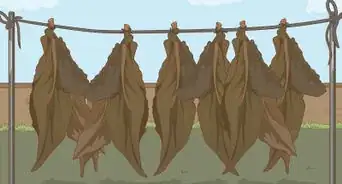
1Use a refrigerator or cool cellar. To harvest the sprouts over time, hang the stalks upright in a cool cellar and twist off the sprouts over the next few weeks.[14] Alternatively, you can wrap a moist paper towel around the stub of the stalk to keep it from drying out and store it in the refrigerator.[15]Advertisement

Method 8
Method 8 of 9:Store the harvested individual sprouts in the fridge.
-
1Keep your brussels sprouts fresh for a few weeks. Wrap the unwashed sprouts in a moist paper towel. Put the wrapped sprouts into a plastic bag with small holes punched in it to prevent moisture/mildew buildup. Place the bags in the portion of your fridge dedicated to keeping vegetables fresh.[16]
- The sprouts will stay fresh for at least 1 week, if not longer.[17]

Method 9
Method 9 of 9:Freeze sprouts for longer storage.
-
1Wash and blanch the sprouts before putting them in freezer bags. Peel off the toughest outer leaves on the sprouts. Wash the plants thoroughly, and toss out any sprouts that have signs of insect damage. Sort the sprouts into small, medium, and large categories for blanching. Once they’re cool, drain them and pack them tightly into plastic bags to put in the freezer.[18]
- Blanch small sprouts for 3 minutes, medium sprouts for 4 minutes, and large sprouts for 5 minutes.
- Your sprouts will keep for up to 16 months in the freezer.[19]
Advertisement


References
- ↑ https://www.bbcgoodfood.com/howto/guide/health-benefits-brussels-sprouts
- ↑ https://harvesttotable.com/harvest-store-brussels-sprouts/
- ↑ https://gardenerspath.com/plants/vegetables/harvest-brussels-sprouts/
- ↑ https://gardenerspath.com/plants/vegetables/harvest-brussels-sprouts/
- ↑ https://harvesttotable.com/harvest-store-brussels-sprouts/
- ↑ https://www.youtube.com/watch?v=A8WKZcReFfw&t=203s&ab_channel=HollisandNancysHomestead
- ↑ https://gardenerspath.com/plants/vegetables/harvest-brussels-sprouts/
- ↑ https://gardenerspath.com/plants/vegetables/harvest-brussels-sprouts/
- ↑ https://extension.umn.edu/vegetables/growing-brussels-sprouts
- ↑ https://harvesttotable.com/harvest-store-brussels-sprouts/
- ↑ https://extension.umn.edu/vegetables/growing-brussels-sprouts
- ↑ https://www.plantedwell.com/brussel-sprout-plants/
- ↑ https://www.gardeningchannel.com/growing-brussels-sprouts/
- ↑ https://extension.umn.edu/vegetables/growing-brussels-sprouts
- ↑ https://harvesttotable.com/harvest-store-brussels-sprouts/
- ↑ https://harvesttotable.com/harvest-store-brussels-sprouts/
- ↑ https://www.epicurious.com/archive/seasonalcooking/fall/brussels-sprouts
- ↑ https://nchfp.uga.edu/how/freeze/brussel_sprouts.html
- ↑ https://thekitchenjournal.com/when-do-brussels-sprouts-go-bad/
About This Article