This article was co-authored by Pippa Elliott, MRCVS. Dr. Elliott, BVMS, MRCVS is a veterinarian with over 30 years of experience in veterinary surgery and companion animal practice. She graduated from the University of Glasgow in 1987 with a degree in veterinary medicine and surgery. She has worked at the same animal clinic in her hometown for over 20 years.
There are 8 references cited in this article, which can be found at the bottom of the page.
wikiHow marks an article as reader-approved once it receives enough positive feedback. In this case, several readers have written to tell us that this article was helpful to them, earning it our reader-approved status.
This article has been viewed 43,740 times.
Hermit crabs are a popular pet, due to their ease of care and the fun that comes with picking colorful shell homes for them to live in. Feeding hermit crabs by hand might seem tricky, but if you follow certain procedures, you will find it is easier than you think!
Steps
Part 1
Part 1 of 2:Feeding Your Hermit Crab by Hand
-
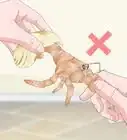
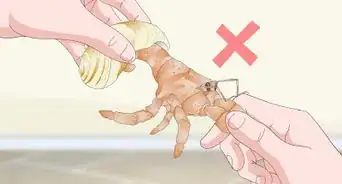
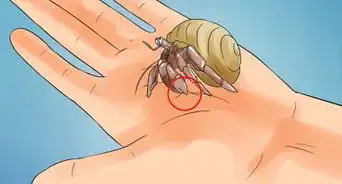
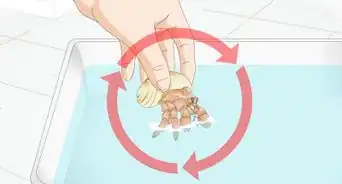
1Pick up your crab gently by his shell. Pick up your crab with your dominant hand and hold him gently but securely. Allow your crab to relax, and gently try to coax him out of his shell a bit. He might stay hidden in his shell if he is scared, so give him some time to adjust.[1]
- Never pick your crab up by his front, or anywhere near his claws, as you might run the risk of getting pinched.[2]
- This process might take time, especially if you’ve never tried it before. If your crab hides in his shell when you hold him, you may need to get him used to being held a bit more before you can hand feed him.
-
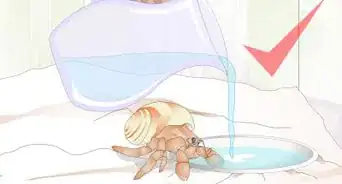
2Use a special feeding spoon. You can purchase one online from a specialty store, or you can make one yourself. Simply use something thin and at least a few inches long, like the stem of a pen cap. Put a tiny piece of food on the end of the stem.[3]
- Don’t use anything with a sharp point on the end. Since you’ll be using this object like a spoon, you won’t want to put anything near the crab’s mouth that could potentially poke or hurt him.
Advertisement -
3Place the food by the crab’s antennae. These are the long, thread-like parts that come out of his head, near his eyes. He uses these parts to sense his surroundings, and also to taste his food. Place the food you want to feed him near his antennae so he can taste it and decide if he likes it and wants it.[4]
- The crab will decide if he wants the food or not, and if he does, he will use his small claw and maxillipeds, or mouth parts, to pick apart the food and push it into his mouth in tiny bites.
-
4Don’t force the crab to eat. If you try to feed your crab and he seems to have no interest in eating, don’t force it. Set him down back in his home and let him be for a while. You can always try again later when he might be more hungry, or even try again with a different food that might be more appealing to him.[5]
- If you get the hang of hand feeding your hermit crab, he might ultimately become easier to handle and more willing to be held, as he will associate being held with getting yummy food and treats.[6]
-
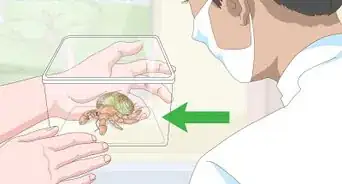
5Avoid holding your crab over hard floors or surfaces. If you have children, especially, avoid letting them hold the crab over tile or wood floors. Dropping a crab from that distance onto a hard surface can ultimately be fatal for the crab, as it could damage or rupture his tiny internal organs.[7]
-
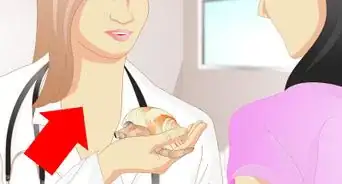
6Wash your hands before and after handling your crab. Even though hermit crabs are not carriers of diseases like many invertebrates, it’s still important to keep your hands clean, both for yourself and the safety of your crab.[8]
- If you have chemicals on your hands, even those from certain lotions or household cleaning products, you might transfer these things to your crab when you handle him. Wash your hands prior to handling him to avoid this.
Advertisement


Part 2
Part 2 of 2:Choosing Food for Your Hermit Crab
-
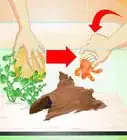
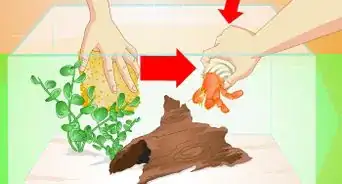
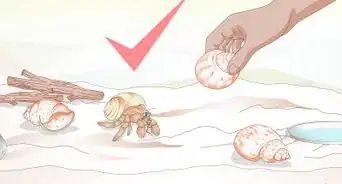
1Make your own hermit crab food. There are plenty of things you probably already have around the house that are safe and enjoyable for your hermit crab to eat. Many fruits and vegetables are great for feeding to your crab.[9]
- Use a food processor or blender to grind up your crab’s food into tiny pieces. This way, he will be better able to eat it when you give it to him.
-
2Avoid foods that are toxic to hermit crabs. Household ingredients like onion and garlic should be avoided, as well as things like catnip, chocolate, dill, eucalyptus, rosemary, and thyme. Before feeding anything to your crab, do a search to make sure it is safe.
-
3Incorporate meat into your hermit crab’s diet. Hermit crabs are omnivores, so it’s important to balance their intake of vegetation and meat. All kinds of crustaceans, including lobster, shrimp, and other crabs, are great sources of meat.
-
4Buy a pre-packaged hermit crab food. At the local pet store, or at the place you bought your crab, there is likely to be a selection of crab food that you can buy already made, blended, and packaged. You can always purchase this kind of food to feed your crab with.
- Be mindful of preservatives in this kind of food. Preservatives are not good for crabs, so if you can, try to choose a food that doesn’t have any. Check the ingredients label for things like Ethoxyquin, copper sulfate, or BHT (butylhydroxytoluene). These can be toxic to your crab.[10]
- These commercially made foods can also become boring and bland for your crab to eat day after day. If you do choose to purchase and use this kind of food, try mixing in other things once in awhile to keep your crab interested.
-
5Offer a variety of foods and treats. You can buy many different kinds of pre-made treats at your local pet supply or grocery store, including freeze-dried plankton and shrimp, fish food flakes, and even seaweed. Giving your crab treats will help keep his diet varied.[11]
- A varied diet is important for hermit crabs. You don’t really need to worry about them overeating or being overfed, due to the way their metabolisms function. They’re more likely to eat too little, especially if their food choices aren’t enticing or interesting. Changing up their food each day will help keep your crab interested in eating.[12]
-
6Learn what your crab likes. Just like any other pet, your crab will like certain foods while disliking others. The way to learn what he does and does not like is by trial and error. See what foods he responds to the best, and which foods he turns away from.[13]
- Even though they do have specific tastes, hermit crabs are not very picky eaters. You will be more likely to see your crab turn away from food if he is bored by it rather than because he doesn’t like it at all.
Advertisement


Warnings
- Don’t allow your crab to roam too far. Keep a watchful eye on him and make sure he doesn’t fall off table edges or go under furniture.Thanks!
- Be mindful of your crab’s claws whenever you handle him to avoid being pinched.Thanks!
References
- ↑ http://www.hermit-crabs.com/food.html
- ↑ http://www.hermitcrabpatch.com/Hermit-Crab-Safe-Handling-a/151.htm
- ↑ http://www.hermitcrabpatch.com/Hermit-Crab-Safe-Handling-a/151.htm
- ↑ http://pethermitcrabs.org/anatomy/
- ↑ http://www.hermit-crabs.com/food.html
- ↑ http://www.hermitcrabpatch.com/Hermit-Crab-Safe-Handling-a/151.htm
- ↑ http://www.hermit-crabs.com/care.html
- ↑ http://www.hermitcrabpatch.com/Hermit-Crab-Safe-Handling-a/151.htm
- ↑ http://hermitcrabassociation.com/phpBB/viewtopic.php?f=25&t=92557
About This Article

To hand feed a hermit crab, start by gently picking it up by its shell and holding it in your hand. Then, place a piece of food on the end of a thin object with a rounded end, like the stem of a pen cap, and place it by your hermit crab's antennae so it can taste the food. Next, wait for your hermit crab to grab the food and eat it. If your hermit crab doesn't seem interested, don't force it to eat, and just put it back in its cage and try again later. Keep in mind that it might take a few tries before your hermit crab is willing to eat out of your hand, so try to be patient. For more tips from our Veterinary co-author, like how to choose food for your hermit crab, read on!