This article was co-authored by Jenny Tran and by wikiHow staff writer, Hannah Madden. Jenny Tran is a Hair Stylist and the Founder of JT Hair Lab by Jenny Tran based in the Dallas, Texas metro area. With over seven years of professional hair styling experience, Jenny specializes in hair coloring, haircutting, and hair extensions. JT Hair Lab is an authorized carrier of R+Co and of Milbon and is committed to using products with quality ingredients.
There are 10 references cited in this article, which can be found at the bottom of the page.
This article has been viewed 13,152 times.
If you’ve been taking care of your hair for a while now, you probably know a lot about hair care. However, just because you’ve heard something 1,000 times doesn’t mean it’s true! There are some common myths out there that might actually be doing you more harm than good. We’ve addressed some of these misconceptions about hair care so you can keep your locks looking and feeling great.
Steps
Method 1
Method 1 of 9:Myth: You should brush your hair 100 times per day.
-
1Fact: Brushing too much can actually damage your hair. Instead of counting your brush strokes every day, you should only brush your hair when you’re styling it. Use a wide-tooth comb and stroke your hair gently to avoid any damage or breakage.[1]
- If you have a lot of tangles, try using a spray conditioner on your ends to avoid tugging or pulling on your hair too much.

Method 2
Method 2 of 9:Myth: You should wash your hair as little as possible.
-
1Fact: If you have oily hair, you may need to wash your hair once a day. While washing your hair too much can leave it feeling dry, greasy hair can cause scalp problems, like dandruff and fungal infections. If you’ve tried skipping wash day and your hair isn’t loving it, it’s okay to wash your hair every day.[2]
- As you get older, your scalp might stop producing as much oil. You may be able to cut down on how often you wash your hair per week.

Method 3
Method 3 of 9:Myth: Trimming your hair makes it grow faster.
-
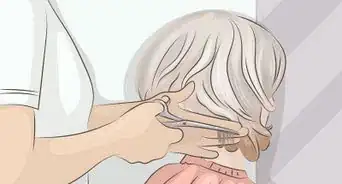
1Fact: Trims get rid of split ends, but they don’t make your hair grow. Getting a regular trim can make your hair look and feel healthier, so they’re definitely a good idea! But cutting off the ends won’t give you long locks any faster than normal.[3]

Method 4
Method 4 of 9:Myth: Dandruff means your scalp is dry.
-
1Fact: Dandruff has many causes, including dry skin, oily skin, and fungus. The exact cause of your dandruff could be any number of things (or a combination of a few). However, just because you have dandruff doesn’t mean your scalp is dry. If you are dealing with dandruff, try using a shampoo specifically formulated to fight it.[6]
- Psoriasis and eczema can also cause dandruff.
- Dandruff can also be caused by not shampooing enough. If oil and bacteria builds up on your scalp, it can irritate your skin, causing it to flake off.

Method 5
Method 5 of 9:Myth: You shouldn’t use conditioner on fine hair.
-
1Fact: Everyone should use conditioner after washing their hair. While fine hair can be weighed down more easily by greasy products, the best way to prevent this is to focus the conditioner on the ends of your hair. Skipping out on this essential step can cause dryness, frizziness, and breakage over time.[7]
- If you have fine hair, make sure you rinse all of the conditioner out before getting out of the shower. That way, you won’t have to deal with any greasiness or oiliness once your hair is dry.

Method 6
Method 6 of 9:Myth: Split ends can be repaired.
-
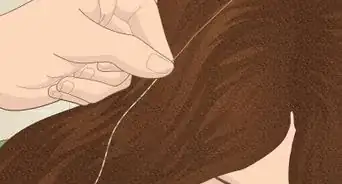
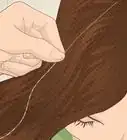
1Fact: Split ends can be prevented, but not repaired. While there are tons of products on the market that claim they can repair split ends, the best thing you can do is get a trim. Once your damaged ends are gone, you can focus on giving the rest of your hair the hydration and moisture that it needs.[8] [9]
- Smoothing products, like oils, can help minimize the appearance of split ends, but they can’t heal them completely.

Method 7
Method 7 of 9:Myth: Washing in cold water makes your hair shinier.
-
1Fact: Warm water might actually be better for your hair. Cold water rinses were thought to close hair cuticles and make your locks look shinier, but that just isn’t the case. Researchers at TRI Princeton discovered that warm water might actually be the perfect temperature for shiny, glossy looking hair. Cold showers aren’t inherently bad for you, but the good news is that there’s no need to suffer through a shivering cold rinse![10]

Method 8
Method 8 of 9:Myth: Your hair can develop a tolerance for shampoo.
-
1Fact: Your hair can’t tell the difference between brands. You can use the same products for years and still have shiny, clean hair that’s as healthy as when you started. There’s no need to switch up your shampoo and conditioner, even if you’ve used them religiously.[11]
- The same goes for products like gel, hair masks, and deep conditioner. If you’ve been using one for a while and it works, keep using it!

Method 9
Method 9 of 9:Myth: Wigs and weaves prevent hair damage.
-
1Fact: Tight braids under tight wigs can cause hair loss. If you’d like to wear a wig or a weave as a protective style, make sure the wig isn’t too heavy so it pulls less on your hair. Make sure you’re washing your scalp frequently to prevent bacteria and oil buildup, and try to only wear a wig for 2 to 3 months at most.[12]
- Get a weave put in at a professional salon so you know you’re getting the best service possible.

Community Q&A
-
QuestionDoes putting lemon juice in your hair damage it permanently?
 Lara WasfyCommunity AnswerYour hair would not get dried out or damaged if you use fresh lemon juice. Long-term sun exposure, on the other hand, will damage your hair's cuticle, or outer sheath. As a result, you'll want to avoid spending too much time in the sun after adding lemon juice to your scalp.
 -
QuestionIs African hair difficult to style?
 Gymnast5678...Community AnswerIt’s not difficult, it just depends on what you’re used to. To some people it’s difficult to do straight hair, but this is just because of what they’re used to doing.
-Step-14-Version-6.webp)


-Step-14-Version-3.webp)
References
- ↑ https://www.aad.org/public/everyday-care/hair-scalp-care/hair/habits-that-damage-hair
- ↑ https://www.aad.org/public/everyday-care/hair-scalp-care/hair/healthy-hair-tips
- ↑ https://sites.psu.edu/siowfa15/2015/09/30/does-cutting-your-hair-make-it-grow-faster/
- ↑ Jenny Tran. Professional Hair Stylist. Expert Interview. 19 May 2020.
- ↑ https://health.clevelandclinic.org/is-there-any-way-to-make-your-hair-grow-faster/
- ↑ https://www.mayoclinic.org/diseases-conditions/dandruff/symptoms-causes/syc-20353850
- ↑ https://www.aad.org/public/everyday-care/hair-scalp-care/hair/healthy-hair-tips#
- ↑ Jenny Tran. Professional Hair Stylist. Expert Interview. 19 May 2020.
- ↑ https://thebeautybrains.com/2008/09/how-to-stop-split-ends/
About This Article



-Step-14-Version-6.webp)