This article was co-authored by wikiHow staff writer, Hannah Madden. Hannah Madden is a writer, editor, and artist currently living in Portland, Oregon. In 2018, she graduated from Portland State University with a B.S. in Environmental Studies. Hannah enjoys writing articles about conservation, sustainability, and eco-friendly products. When she isn’t writing, you can find Hannah working on hand embroidery projects and listening to music.
This article has been viewed 1,042 times.
Learn more...
If you’re looking for a viney succulent with eye-catching leaves, the string of pearl plant might be the one for you. This plant, also known as the string of beads, is easy to take care of and doesn't require a ton of maintenance. Its long tendrils and prominent leaves add an alluring element to any room in your home. Keep in mind that the string of pearl plant is toxic to dogs and cats, and can cause mild irritation in humans, so you may want to put it up high and out of reach.[1]
Steps
Question 1
Question 1 of 8:Can you grow a string of pearls indoors?
-
1Yes, you can grow a string of pearls indoors. In fact, they usually do better inside during the winter since they aren’t a fan of cold temperatures. Try planting your string of pearls in a pot and moving it outside when the weather is nice, then taking it indoors when it gets chilly.[2]Advertisement

Question 2
Question 2 of 8:What kind of container should I plant my string of pearls in?
-
1Use a shallow clay container for the best drainage. Hanging baskets are super popular containers for string of pearl plants because of the long vines that will eventually grow. The roots of this plant are fairly shallow, so pick a flatter dish that doesn’t hold a ton of soil.[3]
- Clay containers are better than plastic ones because they allow excess water to evaporate out the sides.

Question 3
Question 3 of 8:What kind of soil should I use for a string of pearls?
-
1Use a sandy, cactus-type potting mix. This soil is well-draining, so it will help prevent the roots from becoming waterlogged. You can usually find soil like this at most nurseries and garden supply stores.[4]
- You’ll probably find this soil near the cactuses and succulents.
Advertisement

Question 4
Question 4 of 8:How do I plant my string of pearls?
-
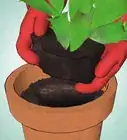
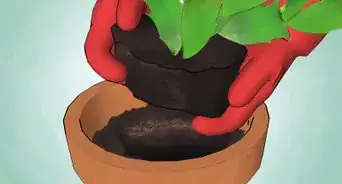
1Fill your container with soil. Make sure the soil is up to the very top of your pot. Since you’re using a shallow container, the more dirt you can pack in, the better![5]
-
2Place the plant in the center of the pot. Gently dig out a 1 to 2 in (2.5 to 5.1 cm) hole and place the roots into the soil. Cover the roots, but make sure the base of the plant sits slightly above the soil. If your plant already has vines, direct them over the side of the container so they can trail downwards.[6]Advertisement

Question 5
Question 5 of 8:How often should I water a string of pearls plant?
-
1Water your plant about once a week. Overwatering can cause root rot, so it’s better to err on the side of too little water. These plants are very drought-tolerant, so even if you forget about it for a couple of weeks, it will probably bounce back just fine.[7]
- A good rule of thumb is to check the soil before watering. If the soil is still wet, don’t add any more water. If the soil is dry, go ahead and give your plant some water.

Question 6
Question 6 of 8:Does a string of pearls plant need direct sunlight?
-
1No, this plant does better in partial shade. This means that your plant needs 3 to 6 hours of sunlight per day (versus the 8 hours that direct sunlight gives). Try setting your string of pearls plant in an east-facing window to give it the light that it needs.[8]Advertisement

Question 7
Question 7 of 8:Why is my string of pearls not growing?
-
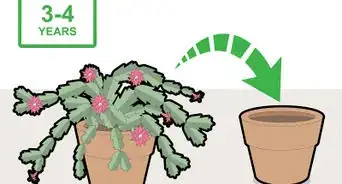
1Your plant might be starting to die off. Unfortunately, the string of pearls plant isn’t very long-lasting, and it usually only lives for a few years. If you notice that your growth has stopped or the vines are beginning to die, it’s probably easier to propagate it and start a new plant instead of reviving your old one.[9]
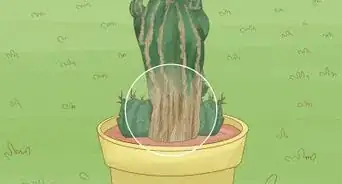
- If your string of pearls is still young and it’s not growing, check your soil and make sure it’s well-draining. Overwatering is the most common problem for string of pearl plants, and root rot will cause your plant to die.
-
2Your plant might be infested with mealybugs or aphids. Most string of pearl plants don’t have any pest problems; however, if yours isn’t growing, check the leaves for small insects. If you see any, spray a mist of neem oil or insecticidal soap onto the leaves of your plant.[10]Advertisement

Question 8
Question 8 of 8:Can you propagate a string of pearls?
-
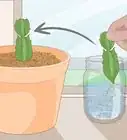
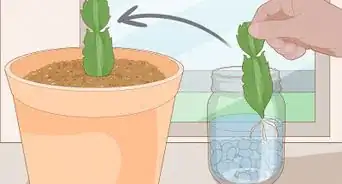
1Yes, just trim off a piece of vine. Pick out an area that looks green and mostly healthy. Take a cutting that’s about 4 in (10 cm) long, then gently press it into a pot with fresh potting soil. Leave it in indirect light for a few months and wait for the roots to grow.[11]
- Mist the cutting a few times a week for the first 2 weeks. After that, water it about once a week, or whenever the soil feels dry.

Warnings
- String of pearl leaves are toxic to animals and slightly irritating to humans. Keep your plant well out of reach of dogs, cats, and small children.[13]Thanks!



References
- ↑ https://hort.extension.wisc.edu/articles/string-of-pearls-senecio-rowleyanus/
- ↑ https://www.missouribotanicalgarden.org/PlantFinder/PlantFinderDetails.aspx?taxonid=277546&isprofile=0&
- ↑ https://hort.extension.wisc.edu/articles/string-of-pearls-senecio-rowleyanus/
- ↑ https://www.missouribotanicalgarden.org/PlantFinder/PlantFinderDetails.aspx?taxonid=277546&isprofile=0&
- ↑ https://www.apartmenttherapy.com/string-of-pearls-plant-care-36755304
- ↑ https://www.apartmenttherapy.com/string-of-pearls-plant-care-36755304
- ↑ https://hort.extension.wisc.edu/articles/string-of-pearls-senecio-rowleyanus/
- ↑ https://www.missouribotanicalgarden.org/PlantFinder/PlantFinderDetails.aspx?taxonid=277546&isprofile=0&
- ↑ https://www.missouribotanicalgarden.org/PlantFinder/PlantFinderDetails.aspx?taxonid=277546&isprofile=0&
- ↑ https://hort.extension.wisc.edu/articles/string-of-pearls-senecio-rowleyanus/
- ↑ https://www.apartmenttherapy.com/string-of-pearls-plant-care-36755304
- ↑ https://hort.extension.wisc.edu/articles/string-of-pearls-senecio-rowleyanus/
- ↑ https://hort.extension.wisc.edu/articles/string-of-pearls-senecio-rowleyanus/
About This Article