This article was co-authored by wikiHow staff writer, Kyle Hall. Kyle Hall works on the content team at wikiHow. He helps manage our team of editors and creates content for a variety of wikiHow projects. Kyle continually looks for new ways to improve the content at wikiHow and make it more helpful and enjoyable for readers. He graduated from Eckerd College in 2015, where he majored in Political Science.
There are 9 references cited in this article, which can be found at the bottom of the page.
Learn more...
Oriental poppies shine bright and fade quickly. Their dazzling blooms of red, orange, pink, or purple may not last long, but they’re a staple in many gardens because of how beautiful and captivating they are. These perennials are also super hardy and easy to grow, even if you're a beginner gardener. As long as you live in hardiness zones 3-9 (they don’t do well in high heat or humidity), oriental poppies can make a beautiful addition to your garden. Check out the tips below to learn how to grow and care for oriental poppies.
Steps
Method 1
Method 1 of 2:Planting Oriental Poppies
-
1Plant oriental poppies in fall or spring. Oriental poppies have a unique life cycle: they put out new leaves during the fall, stop growing over the winter (but stay green), bloom in late spring and early summer, and go dormant through the rest of the summer before starting over again in the fall. Because of this cycle, it’s best to plant them in early fall or spring during their growing season.[1]
- If you get harsh winters, plant your oriental poppies in spring.
- If you have warm, mild winters, plant them in the fall.
-
2Find a bright, sunny spot in your garden. Oriental poppies love full sun (at least 6 hours of sunlight per day). They look extra beautiful mixed in with large groups of flowering plants along borders and walkways, but any sunny spot works.[2]
- Oriental poppies, sadly, die back later in the summer when they go dormant, which can leave bare spots in your garden. Plant them next to flowers that bloom late into the summer and early fall, like baby’s breath and false chamomile, so the bare spots get filled in.[3]
-
3Choose a spot with good drainage. Oriental poppies hate soggy soil and standing water. They're drought tolerant and do best in well-draining soil where their roots can dry out in between waterings.[4]
- Oriental poppies like soil with a neutral pH. If you conduct a soil test and the soil is too acidic, mixing garden lime into it will lower the acidity.[5]
-
4Scatter the seeds over the soil. Till the top 2 inches (5.1 cm) of soil to aerate it, then sprinkle the seeds over it. Poppy seeds are tiny, so don’t worry about being precise. You’ll thin any extra seedlings later once they sprout.[6]
- Don’t bury the seeds—the direct sun will help them germinate.
- If you’re planting a pot-grown poppy, plant the root ball in a hole that’s the same depth and width as the pot the poppy is in.
-
5Keep the soil consistently moist. Check the soil every day to make sure it’s not drying out too much. If it dries out all the way, the tiny seeds won't make it.[7]
-
6Thin the seedlings once they sprout. It should take a couple of weeks for your poppy seedlings to emerge. Once they do, use your fingers to pull out the extra seedlings so there’s 6 inches (15 cm) of space between the remaining ones. That will give them enough room to grow and thrive.[8]
-
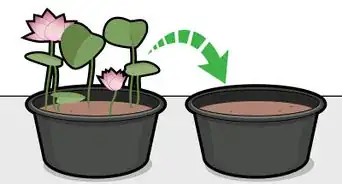
7Try growing oriental poppies in containers if you don’t have flower beds. Container-grown poppies are a great option if you don’t have the space in the ground for them or want to grow them indoors or on a balcony. Here’s how to do it:[9]
- Fill a medium-sized pot with potting soil.
- Sprinkle the seeds on top and lightly tamp them down.
- Water the seeds and keep the soil consistently moist until they germinate.
- Thin the seedlings so they’re 6 inches (15 cm) apart.
- Keep your container poppies in a bright spot that gets at least 6-7 hours of sunlight.


Method 2
Method 2 of 2:Caring for Oriental Poppies
-
1Limit watering once your oriental poppies are healthy and established. Poppies are drought-tolerant, and too much water will cause them to decline. Once they’re established and putting out consistent, healthy growth (about a month or so after planting), you should only need to water them if the weather is particularly hot and dry.[10]
-
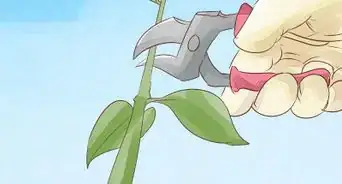
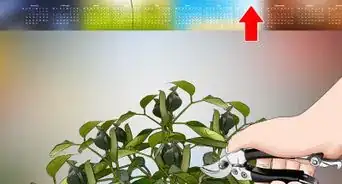
2Cut back stems after the blooms fade during the growing season. Use clean gardening shears to cut the spent stems and heads back down to ground level. Do this whenever the flower on a stem fades and dies. This will help trigger the growth of new foliage and hopefully new blooms too![11]
-
3Don’t panic when your oriental poppies die back later in the summer. This is a totally normal part of their life cycle. Some gardeners mistakenly think this means their poppies are in decline and start overwatering them to compensate, which just ends up damaging the plants. When your poppies start fading in late summer, things are going according to plan.[12]
-
4Collect seeds from spent flower heads to grow more poppies next year. At the end of the growing season, leave the spent flower heads on the plant and let them dry out completely. Then, trim the heads off of the stems and break them open over a big piece of paper to collect the tiny seeds. Place the seeds in a baggy and store them in a cool, dry place until next year.[13]


Warnings
- All parts of oriental poppy plants are mildly toxic if ingested.[16]Thanks!



References
- ↑ https://www.growinganything.com/oriental-poppy/
- ↑ https://plants.ces.ncsu.edu/plants/papaver-orientale/
- ↑ https://planttalk.colostate.edu/topics/annuals-perennials/1037-oriental-poppy-papaver-orientale/
- ↑ https://planttalk.colostate.edu/topics/annuals-perennials/1037-oriental-poppy-papaver-orientale/
- ↑ https://www.growinganything.com/oriental-poppy/
- ↑ https://www.growinganything.com/oriental-poppy/
- ↑ https://gardentherapy.ca/poppy-flowers/
- ↑ https://www.growinganything.com/oriental-poppy/
- ↑ https://balconygardenweb.com/growing-poppies-in-pots-care-how-to-grow-poppies-in-containers/
- ↑ https://www.hortmag.com/weekly-tips/transplanting-oriental-poppies
- ↑ https://www.rhs.org.uk/advice/in-month/june/flowers
- ↑ https://laidbackgardener.blog/2015/07/19/oriental-poppy-dormant-but-not-dead/
- ↑ https://gardentherapy.ca/poppy-flowers/
- ↑ https://www.gardenia.net/plant-variety/papaver-orientale-oriental-poppy
- ↑ https://www.growinganything.com/oriental-poppy/
- ↑ https://plants.ces.ncsu.edu/plants/papaver-orientale/
About This Article