This article was co-authored by wikiHow staff writer, Hunter Rising. Hunter Rising is a wikiHow Staff Writer based in Los Angeles. He has more than three years of experience writing for and working with wikiHow. Hunter holds a BFA in Entertainment Design from the University of Wisconsin - Stout and a Minor in English Writing.
There are 15 references cited in this article, which can be found at the bottom of the page.
This article has been viewed 3,474 times.
Learn more...
If you’re looking for the next superfood to incorporate into your meals, maca can be a nutritious addition to your diet. Maca, also known as Peruvian ginseng, is a nutrient-rich root vegetable that looks like a turnip that’s native to the Andes Mountains in Peru. Many people enjoy maca for its sweet flavor once it’s cooked, but others use it to improve fertility, sex drive, and memory.[1] While it might be difficult to grow maca in other regions, we’ll walk you through the best ways for you to plant and harvest it successfully!
Steps
Part 1
Part 1 of 4:Getting Maca Seeds
-
1Purchase seeds online or from a gardening center. Search for online greenhouses and nurseries for deals on maca seeds since they’ll be easiest for you to find there. If you’d rather support your local gardening center, see if they carry maca seeds in their store. Otherwise, ask an employee if they can make a special order to get some for you.
- There are yellow, red, and black varieties of maca, but they all grow from the same seeds.[2]
-
2Store your seeds at or below 60 °F (16 °C) so they stay viable. Since maca seeds are native to a cool mountain environment, heat can affect how well they grow. Keep your maca seeds in a cool, dry place, such as a cabinet or cellar, until you’re ready to plant them. Avoid places that are damp or humid since your seeds may not germinate and your crops could fail.[3]
-
3Plant the seeds within 2 years for the best germination. As maca seeds age, they start losing viability and won’t grow very well. As you’re searching for maca seeds, check if there’s a harvest or collection date listed to ensure they were packaged within the last 2 years. If your seeds are 3 or 4 years old, then expect only half of them to sprout.[4]
- Maca seeds that are less than 2 years old are about 80% viable.


Part 2
Part 2 of 4:Planting
-
1Wait until there’s no risk of hard freezes to start planting. Even though maca is frost-tolerant, they’ll grow a lot slower when there’s a deep freeze. Check online to find out the last expected freeze date in your area, which is usually in mid-spring, and save your seeds until then.[5]
- Check your last expected freeze and frost dates here: https://www.almanac.com/gardening/frostdates#.
- If you don’t have a risk of freezing temperatures in your area, you can start planting right away in the winter.
-
2Choose a spot that has full sun. Look for a site to plant your maca where it gets at least 8–10 hours of sunlight throughout the day. Avoid areas that are completely shaded, or else your maca roots won’t grow to a decent size before you need to harvest them.[6]
- Maca may be able to tolerate partial shade throughout the day, but ensure that the planting area mostly receives sunlight.
-
3Find a planting area that has well-drained soil with a neutral pH. Since maca naturally grows in harsh conditions, it can tolerate sandy, loamy, or clayey soils.[7] Use a soil test kit to check the pH of your soil and ensure it’s not too acidic or basic. If you need to, amend the soil until it’s neutral. Maca also thrives in soil that’s moist but not waterlogged, so do a drainage test to ensure that it’s not too dry or wet. Treat any drainage issues before you start planting.[8]
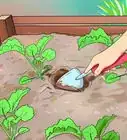
- To test drainage, dig a hole that’s 12 in (30 cm) wide and 12 in (30 cm) deep and fill it with water. Let the water soak into the soil overnight and refill the hole the next day. Measure the depth of your water after an hour. If the water level went down by about 2 in (5.1 cm) then it’s perfect for maca.[9]
-
4Remove weeds and other foliage from your planting area. Pinch the base of the weed and pull it out of the ground. Make sure you remove the entire root systems for the weeds so they don’t grow back later on. If you have larger plants in your growing area, dig them up with a shovel to transplant somewhere else or throw away so they don’t compete with your maca.[10]
- Plants will sap necessary nutrients from the soil and make it hard for you to grow maca.
-
5Mix 2 in (5.1 cm) of compost or manure into the soil. Use a shovel to dig to a depth of 6 inches (15 cm) in your planting area. Mix your compost or manure in with the soil, using a hoe or rake to break up the large clumps. Once you have it thoroughly mixed, rake the soil smooth again so it’s easier to plant your seeds.[11]
- You can buy compost and manure from your local garden supply store.
- If the soil sticks to your garden tools while you’re working, then it’s still a little too early to plant your maca. Wait until the soil dries out more before you start planting.
-
6Rake your seeds into the soil to a depth of 1⁄4 in (0.64 cm). Take a handful of your maca seeds and evenly scatter them throughout your planting area.[12] Gently work the soil with your rake to bury the seeds so they aren’t exposed to the surface. Press the soil down so it makes good contact with seeds.[13]
- It doesn’t matter how many seeds you plant or how they’re spaced right away since you’ll thin them out later on.
-
7Water the soil thoroughly. Wet your soil using a watering can or a hose with a shower attachment so you don’t accidentally wash out the seeds. Only use enough until the topsoil feels moist without forming any pools of water.[14]


Part 3
Part 3 of 4:Caring for Maca
-
1Water the soil so it stays moist. Check the soil every few days to see if it feels dry to the touch. If it does, use your hose or watering can to thoroughly water the soil. Make sure you don’t form any pools of water on the soil’s surface, or else your maca won’t germinate or survive.[15]
- Use a sprinkler on a timer if you don’t want to manually water your maca.
-
2Thin your maca after they germinate in 2–3 weeks. Look for maca that has the largest and strongest sprouts to keep on your growing area. For any other maca that germinated, pinch the base of the sprouts and gently pull them out of the soil with the entire root structure. Clear about 4–6 inches (10–15 cm) of space between each of your maca sprouts so they’re less likely to compete for resources.[16]
- If you don’t thin out your maca, then they won’t grow as large and your crop may fail.
-
3Cover the plants with netting or chicken wire to keep pests away. Maca is resilient against most pests and diseases, but they are susceptible to birds and rodents.[17] Spread the netting or chicken wire over the top of your growing area so animals can’t reach your seeds. Make sure to cover the sides of the growing area as well to cut off all access to your maca.[18]
- You can buy netting or chicken wire from your local garden center.
- You may also try placing a decoy owl near your planting area to frighten off birds. Just be sure to move it around every day, or else birds will ignore it.
-
4Pull weeds by hand once a week. Check for weeds at least once a week so your maca doesn’t have to compete for resources. If you find a weed, pinch the base of its stem and gently pull it out of the ground. Make sure you get all of the roots out of the ground, or else the weeds will just grow back.[19]
- Wear gardening gloves to protect your hands from weeds that have burrs or spines.


Part 4
Part 4 of 4:Harvesting
-
1Harvest your maca after 8–9 months. Maca needs a long growing season to fully mature, so continue taking care of them until then. After 8–9 months, they’ll have absorbed most of the nutrients from the soil and reach their largest size.[20]
-
2Pull the maca roots out of the soil by hand. When you’re ready for harvest, pinch the leaves right above where they meet the soil. Gently twist and ease the root structure out from the ground. Be careful not to break or tear the leaves off of the roots. Continue collecting the rest of your maca the same way.[21]
- Full-grown maca roots are about 3⁄4–2 in (1.9–5.1 cm) wide in diameter.
- Your maca roots may be red, yellow, white, purple, or gray, but that’s normal. The color of your maca roots won’t affect how you use them.
-
3Shake the maca in a netted bag to remove the soil. Brush off as much loose soil as you can by hand before putting the maca roots in a netted bag. Hold the bag by both ends and gently shake it back and forth so the rest of the soil breaks off of the maca.[22]
- You can buy a netted bag at your local garden center.
- If you don’t have a netted bag, use a vegetable brush to scrub your maca roots.
-
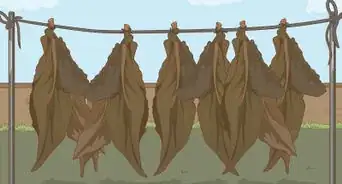
4Let the maca roots dry out in the sun for 10–15 days. Lay your maca roots on a large tarp in an area that gets sunlight throughout the day. During the day, leave the roots in the sun so they dry and shrink down. At night, cover your maca with another tarp or garden cloth to prevent any damage from rain or frost.[23]
- Keep the leaves attached to the maca roots so they have a sweeter flavor.
-
5Thrash the dried leaves to collect the maca seeds. Once the leaves are dry, the maca seeds will loosen up and break away from the plant easier. Lay out a tarp to catch the seeds since they’re small and could easily get lost. Rub the leaves between your hands to make the seeds fall off. Collect all of the seeds and store them at 60 °F (16 °C) or cooler for up to 2 years to plant again.[24]
- A single maca plant can produce up to 22,000 seeds.
-
6Store your maca in a cloth bag for up to 2 years. Place all of your maca roots in a large bag and keep them in a cool, dark area. While you can keep maca roots for longer, they may start to lose their flavor and texture after 2 years.[25]
-
7Boil the maca before using it. Dried maca is hard to digest and susceptible to dangerous mold, so make sure you cook the roots first.[26] Drop your maca roots in a pot of boiling water and let them cook until the roots feel tender to the touch. After that, you can incorporate maca into your favorite meal or grind it into a powder to mix into your dishes.[27]
- Cooked maca also has sweeter flavors and a more pleasant texture.
- Try boiling your maca in water or milk to make a savory and fragrant porridge.


Warnings
Things You’ll Need
- Shovel
- Manure or compost
- Rake
- Watering can or hose
- Netting or chicken wire
- Netted bag
- Cloth bag










References
- ↑ https://www.ncbi.nlm.nih.gov/pmc/articles/PMC3184420/
- ↑ https://themacaexperts.com/maca/learn-about-maca/how-does-maca-grow/
- ↑ https://www.cultivariable.com/instructions/andean-roots-tubers/how-to-grow-maca/
- ↑ https://www.cultivariable.com/instructions/andean-roots-tubers/how-to-grow-maca/
- ↑ https://www.cultivariable.com/instructions/andean-roots-tubers/how-to-grow-maca/
- ↑ https://www.cultivariable.com/instructions/andean-roots-tubers/how-to-grow-maca/
- ↑ https://pfaf.org/user/Plant.aspx?LatinName=Lepidium+meyenii
- ↑ https://www.cultivariable.com/instructions/andean-roots-tubers/how-to-grow-maca/
- ↑ https://extension.tennessee.edu/Williamson/Horticulture/Consumer%20Horticulture/DIY%20Soil%20Drainage%20Perk%20Test%20for%20Your%20Yard%20(2016).pdf
- ↑ https://davesgarden.com/guides/articles/macho-maca
- ↑ https://www.gardenguides.com/123667-grow-bolivian-maca-root.html
- ↑ https://www.cultivariable.com/instructions/andean-roots-tubers/how-to-grow-maca/
- ↑ https://www.gardenguides.com/123667-grow-bolivian-maca-root.html
- ↑ https://www.gardenguides.com/123667-grow-bolivian-maca-root.html
- ↑ https://www.macaguru.com/how-to-grow-maca/
- ↑ https://themacaexperts.com/maca/learn-about-maca/how-does-maca-grow/
- ↑ https://www.cultivariable.com/instructions/andean-roots-tubers/how-to-grow-maca/
- ↑ https://www.bobvila.com/slideshow/20-tips-for-keeping-all-critters-out-of-your-yard-and-garden-52927
- ↑ https://www.bioversityinternational.org/fileadmin/_migrated/uploads/tx_news/Andean_roots_and_tubers_472.pdf
- ↑ https://themacaexperts.com/maca/learn-about-maca/how-does-maca-grow/
- ↑ https://www.gardenguides.com/123667-grow-bolivian-maca-root.html
- ↑ https://themacaexperts.com/maca/learn-about-maca/how-does-maca-grow/
- ↑ https://www.bioversityinternational.org/fileadmin/_migrated/uploads/tx_news/Andean_roots_and_tubers_472.pdf
- ↑ https://www.bioversityinternational.org/fileadmin/_migrated/uploads/tx_news/Andean_roots_and_tubers_472.pdf
- ↑ https://www.cultivariable.com/instructions/andean-roots-tubers/how-to-grow-maca/
- ↑ https://themacaexperts.com/maca/taking-maca/why-you-shouldnt-eat-raw-maca/
- ↑ https://www.nap.edu/read/1398/chapter/7#60
- ↑ https://davesgarden.com/guides/articles/macho-maca
- ↑ https://themacaexperts.com/maca/taking-maca/why-you-shouldnt-eat-raw-maca/
About This Article