This article was co-authored by wikiHow Staff. Our trained team of editors and researchers validate articles for accuracy and comprehensiveness. wikiHow's Content Management Team carefully monitors the work from our editorial staff to ensure that each article is backed by trusted research and meets our high quality standards.
There are 7 references cited in this article, which can be found at the bottom of the page.
Learn more...
Despite their name, California Poppies are found in the wild as far north as southern Washington and as far east as Texas. This bright, typically golden-colored flower is a hardy annual that you can easily plant from seed. California poppies can survive for several years after planting, resprouting several times from year to year. If you want to add a splash of color to your garden, follow the tips and tricks on this list to plant your very own California Poppies!
Steps
Method 1
Method 1 of 10:Sow seeds in late fall or early spring.
-
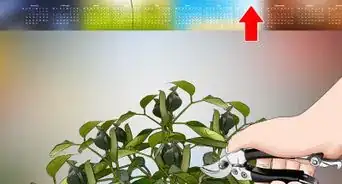
1This allows the poppies to bloom in spring or summer. Choose to plant your California poppies at the end of fall, before the first winter frost, if you want them to flower earlier in spring. Or, plant them in the spring, after the last frost, if you want them to bloom in the summer.[1]
- California poppies typically bloom from May to July each year after they’re planted.
Advertisement

Method 2
Method 2 of 10:Pick a spot that gets full sun.
-
1California poppies need 6-8 hours of direct sun per day to flourish. Choose a spot in your garden, a flower bed, or a planter in a really sunny spot. These bright, cheery flowers look really good along the borders of a yard, for instance.[2]
- If summer temperatures in your area are really hot, you may plant California poppies in a spot that receives some afternoon shade.

Method 3
Method 3 of 10:Choose a spot with sandy, well-draining soil.
-
1These flowers don’t tolerate poor-draining soil. Wherever you choose to plant your California poppies, make sure it has well-draining soil. If you’re planting the poppies in a flower bed or a planter, add some sandy potting soil mix to the area.[3]
- California poppies are highly drought resistant, so they’re great for areas with little rainfall or gardens which you want to water minimally.
Advertisement

Method 4
Method 4 of 10:Plant seeds 2–3 in (5.1–7.6 cm) apart.
-
1This is all the room California poppy seeds need to germinate. Gently press the seeds into the surface of the soil, spacing them out evenly. Don’t cover the seeds with any additional soil.[4]
- It typically takes from 2 weeks to 1 month for the seeds to germinate. If you plant them at the end of fall, they’ll germinate after winter.

Method 5
Method 5 of 10:Water the seeds weekly.
-
1Overwatering can hurt your poppies. Moisten the soil once a week or even less often if it stays moist. When in doubt, err on the side of caution and water less.[5]
- Once the poppy seeds germinate and start to develop roots, they need even less moisture. If there is spring rainfall in your area, you don’t need to water them at all, unless there is a drought.
Advertisement

Method 6
Method 6 of 10:Deadhead the poppies as flowers die.
-
1This maximizes their blooming. Remove the flower stem below a dead flower, just above the first set of healthy leaves below. Leave a few spent flowers on all your poppy plants to encourage self-seeding.[6]
- Self-seeding means that seeds drop from the dead flower heads into the ground. Essentially, California poppies plant themselves once they’re established!

Method 7
Method 7 of 10:Skip the fertilizer.
-
1California poppies prefer poor soil conditions to nutrient-rich soils. Don’t add any fertilizer to your beds of poppies—it’s just not necessary! If you add fertilizer to the soil, your poppies will develop more foliage and fewer blooms.[7]
- The same goes for natural fertilizers like compost and mulch. Don't add these types of things to the soil your poppies are planted in.
Advertisement

Method 8
Method 8 of 10:Use horticultural soap to get rid of aphids.
-
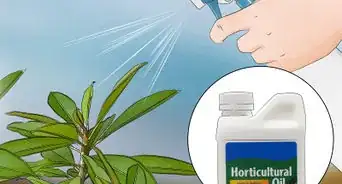
1Aphids like to feed on the young new shoots. Keep an eye on your poppies when they start to sprout and look for small green bugs on the shoots. If you see any, spray them with a horticultural soap spray to get rid of them.[8]
- If you don’t tackle any aphid problems, your flowers might become deformed or grow buds that don’t open.

Method 9
Method 9 of 10:Apply antifungal treatments for mold, mildew, and stem rot.
-
1The flowers can develop these issues due to overwatering or heavy rainfalls. Watch out for signs like spots on the leaves, white powder on the foliage, yellowing leaves, and mushy stems. If you see any of these symptoms of fungal infections, spray the poppies with an antifungal product.[9]
- As long as your poppies are planted in full sun and in well-draining soil, these issues are unlikely.
Advertisement

Method 10
Method 10 of 10:Bring containers of poppies in during the winter.
-
1California poppies are likely to die in containers outside in the winter. If you want your poppies to flower again next spring, bring the containers inside before the first frost. Let the flowers go dormant in your home, then take the containers back outside in the spring after the last frost.[10]
- Alternatively, you can pull up the flowers before winter and plant new seeds to get a whole fresh batch of poppies next spring.






References
- ↑ https://www.finegardening.com/plant/california-poppy
- ↑ http://www.pnwplants.wsu.edu/PlantDisplay.aspx?PlantID=235
- ↑ https://www.fs.fed.us/wildflowers/plant-of-the-week/eschscholzia_californica.shtml
- ↑ https://www.california.com/how-grow-california-poppies/
- ↑ https://gardeningsolutions.ifas.ufl.edu/plants/ornamentals/california-poppy.html
- ↑ http://www.gardening.cornell.edu/homegardening/scene43bf-2.html
- ↑ https://www.gardeningchannel.com/how-to-grow-california-poppy/
- ↑ https://gardeningsolutions.ifas.ufl.edu/plants/ornamentals/california-poppy.html
- ↑ https://www.gardeningchannel.com/how-to-grow-california-poppy/
About This Article