This article was co-authored by Matt Garcia. Matt Garcia is an experienced phlebotomist in Vancouver, Canada. He holds a Diploma in Medical Laboratory Assistance and is certified under the British Columbia Society of Laboratory Science. He previously worked in a high-volume outpatient lab and is currently employed in an acute care hospital and Level III trauma center in downtown Vancouver.
There are 8 references cited in this article, which can be found at the bottom of the page.
This article has been viewed 5,920 times.
If you’ve been feeling fatigued and dizzy lately, you might be experiencing some symptoms of a low red blood cell count.[1] Fortunately, your doctor can easily run a test, known as a complete blood count (CBC). Red blood cells carry oxygen throughout the body while removing carbon dioxide. Part of the CBC panel also examines your hemoglobin (oxygen-carrying capacity) and hemocrit (percentage of red blood cells) levels. You will need to have blood drawn for a red blood cell test at your doctor’s office or a laboratory.
Steps
Method 1
Method 1 of 2:Getting a Blood Test
-
1Visit your doctor. The first step in getting a red blood cell count is scheduling an appointment with your primary care provider. A primary care provider like a doctor, physician’s assistant, or registered nurse can determine whether or not you need laboratory testing. Some common signs and symptoms that may lead your primary care provider to order the test include:[2]
- Weakness
- Fatigue
- Lack of energy
- Paleness
- Disturbed vision
- Chronic headaches
-
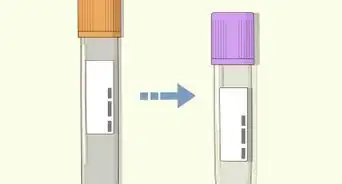
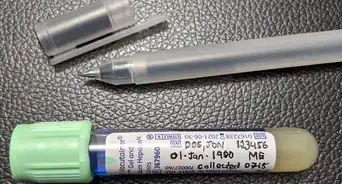
2Be prepared for a blood test. In most cases, your doctor will order a complete blood cell count (CBC) to test your red blood cell levels. This involves having your blood drawn and sent to a laboratory for analysis. The CBC will also examine your white blood cell levels and help give your doctor a more complete picture of your body’s blood cell production and overall health.[3]Advertisement
-
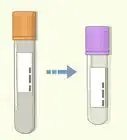
3Ask your doctor if you should fast before the test. In most cases you will not need to fast before having blood drawn for a red blood cell count or CBC. However, your doctor may ask for additional testing that does require fasting to be done during the same blood draw, such as for glucose or cholesterol levels. Make sure you talk to your doctor about whether or not you need to fast for your lab tests.[4]
-
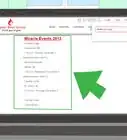
4Schedule your lab tests. Once your doctor determine that you will need a red blood cell count, you will need to go to a lab for the procedure. Check with your insurance provider to see what labs are in network, and then schedule your tests. Most outpatient labs accept walk-ins, but booking an appointment helps to avoid long wait times.
-
5Drink lots of plain water the day before your lab test. It’s important that you’re well hydrated before having your blood drawn. Make sure you drink lots of water the day before your testing so that you are hydrated. For example, try drinking at least 64 ounce or 1.9 liters (0.5 US gal) of water the day before the lab test. If possible, drink extra water as well.[5]
-
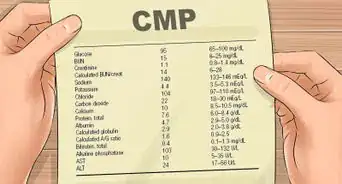
6Schedule a follow-up appointment with your doctor. Once you have your lab tests done, the laboratory will send the results to your doctor. You should get the test results back in about 5 to 7 days. You can schedule a follow-up appointment with your doctor for about 1 week after the test, especially if you are tired and having other symptoms. This will give you an opportunity to discuss the results of the test with your health care provider.[8]Advertisement
-Step-8.jpg)
-Step-3-Version-3.jpg)




Method 2
Method 2 of 2:Understanding Your Test Results
-
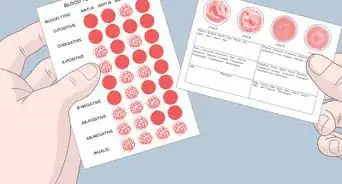
1Know the normal (reference) range. Knowing what the normal range is for a red blood cell count can help you understand the results of your blood test. For males, a normal test result is 4.7 to 6.1 million cells per microliter, while the normal range for females is 4.2 to 5.4 million cells per microliter. Your doctor will use this reference range to interpret your test results.[9]
- Keep in mind that abnormal results don't necessarily mean that anything is wrong, especially if the result falls just slightly out of range. Discuss the results with your doctor
-
2Learn about what causes a low red blood cell count. Several underlying conditions that can cause your red blood cell count to be low. These conditions include anemia, bleeding ulcers, and malnutrition. Vitamin deficiencies, such as having too little vitamin B12, folic acid, copper or iron in your system, can also cause a low red blood cell count.[10]
- Certain drugs, like quinidine, hydantoin, chloramphenicol, and chemotherapy drugs can also contribute to a low red blood cell count.
- A diet low in proteins and leafy greens can also lead to a low red blood cell count.
- A heavy menstrual flow may also lead to a low red blood cell count.
- People with anorexia, drug addictions, and alcoholism also often have low red blood cell counts.
-
3Be prepared for follow-up testing. Sometimes a red blood cell count is not enough to tell your doctor exactly what is causing your symptoms. If this is the case, the doctor may order additional tests after analyzing your red blood cell count. Common follow-up tests include a blood smear, bone marrow examination, or tests to determine whether you are deficient in iron, vitamin B12, or folate.[11]Advertisement


Expert Q&A
Did you know you can get expert answers for this article?
Unlock expert answers by supporting wikiHow
-
QuestionWhat does "H" in bold mean in a test for red blood cells?
 Matt GarciaMatt Garcia is an experienced phlebotomist in Vancouver, Canada. He holds a Diploma in Medical Laboratory Assistance and is certified under the British Columbia Society of Laboratory Science. He previously worked in a high-volume outpatient lab and is currently employed in an acute care hospital and Level III trauma center in downtown Vancouver.
PhlebotomistMatt GarciaPhlebotomistExpert AnswerAll lab tests use a reference range to gauge how normal or abnormal the result is. The "H" that appears next to your test result means your red blood cell count is considered to be higher than normal because the number fell outside the reference range.
Support wikiHow by unlocking this expert answer.
-
QuestionCan you get a red blood cell count using a non-invasive device?Matt GarciaMatt Garcia is an experienced phlebotomist in Vancouver, Canada. He holds a Diploma in Medical Laboratory Assistance and is certified under the British Columbia Society of Laboratory Science. He previously worked in a high-volume outpatient lab and is currently employed in an acute care hospital and Level III trauma center in downtown Vancouver.
PhlebotomistMatt GarciaPhlebotomistExpert AnswerBlood tests are considered to be invasive procedures because a needle is used to puncture the skin to obtain a blood sample. As of 2020, there is no approved method or technology for performing a red blood cell count non-invasively.Support wikiHow by unlocking this expert answer.
-
QuestionWhy should you drink water before a blood test?Matt GarciaMatt Garcia is an experienced phlebotomist in Vancouver, Canada. He holds a Diploma in Medical Laboratory Assistance and is certified under the British Columbia Society of Laboratory Science. He previously worked in a high-volume outpatient lab and is currently employed in an acute care hospital and Level III trauma center in downtown Vancouver.
PhlebotomistMatt GarciaPhlebotomistExpert AnswerBeing hydrated will increase your blood volume, which will help plump up your veins. That will make them more prominent and easier to feel by touch, so it will be easier to draw your blood.Support wikiHow by unlocking this expert answer.










References
- ↑ https://www.cancer.org/treatment/treatments-and-side-effects/physical-side-effects/low-blood-counts/anemia.html
- ↑ https://medlineplus.gov/lab-tests/red-blood-cell-rbc-count/
- ↑ https://medlineplus.gov/lab-tests/complete-blood-count-cbc/
- ↑ https://medlineplus.gov/lab-tests/complete-blood-count-cbc/
- ↑ https://www.health.harvard.edu/staying-healthy/how-much-water-should-you-drink
- ↑ Matt Garcia. Phlebotomist. Expert Interview. 9 November 2020.
- ↑ Matt Garcia. Phlebotomist. Expert Interview. 9 November 2020.
- ↑ https://medlineplus.gov/lab-tests/complete-blood-count-cbc/
- ↑ https://www.nhs.uk/conditions/red-blood-count/













































Medical Disclaimer
The content of this article is not intended to be a substitute for professional medical advice, examination, diagnosis, or treatment. You should always contact your doctor or other qualified healthcare professional before starting, changing, or stopping any kind of health treatment.
Read More...