This article was co-authored by wikiHow staff writer, Amber Crain. Amber Crain has been a member of wikiHow’s writing staff for the last six years. She graduated from the University of Houston where she majored in Classical Studies and minored in Painting. Before coming to wikiHow, she worked in a variety of industries including marketing, education, and music journalism. She's been a radio DJ for 10+ years and currently DJs a biweekly music program on the award-winning internet radio station DKFM. Her work at wikiHow supports her lifelong passion for learning and her belief that knowledge belongs to anyone who desires to seek it.
There are 8 references cited in this article, which can be found at the bottom of the page.
This article has been viewed 3,402 times.
Learn more...
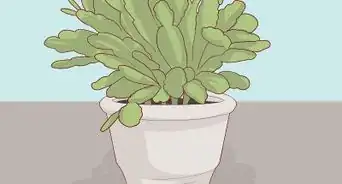
Christmas cacti are beloved for their brightly-colored, cheerful blooms during the holiday season. They make wonderful decorations and gifts! While they're relatively easy to grow, Christmas cacti have very specific requirements in order to bloom. We've researched everything you need to know about this gorgeous plant so you can enjoy its festive, colorful blooms every year without fail.
Steps
Question 1
Question 1 of 7:How many times a year do Christmas cacti bloom?
-
1Their natural bloom cycle happens once in the wintertime. True Christmas cacti (Schlumbergera bridgesii and Schlumbergera x buckleyi) bloom in the month of December, which is how the species got its name! Another species, Schlumbergera truncata or Thanksgiving cacti, is sometimes sold as Christmas cacti, but it blooms in the fall.[1]
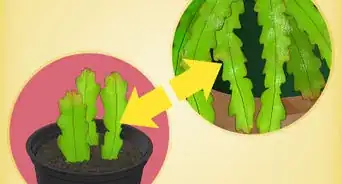
- You can distinguish the species by looking at their stems—Christmas cacti have smooth, rounded stems and Thanksgiving cacti have jagged, serrated stems.[2]

Question 2
Question 2 of 7:What factors affect the blooming cycle of Christmas cacti?
-
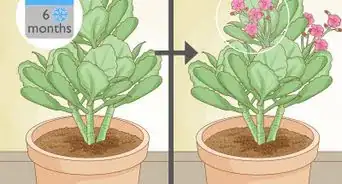
1Specific light and temperature changes initiate blooming. Since Christmas cacti bloom in the winter, the actual blooming cycle begins in autumn when the temperatures get cooler and the days get shorter. If your cactus doesn't experience these 2 crucial changes—colder temperatures and reduced light—it won’t flower.[3]
-
2Fertilize monthly starting in early spring and through the summer. Feeding your cactus fertilizer before the fall blooming cycle begins encourages plentiful blooms. Use a water-soluble fertilizer with an NPK of 20-10-20 or 20-20-20 diluted to half-strength.[4]
- Be sure to stop fertilizing in the late summer! Fertilizing in the fall can prevent buds from forming.
- NPK stands for "nitrogen, phosphorus, and potassium." These 3 nutrients create a complete fertilizer for plants. 20-10-20 fertilizer has slightly less phosphorus than the other 2 nutrients. 20-20-20 is a complete and balanced fertilizer.[5]


Question 3
Question 3 of 7:What temperature do Christmas cacti require for blooming?
-
1Maintain a temperature of 50–65 °F (10–18 °C) starting in early fall. Start this regimen about 6 weeks before you want your cactus to bloom. As long as you maintain this temperature range during this 6-week period, your cactus will bud and bloom in December, just in time for Christmas.[6]
- Preferred nighttime temperature: 50–55 °F (10–13 °C).
- Preferred daytime temperature: 65 °F (18 °C).
- If the nighttime temperature hovers around 65 °F (18 °C), your cactus will still bloom in 6 weeks as long as it gets 12 hours of complete darkness daily. If nighttime temperatures get any higher, it probably won’t bloom.[7]

Question 4
Question 4 of 7:How much light does my Christmas cactus need to bloom?
-
1Give it 8-10 hours of bright, indirect sunlight daily starting in early fall. Place your cactus in a bright window during the daytime. Direct sunlight is too harsh, though, so make sure it gets indirect light. You might want to check the window temperature during the day, too. Remember: Christmas cacti prefer a daytime temperature of 65 °F (18 °C).[8]
-
2Make sure it gets 12-16 hours of complete darkness at night. Uninterrupted periods of darkness are crucial, especially if the nighttime temperature is closer to 65 °F (18 °C) instead of the preferred 50–55 °F (10–13 °C). If you need to, place your cactus in a dark closet at night so it’s completely dark.[9]
- Even dim, ambient light, like your neighbor’s Christmas lights filtering through a window, can disrupt the blooming cycle! Total darkness is key.


Question 5
Question 5 of 7:How much water do Christmas cacti need during a blooming cycle?
-
1Keep the soil moist to the touch during the fall and winter. How often you water your cactus depends on its size and environment, but generally, you need to keep the soil moist to the touch. Never saturate the soil with water or let the soil dry out between waterings, though![10]
- If the cactus starts looking wrinkled, you might be giving it too much water. Underwatering could also be to blame, so always use the soil to guide you. Water just enough to keep the soil moist; it should never feel soggy or dry.[11]
-
2Let the soil dry out between waterings during the spring and summer. Your cactus won’t be actively blooming during this time, so it needs less water to thrive. In fact, it prefers mild drought-like conditions! Water your cactus as soon as the soil feels dry, though—if the soil gets too dry, the cactus will wilt.[12]


Question 6
Question 6 of 7:What should I do once the Christmas cactus starts budding?
-
1Keep maintaining the light, temperature, and water requirements. As long as you maintain a temperature of 50–55 °F (10–13 °C), keep the soil evenly moist, and provide 12 hours of complete darkness at night, buds should form normally and bloom in December. When it comes to its growing environment, consistency is key![13]
- If your cactus experiences any drafts or sudden changes in temperature or humidity, the buds may fall off.
-
2Don’t fertilize your cactus at all during the fall. Once you change the temperature and light conditions, cut off feedings completely. If you apply fertilizer during this period, buds may never form or they'll fall off before blooming. Start fertilizing your cactus again in the spring once the blooming cycle is over.[14]


Question 7
Question 7 of 7:Can I force my Christmas cactus to bloom more than once a year?
-
1Yes, if you can recreate its preferred blooming environment. Give your cactus a few weeks of rest after the initial blooms fall off. During this period, let the soil dry out between waterings and fertilize with a water-soluble 20-10-20 or 20-20-20 formula diluted to half strength. Then, maintain a temperature of 50–55 °F (10–13 °C), keep the soil evenly moist, and provide least 12 hours of complete darkness at night to kickstart another bloom cycle![15]








References
- ↑ https://extension.psu.edu/christmas-cactus-getting-them-to-bloom
- ↑ https://hgic.clemson.edu/factsheet/thanksgiving-christmas-cacti/
- ↑ https://www.canr.msu.edu/news/the_secret_to_getting_a_christmas_cactus_to_bloom_temperature_and_light
- ↑ https://hgic.clemson.edu/factsheet/thanksgiving-christmas-cacti/
- ↑ https://www.canr.msu.edu/field_crops/uploads/archive/E0896.pdf
- ↑ https://extension.psu.edu/christmas-cactus-getting-them-to-bloom
- ↑ https://extension.umn.edu/houseplants/holiday-cacti#light-and-temperature-1431360
- ↑ https://extension.psu.edu/christmas-cactus-getting-them-to-bloom
- ↑ https://extension.arizona.edu/christmas-cactus
- ↑ https://extension.arizona.edu/christmas-cactus
- ↑ https://hgic.clemson.edu/factsheet/thanksgiving-christmas-cacti/
- ↑ https://hgic.clemson.edu/factsheet/thanksgiving-christmas-cacti/
- ↑ https://extension.umn.edu/houseplants/holiday-cacti#flower-buds-1431365
- ↑ https://planttalk.colostate.edu/topics/houseplants/1353-re-blooming-christmas-cactus/
- ↑ https://hgic.clemson.edu/factsheet/thanksgiving-christmas-cacti/
About This Article