This article was co-authored by Donna Serino. Donna Serino is a Dry Cleaning and Alterations Specialist and the Marketing Director for Hallak Cleaners, based in Manhattan, New York and Hackensack, New Jersey. She has expertise in tailoring and alterations, couture and casual wear, designer handbag cleaning, and suede, leather, and furs care. Donna and Hallak Cleaners are part of the National Cleaner’s Association, Drycleaning and Laundry Institute, and Leading Cleaners Internationale.
wikiHow marks an article as reader-approved once it receives enough positive feedback. In this case, 100% of readers who voted found the article helpful, earning it our reader-approved status.
This article has been viewed 262,556 times.
There is no doubt that candles add a lot to a centerpiece, but sometimes they drip wax and make a mess on your tablecloth. Although your first thought may be to throw the tablecloth away, removing the wax is not as challenging as it may seem.
Steps
-
1Freeze the dripped wax. The easiest way to do this is fold the tablecloth with the wax on the outside top layer and put the entire cloth in the freezer. Or, you can fill a bag with ice and place the ice pack on top of the wax while the cloth is still laid out on the table.[1]
-
2Use a dull knife, such as a butter knife, or your fingernail to carefully scrape the frozen wax off the tablecloth.[2] If the tablecloth is made of lace use extra care not to tear the lace material while scraping the wax.[3]Advertisement
-
3Remove the wax with heat.[4]
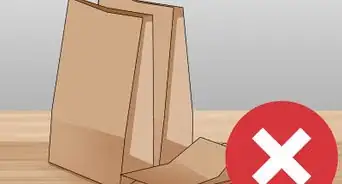
- Place paper towels or pieces of brown paper bag on both sides of the stained area. If you use a paper bag, be sure to choose one that does not have any writing on it.[5]
- Set your iron to warm or medium and iron over the paper. Do not use steam while ironing. The heat from the iron will cause the remaining wax to melt off of the tablecloth and soak into the paper. Then, just do some spot cleaning.[6]
- Repeat the ironing process if necessary using fresh paper towels or brown paper bags. Keep changing the paper and repeating the ironing until all wax is removed.
- Launder the tablecloth as usual once all the wax is gone.
Advertisement


Community Q&A
-
QuestionHow do you remove melted candle wax?
 Donna SerinoDonna Serino is a Dry Cleaning and Alterations Specialist and the Marketing Director for Hallak Cleaners, based in Manhattan, New York and Hackensack, New Jersey. She has expertise in tailoring and alterations, couture and casual wear, designer handbag cleaning, and suede, leather, and furs care. Donna and Hallak Cleaners are part of the National Cleaner’s Association, Drycleaning and Laundry Institute, and Leading Cleaners Internationale.
Dry Cleaning & Alterations SpecialistApply heat! Wax contains oil so the heat will dissolve it, allowing the wax to be peeled off. -
QuestionThe wax is red and dried. What can I do?
 Community AnswerI usually remelt the wax, then wipe it off with a paper towel. Maybe try using a hair dryer.
 -
QuestionHow do I get all the wax off batik?
 Community AnswerRun the batik under warm running water. The wax will fall off. Make sure you have something in the sink to catch the wax before it runs down the drain.
 -
QuestionCan I use the technique mentioned in the article on a plastic table cover?Community AnswerDon't heat a plastic table cover with an iron. Maybe you could use one of the other methods. In my experience, however, wax is fairly easily scraped off of plastic.
-
QuestionHow do I get the stain left by wax off a tablecloth?
 Community AnswerTry spraying it with Goo Gone and washing it in hot water. This will help to minimize the stain.



References
- ↑ https://www.realsimple.com/magazine-more/inside-magazine/ask-real-simple/remove-melted-wax
- ↑ https://www.thisoldhouse.com/ideas/how-to-get-wax-any-surface
- ↑ https://www.youtube.com/watch?v=xda48Lb2LtE
- ↑ Donna Serino. Dry Cleaning & Alterations Specialist. Expert Interview. 31 August 2021.
- ↑ https://www.womansday.com/home/organizing-cleaning/how-to/g305/how-to-remove-wax-from-a-tablecloth-124247/?slide=3
- ↑ Donna Serino. Dry Cleaning & Alterations Specialist. Expert Interview. 31 August 2021.
About This Article