This article was co-authored by wikiHow staff writer, Hunter Rising. Hunter Rising is a wikiHow Staff Writer based in Los Angeles. He has more than three years of experience writing for and working with wikiHow. Hunter holds a BFA in Entertainment Design from the University of Wisconsin - Stout and a Minor in English Writing.
There are 9 references cited in this article, which can be found at the bottom of the page.
Learn more...
If your indoor houseplants have streaked leaves or stunted growth, you may be dealing with thrips. Thrips are pesky little insects that are only 1⁄20 inch (1.3 mm) long and attack your houseplants by sucking out the sap. Luckily, thrips don’t harm humans and there are a lot of things you can do to get rid of an infestation. Since thrips can be a little tough to completely get under control, we’ve put together a list of all the things you should do to get rid of them once and for all!
Steps
Method 1
Method 1 of 14:Shake the thrips off the branches.
-
1Detect and get rid of some of the thrips with this quick test. Thrips usually thrive on leafy, ornamental plants or vegetables, but you can find them on any type of plant.[1] Hold a piece of white paper or cloth underneath the branch. Give the branch a good shake and check the paper for any thrips, which will look like small tan or black dots against the sheet or paper. Just crush the thrips or throw the piece of paper away in a garbage outside.[2]
- This works well for thrips you can see, but there may still be more hidden in the leaves of your plant.
Advertisement

Method 2
Method 2 of 14:Isolate any plants that could be infested.
-
1Separate your plants so thrips don’t spread. Look over your plants with a magnifying glass to see if they have any signs of thrips or thrip damage. The leaves may have a silvery or speckled appearance and the flowers may die without opening from thrips feeding on them. If you notice any of these signs on your houseplants, move them to a separate room than any other plants to keep the thrips contained.[3]
- You may need to isolate your plant for a few weeks while you get thrips under control.

Method 3
Method 3 of 14:Prune branches or leaves with damage.
-
1Thrips might still live on damaged leaves and branches, so get rid of them. Whenever you see leaves that look streaked or speckled, cut them off of the plant with a sharp gardening knife or pruning shears. If multiple leaves on a branch look in bad shape, then cut the entire branch off at a node. Since there might still be thrips living on the branches you cut off, throw them away in an outdoor garbage bin.[4]Advertisement

Method 4
Method 4 of 14:Rinse plants with water.
-
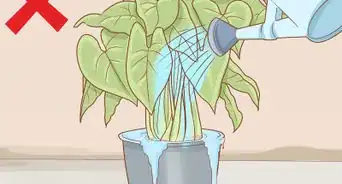
1Wash thrips you see off the surfaces of healthy leaves and growths. If your houseplants have a sturdy stem, take them outside and hit them with a strong spray of water. Make sure you spray the entire surface of the plant to remove all of the thrips. For more delicate plants, give the leaves a good rinse underneath a steady stream of water to wash the bugs away.[5]
- Be careful not to use too high of water pressure since you could damage your plants.

Method 5
Method 5 of 14:Spray insecticidal soap on your plants.
-
1Insecticidal soaps suffocate and kill any leftover thrips living on your houseplants. Insecticidal soaps contain insecticides that kill thrips on contact. Get a spray bottle of insecticidal soap and spray it directly on your plants. Cover the entire plant surface with soap to ensure it reaches the thrips hiding in the leaves and stem. Reapply the insecticidal soaps every week to keep thrips under control.[6]
- You can buy insecticidal soap from your local garden center.
- Apply insecticidal soaps outside in the shade to prevent them from getting on anything inside.
- Some houseplants, like ornamental ivy, impatiens, Easter lilies, and palms are sensitive to insecticidal soaps. Before applying them to the entire plant, test the soap on a small patch and wait 2 days to see if there’s any damage.
Advertisement

Method 6
Method 6 of 14:Apply neem oil to your plants.
-
1Neem oil makes a great natural alternative to chemical insecticides. Neem oil is made from the extract of neem oil seeds, which naturally kills thrips. Buy a neem oil spray from your local garden center and spray it directly on your plants. When the thrips come into contact with the neem oil, they’ll suffocate or be unable to feed and lay eggs.[7]
- Neem oil is safe to use around children and pets.

Method 7
Method 7 of 14:Hang up yellow or blue sticky traps.
-
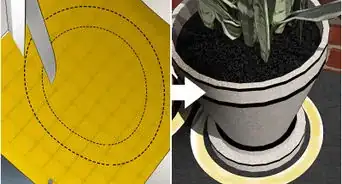
1Attract thrips off of your plants for good control and preventative measures. Hang the traps up on the wall right next to your houseplants. Once a thrip lands on the trap, it won’t be able to pull itself free. When the traps get full of insects, just throw them away and hang up new ones.[8]
- Sticky traps also help catch other flies and pests that could be living in your houseplants.
Advertisement

Method 8
Method 8 of 14:Spray your plants with an insecticide.
-
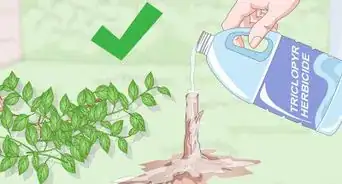
1Chemical insecticides work on serious infestations, but thrips may be resistant. Contact insecticides, like azadirachtin and pyrethrins, work best and they don’t leave any harmful residue on your plants. Look for a pesticide at your local garden center and follow the directions on the packaging to apply it to your houseplants. Be sure to apply it to all of the buds, leaves, and branches where thrips could be hiding.[9]
- Some thrips are resistant to chemical insecticides, so they can survive treatments. Try another way to get rid of thrips, and if that doesn’t work, get rid of the houseplant completely.
- Organophosphate acephate and foliar sprays are not effective against thrips.

Method 9
Method 9 of 14:Check new plants for thrips before bringing them inside.
-
1Prevent new thrips from coming in so you don’t risk infesting other plants. When you buy a new houseplant, always check the leaves and branches for damage. If there are streaky or speckled leaves or the flowers look distorted, there could be thrips. Try holding a piece of paper underneath the branches and tapping them to see if any thrips fall off.[10]
- If you want to be safe, keep your new plants separate from other plants in your home for at least 6 weeks.[11]
Advertisement

Method 10
Method 10 of 14:Repel thrips with capsaicin spray.
-
1Thrips will avoid areas coated with this spicy substance. Capsaicin is the compound that makes peppers and spicy foods taste hot, and thrips really don’t like it. Find a capsaicin spray at your local garden center and spray it directly onto your plants. While it won’t work very well on thrips already there, it will keep them from coming back.[12]
- You can also make your own capsaicin spray with 1 teaspoon (16 g) of ground red pepper and 1 gallon (3.8 L) of water.

Method 11
Method 11 of 14:Try using essential oils as repellents.
-
1Thrips are less likely to eat from plants with diluted oils on them. You can use lavender, mint, marjoram, or rosemary essential oils to help prevent thrips. Combine a few drops of essential oil with enough water to make a 10% concentration. Spray your plant directly with the oil, making sure you coat all of the leaves and flowers with the solution.[13]
- Essential oils may also prevent thrips from laying eggs.
- You can instead buy commercial pre-mixed essential oil sprays if you don’t want to make your own.
Advertisement

Method 12
Method 12 of 14:Mist the leaves to prevent thrips.
-
1Thrips prefer drier conditions rather than moist, humid leaves. Use a spray bottle to gently coat the leaves with a little bit of water. Wait until the leaves completely dry off before misting them again so your plants don’t develop rot.[14]

Method 13
Method 13 of 14:Scare thrips off with aluminum foil mulch.
-
1Reflective materials like foil deters thrips from your plants. Place the aluminum foil on top of the soil or on the wall next to your plant. Since the foil reflects bright light back into the thrips’ eyes, they’ll try to avoid the area instead of landing on your plants.[15]
- Aluminum foil works best when plants are smaller and won’t work as well on tall plants.
Advertisement

Method 14
Method 14 of 14:Prevent thrips with optimal growing conditions.
-
1Your plants resist thrips better if they have good sun and nutrients. Plants are a lot easier to damage when they’re weak. Check the requirements for your houseplants to see how much sunlight, water, and nutrients they need. Move your plants into a sunnier spot, use some fertilizer, and keep track of how your plant’s doing to ensure it’s healthy.[16]
- Be careful not to apply too much nitrogen fertilizer since this could attract more thrips.

Warnings
- Some thrips have developed resistance to insecticides, so they may not be the most effective treatment.[18]Thanks!
References
- ↑ http://ipm.ucanr.edu/PMG/PESTNOTES/pn7429.html
- ↑ https://www.almanac.com/pest/thrips
- ↑ https://hgic.clemson.edu/factsheet/common-houseplant-insects-related-pests/
- ↑ http://ipm.ucanr.edu/PMG/PESTNOTES/pn7429.html
- ↑ https://hgic.clemson.edu/factsheet/common-houseplant-insects-related-pests/
- ↑ https://hgic.clemson.edu/factsheet/common-houseplant-insects-related-pests/
- ↑ https://hgic.clemson.edu/factsheet/less-toxic-insecticides/
- ↑ https://biocontrol.ucr.edu/western-flower-thrips
- ↑ http://ipm.ucanr.edu/PMG/PESTNOTES/pn7429.html
- ↑ https://biocontrol.ucr.edu/western-flower-thrips
- ↑ https://hgic.clemson.edu/factsheet/common-houseplant-insects-related-pests/
- ↑ https://hgic.clemson.edu/factsheet/less-toxic-insecticides/
- ↑ https://journals.sagepub.com/doi/pdf/10.1177/1934578X0800300726
- ↑ https://extension.missouri.edu/publications/g7273
- ↑ https://www.researchgate.net/publication/265064099_Aluminum_Foil_Aluminium-painted_Plastic_and_Degradable_Mulches_Increase_Yields_and_Decrease_Insect-_vectored_Viral_Diseases_of_Vegetables_Aluminum_foil_and_aluminum-_painted_mulches
- ↑ http://ipm.ucanr.edu/PMG/PESTNOTES/pn7429.html
- ↑ http://ipm.ucanr.edu/PMG/PESTNOTES/pn7429.html
- ↑ https://extension.colostate.edu/topic-areas/insects/managing-houseplant-pests-5-595/
About This Article