This article was co-authored by Peggy Rios, PhD. Dr. Peggy Rios is a Counseling Psychologist based in Florida. With over 24 years of experience, Dr. Rios works with people struggling with psychological symptoms such as anxiety and depression. She specializes in medical psychology, weaving together behavioral health programs informed by empowerment theory and trauma treatment. Dr. Rios uses integrated, evidence-based models to provide support and therapy for people with life-altering medical conditions. She holds an MS and Ph.D. in Counseling Psychology from the University of Maryland. Dr. Rios is a licensed psychologist in the state of Florida.
This article has been viewed 4,904 times.
School can be a frightening experience for people with Social Anxiety Disorder. Work on coping with a difficult situation through relaxation and cognitive strategies, and making small steps towards living your best life.
Steps
Method 1
Method 1 of 3:Preparing Over the Summer
-
1Enjoy your favorite summer activities. Do things that make you happy over the summer. It's okay to mostly do things alone, with family, or with a few trusted friends. Focus on what's fun for you.
- Spend time with movies, books, TV, comics, and other media you enjoy.
- Join an online chat group about a favorite subject of yours. If you are too nervous to post, then just read what people say.
- Make some playlists of favorite music. Try exploring new music, too.
-
2Find ways to deal with back-to-school nightmares. If you have anxiety, then it's normal to have bad dreams about school as your mind prepares itself for going back to school.
- Find ways to identify recurring habits. For example, tell yourself "If my teeth are falling out, or I'm naked, then it's a dream. Teeth don't fall out like that, and my family would stop me if I tried to go to school without clothes on. If I'm dreaming, I don't have to stay in school, and I can go flying instead."
-
3Brush up on relaxation strategies. Deep breathing, imagery, and progressive muscle relaxation are all useful tools for handling anxiety.[1]
-
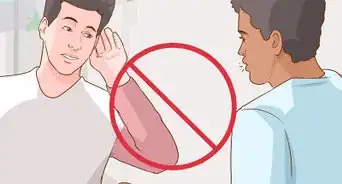
4Work on cognitive reframing. Challenge your negative thoughts. Ask yourself if they are realistic. Identifying your cognitive distortions can help you squash them and think more realistically. Notice if you are...[2]
- Jumping to the worst-case scenario
- Acting like you can read their minds
- Assuming they care that much about you
-
5Prepare all your materials on the night before. Feeling prepared may help you sleep a little better. (If you realize you forgot to do something, write it down for the morning.)
- Set out a favorite outfit to wear.
- Put all your materials, including your schedule and a map of the school, in your backpack.


Method 2
Method 2 of 3:Handling Social Situations at School
-
1Use the strategies you practiced over the summer. Do relaxation exercise, and reframe negative thoughts when you can. Catch yourself obsessing over something unhelpful, and work on handling it. Keep doing your best. As you get more practice handling the anxiety, you'll become better at it.
-
2Be yourself. Faking a personality trait will only make you feel more lonely, and people can usually tell it isn't genuine. It's better to be an authentic, flawed person than to be a bad copy of someone else. Dont think what your school friends will say about you. Remember they will have an opinion, just as you do.
- Don't punish yourself for being less social. If you spend your weekend doing homework, watching movies with a close friend, and drawing pictures, then that is a great weekend. Enjoy your quiet time and don't push yourself to feel guilty.
-
3Try developing your social circle in a low-stress area. Talk to people who seem friendly, at times when you feel more comfortable.
-
4Set realistic goals for yourself. Maybe, smiling and making eye contact with someone is all you can do. Or working up the courage to talk to that nice-looking girl who could be a good friend someday. Try doing small things to push yourself a little, without pushing yourself to the point of panic.
- If you panic and can't do something today, that's okay. You can try again tomorrow, or the next day. There's plenty of time to grow your skills.
- Reward yourself for doing a good job. Mentally praise yourself, and treat yourself after school.
-
5Give yourself a break. It's okay to take some space if you need it. There's nothing wrong with stepping out for a minute, or eating lunch alone sometimes, if that's what you need. Take it easy and allow yourself time to breathe. You don't have to push yourself all the time.
-
6Remember that a little awkwardness is normal. School is an awkward time. Everyone has awkward moments. You aren't uniquely terrible. Awkward things happen all the time, and people tend to forget about them over time. Even if it feels like a big deal right now, it probably won't feel like a big deal next month.
-
7Tell your friends about your anxiety. You can be specific about your disorder, or just treat it casually, depending on your comfort level. For example, you could say things like...
- "I'm a little shy. Sometimes I need to take a break and be alone to calm myself down."
- "I have social anxiety. Sometimes I might get panicky or ask for reassurance a lot. You can help by talking sense into me when I say things that aren't realistic, or by doing this relaxation exercise with me."


Method 3
Method 3 of 3:Getting Help
-
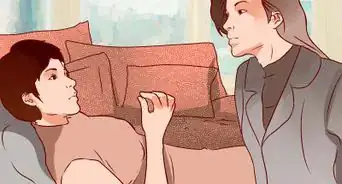
1Talk to your family about your anxiety. Explain what symptoms you have and how they impact you. If they're open to listening, tell them what would help make things better for you.
- If you think you'll have a hard time telling them, try asking the school guidance counselor to help you, or writing a letter.
- Remember that not all adults are good listeners. If your family doesn't listen, it's not because your problem isn't real. It's because they're bad listeners.
-
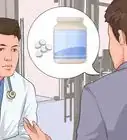
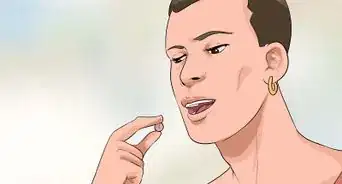
2Talk to a doctor about your social anxiety, if you can. A doctor can give you an assessment and talk to you about options. Ask your family for an appointment, or bring it up at your next check-up. Your doctor may prescribe medication, and/or refer you to a therapist for help.
- If you're nervous about telling the doctor everything, write a list of your symptoms and hand it to the doctor.
-
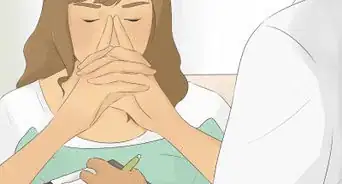
3Try therapy. A therapist can help you find ways to handle your anxiety, and re-frame negative thoughts. Weekly therapy, either individually or in a group, can help with social anxiety.
- A therapist will usually use an exercise called exposure therapy to help you get more comfortable with managing your anxiety reaction in social situations. They might start with just having you imagine a social situation, then gradually work up to in-person interactions.[3]
- It's important to start learning strategies to address your social anxiety now, while you're in school, or you might miss out on some important milestones that could affect you later.[4]
-
4Try seeing a support group. Going to a group for people with social anxiety can help you learn strategies from other people. It may also be comforting to know that you're not alone, and that people aren't judging you for your anxiety because they have the exact same problem themselves.
-
5Talk to the school guidance counselor about ways to manage your anxiety at school. You may have an IEP if your diagnosis is on file. Talk to the counselor about strategies you can use at school.
- Is there a quiet place you can take a break if needed, like the library? (If not, use the bathroom.)








-Step-1.webp)
References
- ↑ https://www.psycom.net/social-anxiety-how-to-help-kids
- ↑ https://www.psycom.net/social-anxiety-how-to-help-kids
- ↑ Peggy Rios, PhD. Counseling Psychologist (Florida). Expert Interview. 18 December 2020.
- ↑ Peggy Rios, PhD. Counseling Psychologist (Florida). Expert Interview. 18 December 2020.
- http://www.calmclinic.com/anxiety/how-to-overcome
About This Article