This article was medically reviewed by Troy A. Miles, MD. Dr. Miles is an Orthopedic Surgeon specializing in Adult Joint Reconstruction in California. He received his MD from the Albert Einstein College of Medicine in 2010, followed by a residency at the Oregon Health & Science University and fellowship at the University of California, Davis. He is a Diplomat of the American Board of Orthopaedic Surgery and is a member of the American Association of Hip and Knee Surgeons, American Orthopaedic Association, American Association of Orthopaedic Surgery, and the North Pacific Orthopaedic Society.
There are 11 references cited in this article, which can be found at the bottom of the page.
wikiHow marks an article as reader-approved once it receives enough positive feedback. In this case, 100% of readers who voted found the article helpful, earning it our reader-approved status.
This article has been viewed 1,095,695 times.
Known medically as medial tibial stress syndrome, "shin splints" are a type of pain you can get from overusing or repetitively straining the muscles that run next to your shinbone, or tibia.[1] Shin splints are relatively common for people who do a lot of physical activities on their feet. They can be a real nuisance, but they’re surprisingly easy to cure! If you have shin splints, try some of the tips and tricks on this list to relieve them.
Steps
Method 1
Method 1 of 10:Stop high-impact exercise.
-
1Shin splints are caused by overuse, so rest is a standard treatment. Stop any regular high-impact exercises you do, such as running or dancing, for up to several weeks until your shins feel better. Your normal amount of walking and activity during the day is fine, just avoid any type of exercise that is likely the cause of your shin splints in the first place.[2]
- Make sure not to return to any type of straining exercise until your shin splints are gone and you’ve been pain-free for at least 2 weeks. And, when you do, ease back into it.
Advertisement

Method 2
Method 2 of 10:Apply ice to your shins.
-
1Along with resting, icing your shin splints is an effective therapy. Apply ice packs to the affected shin for 15-20 minutes at a time. Repeat this 4-8 times a day for several weeks.[3]
- To protect your skin from frostbite, wrap the ice packs in a thin towel.

Method 3
Method 3 of 10:Take an over-the-counter painkiller.
-
1OTC medications decrease swelling and help manage pain. Take either ibuprofen, naproxen, or aspirin according to the package’s instructions. Don’t exceed the recommended dosage or frequency.[4]
- Keep in mind that any medication can interact with other medications or substances and cause side effects. Talk to your doctor if you have any concerns before taking OTC painkillers.
Advertisement

Method 4
Method 4 of 10:Wear arch supports in your shoes.
-
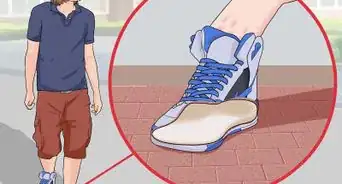
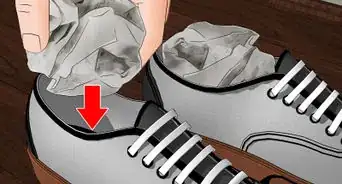
1Arch supports make everyday activities less hard on your shins. Talk to a foot doctor, your general practitioner, or a physical therapist about the best insoles for you. Put shock-absorbing insoles or orthotics inside any shoes you wear regularly to take the stress off your healing shins.[5]
- Once you get back to your regular exercise, make sure to use shoes with proper support and padding to prevent the return of your shin splints.

Method 5
Method 5 of 10:Wear an elastic compression sleeve.
-
1This may reduce additional swelling. Slide compression sleeves over your calves and shins and wear them while you’re treating your shin splints. The compression improves circulation in the area to aid with healing your shins.[6]
- These types of sleeves are sometimes called compression bands or calf compression sleeves.
Advertisement

Method 6
Method 6 of 10:Sit on your shins to stretch them.
-
1Stretching can help relieve pain and inflammation. Get into a kneeling position with the tops of your feet and your shins against the floor and your feet facing slightly inward. Sit on your feet and lean forward, then plant your palms and lift your knees up off the ground to put more pressure on your feet and shins. Hold the stretch for 15-30 seconds, or for however long is comfortable for you.[7]
- If you feel like any stretch increases the pain, stop immediately and try something different.

Method 7
Method 7 of 10:Do toe flexes to stretch your shins.
-
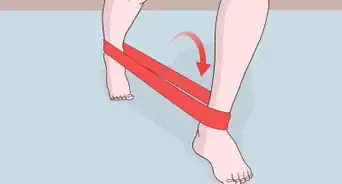
1Sit on the floor with your legs straight out in front of you. Flex your toes forward until you feel a good stretch. Hold the position for 5 seconds or so, then pull your toes all the way back towards you. Repeat as many repetitions as is comfortable.[8]
- Loop an exercise band around your toes when you do this stretch to add resistance and build strength in your shins.
Advertisement

Method 8
Method 8 of 10:Use a foam roller on your shins.
-
1Foam rolling massages your shins. Place a foam roller on the floor and get on your hands and knees with the foam roller underneath your shins. Roll your shins back and forth over the foam roller.[9]
- A foam roller is a hard, cylindrical piece of foam used in physical therapy. You can order one online if you don’t have one.

Method 9
Method 9 of 10:Perform gentle exercises.
-
1Low-impact exercises are fine while your shins heal. Sub in some low-impact aerobic workouts for your regular workouts to stay moving while you wait for your shin splints to go away. For example, swim, do yoga, or use a stationary bike or an elliptical machine.[10]
- If any type of light exercise ever makes your shins hurt while you have shin splints, stop doing it and switch to something else.
Advertisement

Method 10
Method 10 of 10:Seek treatment if your shin splints don’t improve.
-
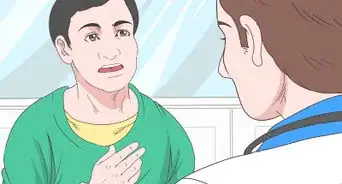
1A general practitioner can refer you to a physiotherapist. If your shin splints don’t start feeling better after a week of trying to get rid of them on your own, make an appointment with your doctor to get your legs examined. If your shin splints feel like they’re getting worse at any point, seek immediate treatment.[11]
- You could also contact a physiotherapist directly if you’re sure you have shin splints. However, a doctor will be able to correctly diagnose your pain and prescribe treatment.

References
- ↑ http://www.mayoclinic.org/diseases-conditions/shin-splints/basics/definition/con-20023428
- ↑ http://orthoinfo.aaos.org/topic.cfm?topic=a00407
- ↑ http://www.mayoclinic.org/diseases-conditions/shin-splints/basics/treatment/con-20023428
- ↑ https://medlineplus.gov/ency/patientinstructions/000654.htm
- ↑ https://medlineplus.gov/ency/patientinstructions/000654.htm
- ↑ https://orthoinfo.aaos.org/en/diseases--conditions/shin-splints/
- ↑ https://www.youtube.com/watch?v=wLnYZRHLhnY&t=5s
- ↑ https://www.youtube.com/watch?v=Z2G5WCJBpps&t=31s
- ↑ https://www.youtube.com/watch?v=Z2G5WCJBpps&t=136s
- ↑ https://www.nhs.uk/conditions/shin-splints/
- ↑ https://www.nhs.uk/conditions/shin-splints/
- ↑ https://www.choosept.com/resources/detail/8-tips-to-prevent-shin-splints
- ↑ https://www.choosept.com/resources/detail/8-tips-to-prevent-shin-splints
- ↑ https://www.choosept.com/resources/detail/8-tips-to-prevent-shin-splints
- ↑ https://www.mayoclinic.org/diseases-conditions/shin-splints/symptoms-causes/syc-20354105
- ↑ https://www.choosept.com/resources/detail/8-tips-to-prevent-shin-splints
About This Article

Medical Disclaimer
The content of this article is not intended to be a substitute for professional medical advice, examination, diagnosis, or treatment. You should always contact your doctor or other qualified healthcare professional before starting, changing, or stopping any kind of health treatment.
To get rid of shin splints, put ice packs on them 4 times a day for 15 minutes at a time for at least a few weeks to reduce inflammation. You can also soak your feet and lower legs in a warm Epsom salt bath to reduce pain and swelling. Additionally, try to do exercises that stretch your shin muscles, like lifting your affected leg and tracing letters in the air with your toes. Finally, it may help if you run on a softer surface or wear lighter-weight shoes when you run. For information from our Medical reviewer on how physiotherapy or acupuncture might help, keep reading!