This article was co-authored by wikiHow Staff. Our trained team of editors and researchers validate articles for accuracy and comprehensiveness. wikiHow's Content Management Team carefully monitors the work from our editorial staff to ensure that each article is backed by trusted research and meets our high quality standards.
This article has been viewed 164,130 times.
Learn more...
So you’re all dressed up and ready to head out. Suddenly, you notice something fuzzy on your outfit. It’s lint! There’s nothing more annoying than finding lint on your freshly washed clothes. Fortunately, there are things you can do to help prevent it from happening while you’re actually doing your washing. To help you do it, we’ve put together a handy list you can use to fight back against lint.
Steps
Method 1
Method 1 of 11:Wash items with a lot of lint separately.
-
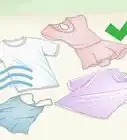
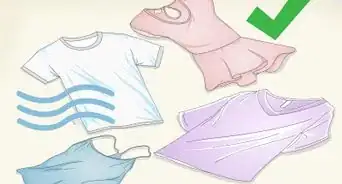
1Separating your clothes can help keep lint from sticking to them. If you’re machine-washing your clothes, separate lint-producing items like towels, chenille, sweatshirts, fleece, felt, and sweaters. Wash them separately from items that naturally collect lint more easily such as synthetic fibers, corduroy, and knits.[1]
- If you have brand new clothing items, wash them separately as well because they’re more likely to have fibers that can break off and form lint.
Advertisement

Method 2
Method 2 of 11:Flip your clothes inside out when you wash them.
-
1It can protect your clothes from lint and reduce shedding. Take all of your shirts, socks, pants, sweatshirts, and anything else you’re washing and flip them inside out. Add them to your washing machine inside-out so they won’t lose as many of their fibers, which can form lint, and so any lint that forms in the wash is less likely to stick to them somewhere noticeable.[2]
Method 3
Method 3 of 11:Check your pockets for tissue and paper.
-
1They can shred when you wash them and get everywhere. Reach into the pockets of any pants, shirts, or sweatshirts you’re washing. Pull out anything you find, especially stuff that can break down and form lint like napkins, tissues, and paper.[3]
- It’s always a good idea to check your pockets before you wash your clothes. You don’t want anything damaged or soaked!
Advertisement
Method 4
Method 4 of 11:Use the recommended amount of detergent.
-
1Check the packaging of the laundry detergent you’re using. It’ll say how much you need to use depending on how full your machine is. It’ll also have measurements for how much to use depending on the hardness of your water. Add the recommended amount to properly wash your clothes and help prevent lint.[4]
- If you don’t have enough detergent, it can cause lint particles to get deposited on your clothes. If you have too much, it can leave behind a grimy residue.

Method 5
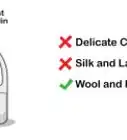
Method 5 of 11:Add 1 cup (240 mL) of white vinegar to the load.
-
1It can help fight against lint in your washing machine. Use distilled white vinegar so there isn’t a super strong odor in your clothes. Add it during the final rinse cycle and it’ll help prevent fuzzy lint from getting onto your clothes.[5]Advertisement
Method 6
Method 6 of 11:Hang your clothes to dry if you can.
-
1Let your clothes dry naturally to help prevent lint. As clothes tumble in a dryer, the fibers can break loose and collect to form lint. One simple way to solve the problem is to hang your clothes up on a clothesline or a drying rack. It may take longer, but it can seriously cut down on lint.[6]
- You can hang your clothes to dry somewhere with good airflow and circulation to help them dry more quickly.

Method 7
Method 7 of 11:Machine-dry your clothes with a fabric softener sheet.
-
1It’ll help remove the lint while your clothes dry. Transfer your clothes from your washing machine to your dryer as soon as they’re done washing. Toss a fabric softener sheet into the dryer and turn it on. The sheet will help keep your clothes soft, add a nice scent, and help prevent lint from collecting on them.[7]
- You could also use an unscented fabric softener sheet if you don’t want an extra scent.
Advertisement
Method 8
Method 8 of 11:Toss a microfiber square in the dryer instead of a dryer sheet.
-
1It’ll collect the fuzz and keep it off your clothes. Microfiber squares naturally attract lint. Add one into the dryer along with your clothes and any lint that’s in there will stick to the square instead of your clothes.[8]
- You can find microfiber squares at your local department or home goods store. You can also order them online.

Method 9
Method 9 of 11:Clear the lint filter of your dryer after each use.
-
1It’ll keep it from building up and getting onto your clothes. Dryers have a filter that is designed to catch any lint in the machine. Slide it out, clean off any lint that’s on it, and then slide it back into place and you’re good to go![9]
- The lint filter is usually located either in the front or on top of the dryer.
Advertisement
Method 10
Method 10 of 11:Clean your washing machine once every 2 months.
-
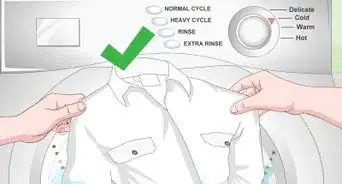
1Run an empty cycle with detergent or vinegar to remove buildup. Lint can collect and be deposited on the inside of your washing machine and in the internal filters. Run a normal cycle using detergent with any clothes inside.[10] Another option is to use 2 cups (470 mL) of distilled white vinegar instead of detergent when you run an empty cycle.[11]

Method 11
Method 11 of 11:Hand-wash your clothes for the best protection.
-
1It’ll help prevent fibers from breaking off and forming lint. If you’re able to do it, washing your clothes by hand is by far the best way to prevent lint from getting onto your clothes.[12] Fill a small tub or sink with water and add about 1 teaspoon (4.9 mL) of detergent. Submerge your clothes in the water and gently swish them through the soapy water. Then, drain the water and fill it with cool, clean water to rinse the clothes.[13]
- You may need to rinse the clothes more than once to fully remove the soap.
- Hand-washing can be much more time-consuming, but it’ll help prevent lint!
Advertisement

Community Q&A
-
QuestionIs there another solution?
 Community AnswerThe biggest problem that arises with getting lint fibers on other clothes is washing too many types of loose-fibered clothes with tightly-woven material. It's best not to wash towels and dress clothes or towels and sweaters. The fibers from each end up clinging to the other material. Wash similar types of garments separately in their own loads. Whatever you do, do not mix terry towels and sweaters, together, this causes pilling.
 -
QuestionDo I pour the vinegar directly on the clothes?Community AnswerPour white vinegar into the water to dilute it a little, then add the clothes, then follow the rest of the directions.
-
QuestionMy new washing machine has no catch filter. The pieces I don't dry in the dryer have lint. What can I do to catch it in the washing machine?
 Community AnswerVinegar helps. I put it in the wash and the fabric softener cup. It also helps to wash your clothes inside out.
 -
QuestionWill the clothes smell like vinegar?
 Community AnswerI don't find that it causes a smell, and if it does, it generally evaporates when the clothes are dry. You can always reduce the amount you use if the smell bothers you.
 -
QuestionDo you use vinegar and laundry detergent in the same load of wash?
 Drew Hawkins1Community AnswerIdeally, you want to add the vinegar during the final rinse cycle of the wash. Some machines have a special slot for you to add it for the final rinse. For other machines, you'll need to add it when the final rinse cycle begins.
 -
QuestionHow do I prevent little hairs and things from getting embedded in the materials of socks?Drew Hawkins1Community AnswerThere are a few things you can try. For starters, make sure your washing machine is clean. Run an empty cycle and use distilled white vinegar instead of detergent to flush out any hair and lint that may be in the filters. Also, make sure you clear out the lint filter in your dryer after each use. You can also try turning the socks inside out so any fibers aren't as noticeable when you wear them.
-
QuestionWhat about front loader machines?Drew Hawkins1Community AnswerFront loading washing machines can be treated just like other types of washing machines. Keep it clean and try to separate clothing items that produce lots of lint, such as chenille, sweat shirts, fleece, and felt from items that naturally collect lint like corduroy, synthetic fibers, and knits.
Warnings
- Always double-check the tag of your clothes for specific washing and drying instructions so you don’t damage them.Thanks!



References
- ↑ https://www.home-ec101.com/how-do-i-reduce-lint-in-my-laundry/
- ↑ https://www.apartmenttherapy.com/how-to-remove-lint-from-clothes-quickly-263181
- ↑ https://www.home-ec101.com/how-do-i-reduce-lint-in-my-laundry/
- ↑ https://www.home-ec101.com/how-do-i-reduce-lint-in-my-laundry/
- ↑ https://www.apartmenttherapy.com/how-to-remove-lint-from-clothes-quickly-263181
- ↑ https://sewguide.com/keep-lint-off-clothes/
- ↑ https://sewguide.com/keep-lint-off-clothes/
- ↑ https://sewguide.com/keep-lint-off-clothes/
- ↑ https://punchng.com/4-steps-on-how-to-remove-lint-from-washing-machines/
- ↑ https://sewguide.com/keep-lint-off-clothes/
- ↑ https://www.thekitchn.com/natural-washing-machine-cleaner-vinegar-22924103
- ↑ https://sewguide.com/keep-lint-off-clothes/
- ↑ https://www.bhg.com/homekeeping/laundry-linens/clothes/how-to-wash-clothes-by-hand/
- ↑ https://www.home-ec101.com/how-do-i-reduce-lint-in-my-laundry/
About This Article