This article was co-authored by Courtney Foster and by wikiHow staff writer, Jessica Gibson. Courtney Foster is a Licensed Cosmetologist, Certified Hair Loss Practitioner, and Cosmetology Educator based out of New York City. Courtney runs Courtney Foster Beauty, LLC and her work has been featured on The Wendy Williams Show, Good Morning America, The Today Show, The Late Show with David Letterman, and in East/West Magazine. She received her Cosmetology License from the State of New York after training at the Empire Beauty School - Manhattan.
There are 10 references cited in this article, which can be found at the bottom of the page.
wikiHow marks an article as reader-approved once it receives enough positive feedback. This article has 18 testimonials from our readers, earning it our reader-approved status.
This article has been viewed 2,486,082 times.
Most people experience dry hair and scalp at some point. It can be caused by weather, hormones, hair care, and sun damage. Fortunately, this means there are lots of things you can do to nourish and strengthen your hair. In some cases, just switching hair products can make a huge difference! Check out our tips for restoring moisture to your hair and scalp.
Steps
Method 1
Method 1 of 10:Choose sulfate-free moisturizing hair products.
-
1Sulfates are detergents that make products suds up but they're harsh. When you shampoo and condition with sulfates, they strip the natural oils from your hair and scalp which can make your dry issue even worse. To protect your hair and help it stay hydrated, get products that say they moisturize your hair with natural ingredients. A great shampoo or conditioner might have aloe, vitamin E, argan oil, or baobab oil, for instance.[1]
- If your scalp is also itchy, flaky, and looks red or irritated, you may have dandruff which is actually caused by an overgrowth of yeast. Putting oil or moisturizing products on the yeast can actually make dandruff worse, so switch to a dandruff shampoo instead.[2]

Method 2
Method 2 of 10:Wash your hair every 3 days.
-
1Your dry hair and scalp need their natural oils. When you wash your hair, you strip these oils away, making your hair and scalp even drier. Limit your hair washing to just 2 or 3 times a week at the max so the natural oils can hydrate your hair and scalp.[3]
- It's totally fine to wash your hair after exercising or getting sweaty. You can also use dry shampoo in between washes.
- Alternatively, just rinse your hair during your daily shower and apply conditioner (not shampoo).

Method 3
Method 3 of 10:Condition your hair with a silicone-based product.
-
1Work a rinse-out conditioner through your hair right after you shampoo. Use a conditioner that says it's moisturizing or hydrating. These usually have silicones that coat your hair and prevent moisture loss. Leave the conditioner on your hair for at least 2 or 3 minutes so the product can penetrate your hair.[4]
- If you read the product label, you might see silicones listed as dimethicone, dimethiconol, and amodimethicone.
- Avoid putting conditioner on your scalp since it's designed for your hair and could build up on your scalp.

Method 4
Method 4 of 10:Deep condition your hair and scalp once a week.
-
1Protect your hair from moisture loss by locking in hydration. Massage a deep conditioner or coconut oil through your hair, starting at the ends and working toward your scalp. Let it sit on your hair for 20 to 30 minutes before you rinse it out with cool water. This seals the outside cuticles of your hair so moisture can't escape as easily.[5]
- If you're buying a deep conditioner, look for one that's approved to use on your scalp, too. Choose a product that says it's deeply moisturizing or hydrating and that's designed for dry or brittle hair.
- Crunched for time? It's fine to rinse off the deep conditioner before the time's up. It won't be as effective, but you should still notice extra moisture.
- You can also use avocado oil, argan oil, or jojoba oil since these are all deeply moisturizing. Plus, you can use natural oils to moisturize your scalp!

Method 5
Method 5 of 10:Do an egg mask to add moisture and protein.
-
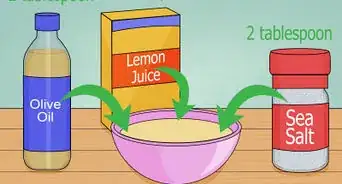
1Whisk 2 or 3 yolks with 2 or 3 drops of lemon juice to make a mask. Once you've mixed the mask until it's frothy, massage it into your wet hair and put on a shower cap. Leave the mask on for 20 minutes before you rinse it out with cool water. Then, shampoo and condition your hair with moisturizing products. You can do this deep-moisturizing mask once a month.[6]
- The egg yolks have a lot of fat and protein which can help moisturize your hair. The lemon juice simply masks the eggy smell so feel free to leave it out if you don't have any.
- Don’t rinse the mask out with warm or hot water because the egg will start to clump in your hair.
- Want a little extra softness or shine? Mix in 2 tablespoons (30 mL) of honey, 2 tablespoons (30 mL) of olive oil, or 2 tablespoons (30 mL) of coconut oil to your egg mask.

Method 6
Method 6 of 10:Try to avoid styling your hair with heat.
-
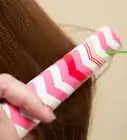
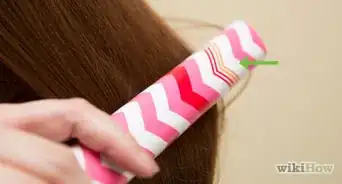
1Heat is hard on dry hair since it pulls out even more moisture. Instead of blow-drying your hair, let it air dry. If you like to straighten or curl your hair with a styling iron, only do it once a week to minimize the damage.[7]
- If you do style your hair with a heat styling tool, apply a heat protectant product through your hair first. It's designed to reduce the damage so your hair doesn't dry out as badly.

Method 7
Method 7 of 10:Wear a hat and stay in the shade when you're outside.
-
1Sun damage is incredibly harsh on your hair. The sun's rays penetrate deep into your hair which makes it dry and brittle. This is why it's so important to wear a hat that covers your hair. For even more protection, stay out of direct sunlight as much as possible.[8]
- If you've got long hair, reach for a wide-brimmed hat rather than a baseball cap.
- If you can, avoid being outside between 10 am and 2 pm when the rays of the sun are the most direct.

Method 8
Method 8 of 10:Cover your hair when you swim in a chlorinated pool.
-
1Chlorine and pool chemicals are harsh! To protect your dry hair and scalp, pop on a swim cap before you jump in the pool. If you don't feel like wearing a swim cap, don't let your hair get wet while you swim.[9]
- If you accidentally got your hair wet in the pool, don't worry. Rinse your hair with clean water as soon as you get out and use a conditioning product.

Method 9
Method 9 of 10:Eat foods rich in protein, zinc, and vitamins.
-
1Give your hair the nutrients it needs to heal. Eating protein-rich foods strengthens your hair so it's not dry or brittle. Zinc is also important for a healthy scalp—if you're deficient, your scalp can dry out. You also need vitamin A so your hair can make its natural oils which keep your hair and scalp moisturized. You can take a hair supplement that has some of these nutrients or add these foods to your diet:[10]
- Protein: chicken, eggs, fish, legumes, nuts
- Zinc: fortified cereals, beef, eggs, oysters
- Vitamin A: carrots, pumpkins, sweet potatoes

Method 10
Method 10 of 10:See a dermatologist if your hair and scalp are still dry.
-
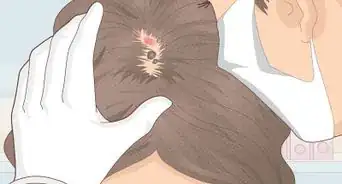
1They'll do an exam and take your medical history. This helps them rule out underlying health conditions that might be causing the dryness. They may diagnose you with eczema, an allergic reaction, or psoriasis, for instance. Once you have a diagnosis, they'll give you a personalized treatment plan to nourish your scalp and hair.[11]
- Don't forget to tell your dermatologist about any medications or supplements that you're taking.

Expert Q&A
Did you know you can get expert answers for this article?
Unlock expert answers by supporting wikiHow
-
QuestionWhy is my scalp and hair so dry?
 Courtney FosterCourtney Foster is a Licensed Cosmetologist, Certified Hair Loss Practitioner, and Cosmetology Educator based out of New York City. Courtney runs Courtney Foster Beauty, LLC and her work has been featured on The Wendy Williams Show, Good Morning America, The Today Show, The Late Show with David Letterman, and in East/West Magazine. She received her Cosmetology License from the State of New York after training at the Empire Beauty School - Manhattan.
Licensed CosmetologistIt really depends on a variety of factors. It could be environmental damage, like if you spent too long in the sun, or it could be your body's natural state. In a lot of cases, dry hair and skin is related to something you're doing healthwise. It could be that you aren't drinking enough water, or you aren't eating a healthy diet. It depends on a variety of things.
Support wikiHow by unlocking this expert answer.





References
- ↑ Courtney Foster. Licensed Cosmetologist. Expert Interview. 9 December 2019.
- ↑ https://www.aad.org/public/everyday-care/hair-scalp-care/scalp/treat-dandruff
- ↑ https://www.gq-magazine.co.uk/article/how-often-should-you-shampoo-your-hair
- ↑ https://www.sciencedirect.com/topics/chemistry/shampoo
- ↑ Courtney Foster. Licensed Cosmetologist. Expert Interview. 9 December 2019.
- ↑ Courtney Foster. Licensed Cosmetologist. Expert Interview. 9 December 2019.
- ↑ https://www.aad.org/public/diseases/hair-loss/insider/stop-damage
- ↑ https://health.clevelandclinic.org/best-ways-to-protect-your-hair-from-sun-damage/
- ↑ https://www.aad.org/public/diseases/hair-loss/insider/stop-damage
About This Article

To get rid of dry hair and dry scalp, avoid shampooing your hair more than a few times a week, since shampooing daily strips oil from your hair and scalp. When you do shampoo your hair, be sure to use a sulfate-free, moisturizing shampoo. You can condition your hair every day to keep it soft, but avoid putting conditioner on the roots of your hair, since it can dry the scalp. Finally, limit your use of heat styling tools and do a deep conditioning treatment once a week to restore your hair’s moisture. To learn how to make homemade treatments for dry hair and scalp, read on!