This article was co-authored by wikiHow staff writer, Eric McClure. Eric McClure is an editing fellow at wikiHow where he has been editing, researching, and creating content since 2019. A former educator and poet, his work has appeared in Carcinogenic Poetry, Shot Glass Journal, Prairie Margins, and The Rusty Nail. His digital chapbook, The Internet, was also published in TL;DR Magazine. He was the winner of the Paul Carroll award for outstanding achievement in creative writing in 2014, and he was a featured reader at the Poetry Foundation’s Open Door Reading Series in 2015. Eric holds a BA in English from the University of Illinois at Chicago, and an MEd in secondary education from DePaul University.
There are 10 references cited in this article, which can be found at the bottom of the page.
Learn more...
If Asian lady beetles have started wandering into your home, there are a few easy steps you can take to eradicate the infestation. While these bugs have a bad reputation, you can rest assured that the problem probably isn’t as dangerous as it may initially seem. You may also be relieved to know that they’re only near your home to hibernate for the winter, so they won’t cause any structural damage. Still, if you want to get rid of these annoying bugs, we’ll walk your through the steps you can take to solve the problem.
Steps
Method 1
Method 1 of 11:Vacuum up the beetles and release them outside.
-
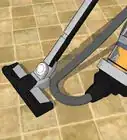
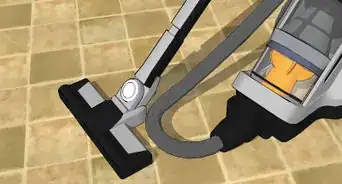
1This is probably the best way to get rid of the beetles. If you stumble across a large number of lady beetles, grab your vacuum and use the hose attachment to suck them up. Use a vacuum with a HEPA filter if you have one, as this will keep the bugs from crawling back out. Once you’ve sucked the beetles up, release them outside.[1]
- This is also a great way to suck the bugs out if you can’t really reach them. Lady beetles like to hide in hard-to-reach areas like crawl spaces, attics, and behind drywall to stay warm.
- The beetles aren’t actually bad for the environment, and they don’t damage homes where they set up shop for the winter. If you can, release the bugs outside without killing them.

Method 2
Method 2 of 11:Catch and release individual bugs you find.
-
1If you spot a loose beetle or two, catch and release them outside. The beetles only bite if they think they’re being attacked, so just slide a piece of paper underneath them and take them out the window. You can even grab a broom and a dustpan and gently sweep them up before releasing them outside.[2]

Method 3
Method 3 of 11:Hang light traps to lure hard-to-reach infestations out.
-
1The beetles are attracted to light, so purchase a light trap to catch them. These are different from the bug zapper you might be picturing. These are just one-way live traps that emit light that you’ll probably need to buy online. At night, hang the trap in whatever area the bugs are in and empty it out in the morning.[3]
- If the bugs are outside swarming against your vinyl siding, hang the light in your garden away from your home.

Method 4
Method 4 of 11:Try insecticides as a last resort.
-
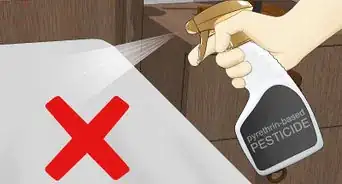
1Only a handful of insecticides are effective at managing lady beetles. Unfortunately, most of the non-toxic and natural options are not potent enough to handle these pesky bugs.[4] You can spray the bugs directly with any insecticide containing pyrethrins or pyrethroid (i.e. tetramethrin or resmethrin). Spritz the bugs directly to kill them on contact and wipe up the residue and bug.[5]
- Unfortunately, these insecticides are toxic. They can damage your skin and they’re lung irritants. Wear a dust mask and gloves when using them and clean any surface you spray thoroughly after you discard the dead bugs.[6]
- It may be tempting to empty an insecticide into a crack in the wall where the bugs are coming out, but it’s unlikely to have a positive impact. The dead beetles may also attract other bugs, so leaving them in your wall may not work out so well.[7]
- Bug bombs do not work with the Asian lady beetles, so don’t bother fogging your home.

Method 5
Method 5 of 11:Hire an exterminator to remove a large infestation.
-
1Hire a professional to handle the infestation successfully. Asian lady beetles often hang out in hard-to-reach spaces, so a pro will have an easier time finding them. On top of that, they have access to commercial insecticides and tools that you won’t be able to use. If you really want to get rid of a large number of lady beetles, this is the way to go.[8]
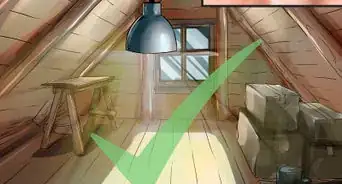
- Asian lady beetles hibernate high off of the ground wherever they can find warmth. As such, they’ll often dig their way into crawl spaces, attics, and gaps in walls on the second and third floors of buildings.
- If possible, try to find an exterminator who has experience working with Asian lady beetles. These bugs haven’t been around the US for very long.

Method 6
Method 6 of 11:Seal up any entry points in your home.
-
1Once the bugs are out, seal up your home before the next winter. If the bugs are inside, they’re coming through a crack somewhere. Seal up the gaps around light fixtures and patch any missing drywall. Seal your doors and windows with weatherstripping.[9] For chimneys and exhaust pipes, use number 20 (or smaller) screen mesh to cover the opening. This will keep the beetles out without interrupting airflow.[10]
- This is really the best way to keep the lady beetles out in the future. They’re not especially adept at breaking into homes. In fact, you may even see a swarm on the exterior of your building just hibernating in the open if they can’t get in.

Method 7
Method 7 of 11:Give exterior barrier treatments a shot.
-
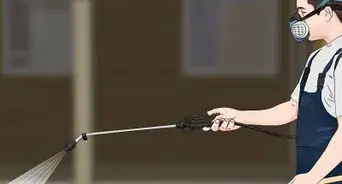
1Pick up a home defense spray for bugs and spray the side of your home. Any ready-to-use formula containing bifenthrin, cyfluthrin, deltamethrin, or permethrin might work. Follow the directions on the label, put on protective gear, and spray the sides of your home to keep the beetles out. The lady beetles will look for somewhere else to hibernate for the winter.[11]
- This is a good option if it’s impossible to seal up your home because it’s very old or you have major repairs to make.
- The lady beetles prefer unshaded walls that get a lot of sun. If your home is especially large, at least cover the western and southern exterior walls.[12]

Method 8
Method 8 of 11:Wait for early spring and the beetles will leave.
-
1The bugs will leave once winter is over, so you can always wait them out! The bugs won’t damage anything, and they’re just hibernating in your wall. If you hear them moving around when it starts getting warm again, they’re just looking for an exit. If you’re comfortable leaving the bugs alone, they’ll be out of your hair before you know it![13]
- If you have a garden, the Asian lady beetles are good for your plants! They eat aphids and other scale insects that kill plants, and they’re tougher than ladybugs in the pest-cleanup department.[14]

Method 9
Method 9 of 11:Confirm you actually have Asian lady beetles.
-
1The lady beetles look a lot like lady bugs but there are a few key differences. Lady bugs are consistently red, while the lady beetles can be orange, yellowish, or even dark red. The lady beetles also often have a white M-shape on top of their head. Finally, the dots on a lady bug are usually uniform, while the lady beetles have all kinds of different spots—some will even have zero dots at all![15]
- If the bug is in your house, it’s probably a lady beetle. Lady bugs don’t want to be inside of your house, while lady beetles will try to seek shelter when it starts to get cold out.[16]
- Asian lady beetles are also known as Asian lady bugs or multi-colored lady beetles. They’re all the same thing, though.

Method 10
Method 10 of 11:Hold off on instantly crushing any beetles you find.
-
1Do your best to not crush any beetles that you come across inside. For one, the bugs only bite if they think they’re being attacked. On top of that, they’ll release a nasty odor when you crush them, and they’ll stain whatever surface you crush them on. As tempting as it may be, do not stomp on the beetles than wander into your home.[17]
- It’s important to note that they don’t want to be in your home, as well. The lady beetles only wander inside because they’re lost, and they’ll leave if you take them outside!

Method 11
Method 11 of 11:Put on a dust mask and safety gear to play it safe.
-
1These bugs emit a pheromone that you may be allergic to. If you’re getting close to Asian lady beetles, put on a dust mask and wear long sleeves. The vast majority of the time, these bugs are harmless, but they can bite if they get nervous, and they release an obnoxious pheromone when they’re disturbed. Some folks are allergic to this pheromone, so gear up just to be safe![18]
- Most people will just be annoyed by the smell. Allergic reactions are rare and unlikely to be serious (it’s usually just sinus and skin irritation). Still, better safe than sorry!
- The bite isn’t dangerous, although it might be alarming. Many people compare it to a small pinprick. You can prevent the bites by wearing long sleeves and gloves.
- Also, wear clothes that you don’t mind throwing in the wash. These bugs can leave yellow stains behind, and you may need to wash your clothes if they rub against you.[19]

Warnings
- There’s a viral post going around online about dogs swallowing lady beetles and becoming poisoned. Unfortunately, this is true. While a pup may just have an upset stomach when they eat a bug or two, they may become toxically ill if they eat too many lady beetles. Take your dog to the vet if you see them chewing on a bunch of these bugs.[21]Thanks!
- You can be allergic to the pheromone the lady beetles emit. It’s not likely going to be dangerous, but see a doctor if you have difficulty breathing or your symptoms don’t go away.[22]Thanks!
- Most over-the-counter insecticides are going to be ineffective to the lady beetles. They may just irritate them to start emitting their pheromone, so read the ingredients carefully to see if a product will work. Anything containing pyrethrins or pyrethroid (i.e. tetramethrin or resmethrin) should do the trick.[23]Thanks!


References
- ↑ https://extension.psu.edu/multicolored-asian-lady-beetle-ladybug
- ↑ https://extension.missouri.edu/publications/g7369
- ↑ https://www.ars.usda.gov/oc/br/lbeetle/index/#mixed
- ↑ https://extension.psu.edu/multicolored-asian-lady-beetle-ladybug
- ↑ https://extension.missouri.edu/publications/g7369
- ↑ https://nj.gov/health/eoh/rtkweb/documents/fs/3450.pdf
- ↑ https://extension.psu.edu/multicolored-asian-lady-beetle-ladybug
- ↑ https://www.ars.usda.gov/oc/br/lbeetle/index/#mixed
- ↑ https://extension.missouri.edu/publications/g7369
- ↑ https://extension.psu.edu/multicolored-asian-lady-beetle-ladybug
- ↑ https://extension.msstate.edu/sites/default/files/publications/publications/p2443.pdf
- ↑ https://extension.msstate.edu/sites/default/files/publications/publications/p2443.pdf
- ↑ https://www.ars.usda.gov/oc/br/lbeetle/index/#mixed
- ↑ https://portal.ct.gov/CAES/Fact-Sheets/Entomology/Multicolored-Asian-Lady-Beetles
- ↑ https://extension.umn.edu/nuisance-insects/multicolored-asian-lady-beetles
- ↑ https://www.wkbn.com/news/local-news/ladybugs-or-asian-lady-beetles-what-to-know/
- ↑ https://extension.missouri.edu/publications/g7369
- ↑ https://extension.psu.edu/multicolored-asian-lady-beetle-ladybug
- ↑ https://www.ars.usda.gov/oc/br/lbeetle/index/#mixed
- ↑ https://www.ars.usda.gov/oc/br/lbeetle/index/#mixed
- ↑ https://www.snopes.com/fact-check/ladybugs-beetles-dog-mouth/
- ↑ https://entomology.ca.uky.edu/ef416
- ↑ https://entomology.ca.uky.edu/ef416
About This Article