This article was co-authored by Jason Myerson, DPT, DMT, OCS, FAAOMPT and by wikiHow staff writer, Jessica Gibson. Jason Myerson is a Physical Therapist and a Certified Orthopedic Specialist. He is affiliated with Performance Physical Therapy & Wellness with clinics located in Connecticut. He serves as adjunct faculty in the Physical Therapy Department at Quinnipiac University. Jason specializes in helping active people get back to hobbies, activities, and sports they love while utilizing an integrated approach to wellness. He holds an MA in Physical Therapy from Quinnipiac University and a Doctorate in Physical Therapy (DPT) from Arcadia University. He is Residency and Fellowship trained in Orthopedic Manual Therapy, achieved a Doctorate in Manual Therapy (DMT) and became a Fellow of the American Academy of Orthopedic Manual Physical Therapists (FAAOMPT).
There are 17 references cited in this article, which can be found at the bottom of the page.
wikiHow marks an article as reader-approved once it receives enough positive feedback. This article received 15 testimonials and 100% of readers who voted found it helpful, earning it our reader-approved status.
This article has been viewed 335,402 times.
Arthritis can be painful, but you don't have to put up with it. Whether you have osteoarthritis from wear and tear of your joints or the autoimmune disease, rheumatoid arthritis, there is pain relief. The key is trying several pain relief strategies to find the ones that work for you. We've put together some great ideas to get you started.
Steps
Method 1
Method 1 of 13:Press a heating pad against the painful joint.
-
1Heat relaxes your muscles and relieves joint pain. If you don't have a heating pad, you could put a hot water bottle against the painful area. Hold the pad or bottle against the spot for about 20 minutes to get temporary pain relief.[1]
- Never sleep with a heating pad on because you could burn yourself.
- Want to make a quick heating pad? Fill a sock with uncooked rice and tie it shut. Then, microwave it for 1 to 2 minutes or until it feels hot. Carefully remove it and press it against your painful joint.
Advertisement


Method 2
Method 2 of 13:Try cold therapy to reduce swelling.
-
1Place a cold pack on your joint for 10 to 20 minutes to numb the pain. Wrap an ice pack in a thin cloth before you press it on your painful joint—this way, you won't damage your bare skin. Keep the pack in place so it numbs the area and reduces inflammation.[2]
- Most people with arthritis prefer heat treatments, but it's worth trying cold therapies to see if it helps you.[3]
- Try alternating cold and heat therapies. For instance, press a heating pad on the affected joint after you ice it. After 20 minutes, switch back to the cold pack.

Method 3
Method 3 of 13:Soak in an Epsom salt bath.
-
1Dissolve 1 1/2 cups (300 g) of Epsom salt in a tub of hot water. Although clinical trials are needed, some people find that Epsom salts soothe their muscles and relieve joint pain. The salts have magnesium and sulfate which soothe your muscles and can relieve joint pain. Try to soak for about 15 to 20 minutes to get the maximum benefit.[4]
- Don't have time to run a full bath? No problem—dissolve a few spoonfuls of Epsom salt in a large bowl of hot water and submerge your hand, wrist, or elbow into it. Soak for as long as you can!
Advertisement

Method 4
Method 4 of 13:Get a massage.
-
1Schedule a Swedish or deep-tissue massage with a trained therapist. Communication is the key to a great massage, so let your therapist know where you're feeling arthritis pain. Research shows that regular massage therapy can reduce arthritis pain and improve your range of motion.[5]
- Some insurance plans cover massage therapy, so check your plan before you schedule a session.

Method 5
Method 5 of 13:Stay active to prevent stiffness in your joints.
-
1Try to move more throughout the day to increase muscle strength. This helps keep your joints flexible so you don't have as much pain or stiffness. Aim to get up and move around for a few minutes every hour. You might also stand up and do a few simple stretches, take the stairs whenever possible, or take the long way when you walk somewhere.[6]
- Got extra time for movement? Block out time for yoga, pilates, or tai chi to improve flexibility and strengthen your muscles.
- If you're losing range of motion in your joints, you may need to work with a physical therapist who can design a personalized fitness program for you.
Advertisement

Method 6
Method 6 of 13:Lose weight to reduce pressure on your joints.
-
1Carrying excess weight can also worsen inflammation. Although losing weight can be daunting, try to make gradual changes like eating better and getting more active. Work with your doctor to come up with a weight-loss plan that you can stick with over the long term.[7]
- Try to exercise later in the day when you're less likely to feel stiff.
- Do exercises that are easier on your joints like swimming and walking instead of high-impact activities like running, jumping, or tennis.

Method 7
Method 7 of 13:Eat an anti-inflammatory diet.
-
1Fill your plate with nutritious fruits, vegetables, and whole grains. While supplements can help you manage arthritis pain, a healthy diet can prevent a lot of painful inflammation in the first place. Instead of eating refined flours, sugar, dairy, and saturated fats, try to incorporate:[8]
- Fish like salmon, tuna, anchovies, and sardines
- Fruit like blueberries, blackberries, cherries, and strawberries
- Vegetables like kale, broccoli, spinach, and onions
- Nuts like walnuts, pine nuts, pistachios, and almonds
- Beans like pinto, black, red kidney, and garbanzo beans
- Healthy fats like extra-virgin olive oil, avocado oil, and yogurt
- Whole grains like rye, oats, and quinoa
Advertisement

Method 8
Method 8 of 13:Take over-the-counter pain medication.
-
1Try analgesics or nonsteroidal anti-inflammatory drugs for quick relief. Analgesics and NSAIDs are both pain relievers. The main difference is that NSAIDs like ibuprofen and aspirin also reduce inflammation so they're better if you have muscle pain along with arthritis. If you're concerned about the side effects of using NSAIDs long-term, try analgesics like acetaminophen first.[9]
- Read the manufacturer's dosing recommendation so you don't exceed the daily recommended dose.
- If you're relying on NSAIDs for daily pain relief, ask your doctor about switching to an S-adenosylmethionine (SAM-e) supplement instead. SAM-e is a chemical compound that can reduce pain perception just like NSAIDs but without side effects.[10]


Method 9
Method 9 of 13:Apply topical analgesics to distract from the pain.
-
1Use an OTC cream or gel that has menthol, capsaicin, or camphor. When you rub a thin layer of the product over the painful joint, these ingredients block pain signals to your nerves or make a cooling sensation that distracts you from the arthritis pain.[11]
- It's fine to apply topical analgesics and take oral pain medication at the same time.
- Capsaicin can reduce joint pain with regular use. Studies showed a 50% pain reduction after 3 weeks of using a capsaicin cream or gel.[12]
Advertisement

Method 10
Method 10 of 13:Take a daily supplement to reduce inflammation.
-
1Inflammation causes pressure, stiffness, and joint pain. Fortunately, you can reduce inflammation by adding a nutritional supplement that supports your joints. You can shop for a general arthritis supplement or look for these specific nutrients:[13]
- Avocado-soybean unsaponifiables (ASU): This reduces pain and stiffness while preventing arthritis from worsening.[14]
- Fish oil or Omega-3s: These reduce inflammation and relieve pain almost as effectively as NSAIDs.[15]
- Vitamin D: Treating a vitamin D deficiency can prevent early inflammatory arthritis from progressing to chronic rheumatoid arthritis.[16]

Method 11
Method 11 of 13:Quit smoking.
-
1Smoking stresses your connective tissues which causes arthritis pain. Studies have also shown that smoking can increase your pain sensitivity so arthritis pain feels worse for you. Try to give up smoking or at least cut back on how much you smoke every day.[17]
- Join a local support group to help you give up smoking. Your doctor can also help you find cessation products like nicotine patches or gum.
Advertisement

Method 12
Method 12 of 13:Use assistive devices like canes or tools with wide grips.
-
1These are great at reducing pressure on your joints. You might instantly think of canes or walkers that help you distribute pressure when you walk, but there are also household items designed for people with arthritis. Use ergonomic pens with a larger base if you have pain or stiffness in your hands, add handrails to bathtubs or showers so they're easier to get into, or use tools that have wide grips that are easier to grasp, for instance.[18]
- You should also pick up things with stronger joints instead of smaller ones. For example, carry a heavy bag with your elbow joint instead of with a weaker wrist or your fingers.

Method 13
Method 13 of 13:Talk with your doctor about stronger pain relief treatments.
-
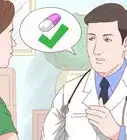
1Your doctor will take X-rays and your medical history. This helps them give you a specialized treatment plan. You might be prescribed a stronger analgesic that has oxycodone or hydrocodone if you have extreme arthritis pain or they'll give you a corticosteroid shot to manage severe pain and swelling, for instance.[19]
- Injections can provide you with quick relief, but they can only be used a few times a year since they break down bone and cartilage. This is why it's important to develop a long-term treatment plan with your doctor.
Advertisement

Expert Q&A
-
QuestionHow can I fight osteoarthritis naturally?
 Jason Myerson, DPT, DMT, OCS, FAAOMPTJason Myerson is a Physical Therapist and a Certified Orthopedic Specialist. He is affiliated with Performance Physical Therapy & Wellness with clinics located in Connecticut. He serves as adjunct faculty in the Physical Therapy Department at Quinnipiac University. Jason specializes in helping active people get back to hobbies, activities, and sports they love while utilizing an integrated approach to wellness. He holds an MA in Physical Therapy from Quinnipiac University and a Doctorate in Physical Therapy (DPT) from Arcadia University. He is Residency and Fellowship trained in Orthopedic Manual Therapy, achieved a Doctorate in Manual Therapy (DMT) and became a Fellow of the American Academy of Orthopedic Manual Physical Therapists (FAAOMPT).
Physical Therapist & Certified Orthopedic SpecialistPhysical Therapist & Certified Orthopedic SpecialistExpert AnswerTo help avoid osteoarthritis pain, try to get up and move around frequently. For instance, if you're working, get up once or twice an hour to stretch, rather than working for 3 or 4 hours at a time. -
QuestionDoes exercise help with arthritis pain?
 David Schechter, MDDr. David Schechter is a physician in Culver City, California. With over 25 years of experience as a family and sports medicine physician, Dr. Schechter specializes in mind-body medicine, preventive medicine, and chronic pain. Dr. Schechter received his MD from New York University and is an attending physician at Cedars-Sinai Medical Center. He was named a Top Doctor by Los Angeles Magazine and Men's Health Magazine. He has also written several books, including The MindBody Workbook.
Family Medicine PractitionerIt really depends on the type of exercise and the type of arthritic pain. Some light exercise and smart rehabilitation can be a good thing. At the same time, arthritic joints really need to rest sometimes. I'd recommend talking to your doctor first before you do anything else. -
QuestionWhat can I do to relieve knee pain?David Schechter, MDDr. David Schechter is a physician in Culver City, California. With over 25 years of experience as a family and sports medicine physician, Dr. Schechter specializes in mind-body medicine, preventive medicine, and chronic pain. Dr. Schechter received his MD from New York University and is an attending physician at Cedars-Sinai Medical Center. He was named a Top Doctor by Los Angeles Magazine and Men's Health Magazine. He has also written several books, including The MindBody Workbook.
Family Medicine PractitionerThe knee is a complicated joint. Typically, knee pain is the result of overuse, so a little rest may be in order. But you could start with ice and anti-inflammatory pills or gels. You could also get a knee sleeve, which is made of neoprene or elastic, to provide some support for your knee. -
QuestionCan I treat joint redness at home?
 Zheni Stavre, MDDr. Zheni Stavre is a board-certified Rheumatologist based in Worcester, Massachusetts. With over a decade of experience, Dr. Stavre specializes in Rheumatoid Arthritis, Spondyloarthritis/Psoriatic Arthritis, Osteoarthritis, and Gout. She holds a BS in Chemistry from Yale University and an MD in Internal Medicine and Rheumatology from The University of Massachusetts Medical School. Dr. Stavre is also an Assistant Professor at the University of Massachusetts Medical School.
Board Certified RheumatologistIf you're dealing with a minor injury and the area is just irritated, maybe. But if you've got persistent redness that won't go away after a day or two, it's time to see a doctor. This is the kind of thing you need a medical professional to look at. -
QuestionWhat if I feel like I have a fever?Zheni Stavre, MDDr. Zheni Stavre is a board-certified Rheumatologist based in Worcester, Massachusetts. With over a decade of experience, Dr. Stavre specializes in Rheumatoid Arthritis, Spondyloarthritis/Psoriatic Arthritis, Osteoarthritis, and Gout. She holds a BS in Chemistry from Yale University and an MD in Internal Medicine and Rheumatology from The University of Massachusetts Medical School. Dr. Stavre is also an Assistant Professor at the University of Massachusetts Medical School.
Board Certified RheumatologistIf you have joint redness and a fever, you need to go see a doctor immediately. There are a few things that could cause both of these symptoms, but they need to be investigated. -
QuestionWhat kind of tests will a doctor do to figure out what's causing the redness?Zheni Stavre, MDDr. Zheni Stavre is a board-certified Rheumatologist based in Worcester, Massachusetts. With over a decade of experience, Dr. Stavre specializes in Rheumatoid Arthritis, Spondyloarthritis/Psoriatic Arthritis, Osteoarthritis, and Gout. She holds a BS in Chemistry from Yale University and an MD in Internal Medicine and Rheumatology from The University of Massachusetts Medical School. Dr. Stavre is also an Assistant Professor at the University of Massachusetts Medical School.
Board Certified RheumatologistYou can expect a whole variety of blood tests and X-rays. It can be a little tricky to get a diagnosis with this since the cause could be something really basic, like arthritis, or a complicated autoimmune disease, like lupus. -
QuestionWhat is the best pain relief for arthritis?Zheni Stavre, MDDr. Zheni Stavre is a board-certified Rheumatologist based in Worcester, Massachusetts. With over a decade of experience, Dr. Stavre specializes in Rheumatoid Arthritis, Spondyloarthritis/Psoriatic Arthritis, Osteoarthritis, and Gout. She holds a BS in Chemistry from Yale University and an MD in Internal Medicine and Rheumatology from The University of Massachusetts Medical School. Dr. Stavre is also an Assistant Professor at the University of Massachusetts Medical School.
Board Certified RheumatologistIt depends on what works for you. Different people find different solutions beneficial. Some people find a lot of relief from topical creams, while other folks prefer OTC anti-inflammatory medications. -
QuestionWill arthritis pain go away on its own?Zheni Stavre, MDDr. Zheni Stavre is a board-certified Rheumatologist based in Worcester, Massachusetts. With over a decade of experience, Dr. Stavre specializes in Rheumatoid Arthritis, Spondyloarthritis/Psoriatic Arthritis, Osteoarthritis, and Gout. She holds a BS in Chemistry from Yale University and an MD in Internal Medicine and Rheumatology from The University of Massachusetts Medical School. Dr. Stavre is also an Assistant Professor at the University of Massachusetts Medical School.
Board Certified RheumatologistThe pain may come and go in waves, but if you've been diagnosed with arthritis, that pain is likely going to come back at some point. This isn't one of those problems that just goes away on its own. -
QuestionHow do you find out if you have rheumatoid arthritis?
 Siddharth Tambar, MDDr. Siddharth Tambar, MD is a board certified rheumatologist at Chicago Arthritis and Regenerative Medicine in Chicago, Illinois. With over 19 years of experience, Dr. Tambar specializes in Regenerative Medicine and Rheumatology, with a focus on platelet rich plasma and bone marrow derived stem cell treatments for arthritis, tendinitis, injuries, and back pain. Dr. Tambar holds a BA in Economics from State University of New York at Buffalo. He earned his MD from State University of New York at Syracuse. He completed his Internship, Residency in Internal Medicine, and his Rheumatology Fellowship at Northwestern Memorial Hospital. Dr Tambar is board certified in both rheumatology and internal medicine. He also holds Musculoskeletal Ultrasound Diagnostic and Interventional certifications from the American College of Rheumatology and the American Institute of Ultrasound in Medicine.
Board Certified RheumatologistI recommend you talk to your doctor about your symptoms. They will likely run a blood test to determine your risk for RA. They may also use a musculoskeletal ultrasound to take a look at the inflammation in your joints. -
QuestionCan degenerative arthritis be cured?Siddharth Tambar, MDDr. Siddharth Tambar, MD is a board certified rheumatologist at Chicago Arthritis and Regenerative Medicine in Chicago, Illinois. With over 19 years of experience, Dr. Tambar specializes in Regenerative Medicine and Rheumatology, with a focus on platelet rich plasma and bone marrow derived stem cell treatments for arthritis, tendinitis, injuries, and back pain. Dr. Tambar holds a BA in Economics from State University of New York at Buffalo. He earned his MD from State University of New York at Syracuse. He completed his Internship, Residency in Internal Medicine, and his Rheumatology Fellowship at Northwestern Memorial Hospital. Dr Tambar is board certified in both rheumatology and internal medicine. He also holds Musculoskeletal Ultrasound Diagnostic and Interventional certifications from the American College of Rheumatology and the American Institute of Ultrasound in Medicine.
Board Certified RheumatologistThe way degenerative arthritis develops is through sustaining a mild yet recurrent soft tissue injury throughout your lifetime. That then leaves the joint slightly unstable, which can eventually lead to degeneration of joints. There are a couple of ways that you should think about to prevent that from progressing. Number one, if you've had an injury to the knee, you want to be thinking about how you can reduce the stress on that knee. If you have excess weight, for example, try reducing your weight.
References
- ↑ Zheni Stavre, MD. Board Certified Rheumatologist. Expert Interview. 3 February 2021.
- ↑ https://www.uofmhealth.org/health-library/hw125087
- ↑ https://health.clevelandclinic.org/should-you-use-ice-or-heat-for-pain-infographic/
- ↑ https://health.clevelandclinic.org/7-things-you-probably-didnt-know-about-epsom-salt/
- ↑ https://pubmed.ncbi.nlm.nih.gov/17159021/
- ↑ https://www.arthritis.org/health-wellness/healthy-living/physical-activity/success-strategies/eights-ways-to-move-more
- ↑ Zheni Stavre, MD. Board Certified Rheumatologist. Expert Interview. 3 February 2021.
- ↑ https://www.arthritis.org/health-wellness/healthy-living/nutrition/anti-inflammatory/the-ultimate-arthritis-diet
- ↑ David Schechter, MD. Family Medicine Practitioner. Expert Interview. 15 July 2020.
- ↑ https://pubmed.ncbi.nlm.nih.gov/12019049/
- ↑ Zheni Stavre, MD. Board Certified Rheumatologist. Expert Interview. 3 February 2021.
- ↑ https://pubmed.ncbi.nlm.nih.gov/21104944/
- ↑ https://www.arthritis.org/health-wellness/treatment/complementary-therapies/supplements-and-vitamins/supplements-for-arthritis
- ↑ https://www.ncbi.nlm.nih.gov/pmc/articles/PMC4303902/
- ↑ https://pubmed.ncbi.nlm.nih.gov/16531187/
- ↑ https://pubmed.ncbi.nlm.nih.gov/24718489/
- ↑ https://www.ncbi.nlm.nih.gov/pmc/articles/PMC5473429/
- ↑ David Schechter, MD. Family Medicine Practitioner. Expert Interview. 15 July 2020.
- ↑ https://orthop.washington.edu/patient-care/articles/arthritis/frequently-asked-questions-about-arthritis.html
- ↑ https://pubmed.ncbi.nlm.nih.gov/27634207/
About This Article

Medical Disclaimer
The content of this article is not intended to be a substitute for professional medical advice, examination, diagnosis, or treatment. You should always contact your doctor or other qualified healthcare professional before starting, changing, or stopping any kind of health treatment.
To get rid of arthritis pain, try taking over-the-counter analgesics, like Tylenol, or nonsteroidal anti-inflammatory drugs, like ibuprofen, for quick relief. You can also treat a painful joint directly by applying a topical analgesic, such as capsaicin, onto your skin near the joint. If you'd prefer a more natural pain relief solution, try taking anti-inflammatory supplements, like SAM-e, fish oil, and avocado-soybean Unsaponifiables, instead. You should also make sure to exercise regularly and stay mobile to keep your joints from stiffening. However, avoid activities that put too much pressure on your joints, since you can overwork them. For more tips from our Medical co-author, like how to get rid of arthritis pain by making diet changes, scroll down!