This article was co-authored by Miguel Cunha, DPM and by wikiHow staff writer, Hannah Madden. Dr. Miguel Cunha is the founder of Gotham Footcare and is a podiatrist based in Manhattan, New York. Dr. Cunha is a foot and ankle surgeon with experience treating a wide array of foot and ankle conditions from minor problems to complex reconstructive foot and ankle surgery. Dr. Cunha received his DPM from the Temple University School of Podiatric Medicine and completed his residency as the Chief Resident at the Washington Hospital Center and Georgetown University where he specialized in lower extremity trauma, diabetic limb salvage, and reconstructive surgery of the foot and ankle. Dr. Cunha is a member of the American Podiatric Medical Association, the New York Podiatric Medical Association, the American College of Foot and Ankle Surgeons, and is board certified in Podiatric Medicine.
There are 12 references cited in this article, which can be found at the bottom of the page.
wikiHow marks an article as reader-approved once it receives enough positive feedback. This article has 17 testimonials from our readers, earning it our reader-approved status.
This article has been viewed 703,140 times.
Our feet take a lot of punishment on a daily basis—walking, standing, running, and wearing shoes all take their toll. If your feet are feeling dry or callused, there are a few ways you can pamper them to make them feel soft again. Getting your feet to be baby soft might not happen overnight, but with a little patience, you can have silky smooth feet in no time.
Steps
Method 1
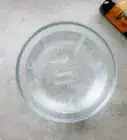
Method 1 of 10:Soak your feet in warm water for about 10 minutes.
-
1This will help your skin feel soft and easy to exfoliate. You can either fill a small bucket with water or get into the shower/bathtub to let your feet have a luxurious soak.[1]
- It’s usually much easier to exfoliate when your skin is already soft and warm, so it’s important to soak them first.
- If your feet are feeling sore, add 300 g (1.5 cups) of Epsom salt to your bath. This will help soothe your aching feet and muscles.[2]
Advertisement

Method 2
Method 2 of 10:Pat your feet dry with a towel.
-
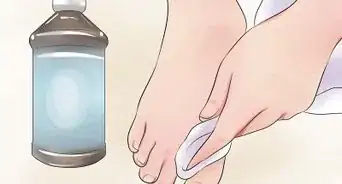
1Leaving your skin damp can lead to bacteria and fungal growth. Use a towel to pat your skin dry after you get out of the bath or the shower. Don’t forget to get the creases in between your toes![3]
- This is especially important if you’re prone to athlete’s foot or toenail fungus.
- If you’re really worried about fungal or bacteria growth, use a hair dryer on the cool setting to quickly dry your feet off after you get out of the bath or the shower.

Method 3
Method 3 of 10:Exfoliate with a pumice stone on a daily basis.
-
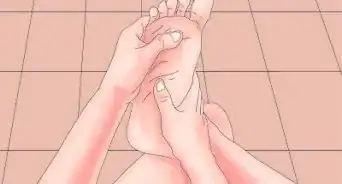
1Pumice stones help remove dead skin and prevent calluses. After you get out of the shower of the bath, rub the stone slowly and gently over your heels, the balls of your feet, and the outside edges of your big toes.[4]
- Use a circular motion when rubbing either a pumice stone or foot file on your skin. You’ll only need to perform this step for a few minutes on each foot. Make sure to be gentle when using a pumice stone to avoid accidentally injuring your skin.[5]
- If you don’t have a pumice stone, use a salt scrub instead. Mix (128 g) of salt and 1⁄2 tsp (2.5 mL) of an essential oil, then rub it on your feet to exfoliate them.[6]
Advertisement

Method 4
Method 4 of 10:File the areas of your feet that are super rough or dry.
-
1Your heels and the outside of your toes might have a lot of skin built up. If you notice that there are areas on your feet that aren’t getting softer with the pumice stone, take an emery board and rub it gently across these areas.[7]
- Foot files are super sharp, and they can hurt your feet if you rub too hard. Start out slowly and then work your way up to shave down your skin.
- Foot files work great on corns and calluses, too.

Method 5
Method 5 of 10:Moisturize your feet with lotion or cream.
-
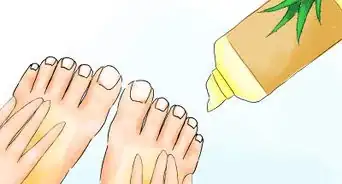
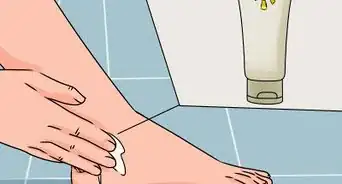
1Your feet don’t secrete oil, so they can’t hydrate themselves. Once you get out of the shower or the bath and you’ve exfoliated, pat your feet dry and apply a moisturizer all over your feet.[8]
- If you’re prone to athlete’s foot or fungal infections, don’t put moisturizer in between your toes. The moist environment can grow bacteria and fungus.[9]
- Remember that lotion and cream can make your feet slippery, so be careful if you step onto a tiled or hardwood floor with your bare feet after applying moisturizer!
Advertisement

Method 6
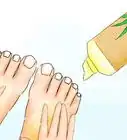
Method 6 of 10:Make your toenails softer with petroleum jelly.
-
1When the weather is dry, your toenails may feel hard or brittle. Use a thin layer of petroleum jelly on your toenails every night to make them feel softer and smoother.[10]
- To avoid rubbing the petroleum jelly onto your sheets at night, wear socks to bed.
- This can also help soften your cuticles so you can push them back if they’re too long.

Method 7
Method 7 of 10:Use a foot mask for intense hydration.
-
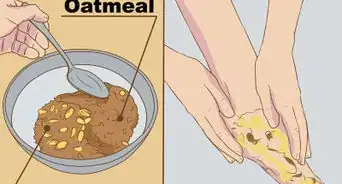
1If your feet are really dry or callused, you may need a rejuvenating mask. After you’ve exfoliated and moisturized your feet, mix 1⁄4 c (59 mL) of pumpkin puree, 1/4 tsp (1.42 g) of cinnamon, and 1⁄4 c (59 mL) of plain yogurt. Spread the mixture onto your feet, then let it sit for 15 minutes.[11]
- Cinnamon helps to soften your skin, and pumpkin puree works to brighten and nourish it.
- You don’t need to use a foot mask every day—just whenever your feet feel especially rough, like during the winter or after a long day of manual labor.
Advertisement

Method 8
Method 8 of 10:Treat corns and calluses with exfoliation and moisturizer.
-
1These tough spots can lead to pain and discomfort on your feet. If you have a corn or callus, start by soaking your feet in warm water for about 10 minutes. Use your pumice stone to gently file down the area, then apply a moisturizer.[12]
- You can do this every day until you get rid of your corn or callus.
- If you have diabetes or your corn/callus is especially painful, consult a dermatologist.

Method 9
Method 9 of 10:Cover blisters to allow them to heal.
-
1Blisters often happen because of ill-fitting socks or shoes. If you get a blister, cover it with a bandage to let it pop and drain on its own. If your blister is rubbing against your shoes, use padding (like Moleskine) to protect it.[13]
- If your blister is particularly large or painful, you may need to lance it on your own. Use rubbing alcohol to sterilize a small needle, then carefully poke the edge of the blister and allow it to drain.
- If you notice any pus or redness as your blister heals, it could be a sign of an infection. Talk to a dermatologist right away.
Advertisement

Method 10
Method 10 of 10:Protect your feet with shoes and socks.
-
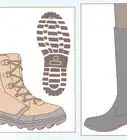
1Going out barefoot can make your feet feel rough. Make sure you’re always wearing appropriate footwear before you head outside to keep your feet feeling silky and soft.[14]
- You should always make sure your shoes fit you well! Shoes that are too small can lead to blisters, corns, and calluses.
- Go for moisture-wicking socks, like cotton and wool, to keep your feet dry.

Expert Q&A
Did you know you can get premium answers for this article?
Unlock premium answers by supporting wikiHow
-
QuestionHow can I make my feet callous-free?
 Miguel Cunha, DPMDr. Miguel Cunha is the founder of Gotham Footcare and is a podiatrist based in Manhattan, New York. Dr. Cunha is a foot and ankle surgeon with experience treating a wide array of foot and ankle conditions from minor problems to complex reconstructive foot and ankle surgery. Dr. Cunha received his DPM from the Temple University School of Podiatric Medicine and completed his residency as the Chief Resident at the Washington Hospital Center and Georgetown University where he specialized in lower extremity trauma, diabetic limb salvage, and reconstructive surgery of the foot and ankle. Dr. Cunha is a member of the American Podiatric Medical Association, the New York Podiatric Medical Association, the American College of Foot and Ankle Surgeons, and is board certified in Podiatric Medicine.
Board Certified PodiatristFor the average person who has callouses, you can get either a pumice stone or scrapers at the foot section of the pharmacy. If it's done routinely after taking a shower or in the shower, you can gradually reduce the buildup of thickened skin on your feet. Remember not to be too aggressive when using a pumice stone or scraper.
Support wikiHow by unlocking this expert answer.
-
QuestionHow can I make my feet softer overnight?Miguel Cunha, DPMDr. Miguel Cunha is the founder of Gotham Footcare and is a podiatrist based in Manhattan, New York. Dr. Cunha is a foot and ankle surgeon with experience treating a wide array of foot and ankle conditions from minor problems to complex reconstructive foot and ankle surgery. Dr. Cunha received his DPM from the Temple University School of Podiatric Medicine and completed his residency as the Chief Resident at the Washington Hospital Center and Georgetown University where he specialized in lower extremity trauma, diabetic limb salvage, and reconstructive surgery of the foot and ankle. Dr. Cunha is a member of the American Podiatric Medical Association, the New York Podiatric Medical Association, the American College of Foot and Ankle Surgeons, and is board certified in Podiatric Medicine.
Board Certified PodiatristA technique that I recommend would be using urea cream and putting it on the rough areas of your feet at night. Wrap saran wrap around your feet and put socks over them. What the urea cream will do is break down the thickness of the calluses. In the morning when you take a shower, use a pumice stone and it will scrape off very easily.Support wikiHow by unlocking this expert answer.


References
- ↑ https://www.footcaremd.org/resources/how-to-help/tips-for-safe-pedicures
- ↑ https://health.clevelandclinic.org/7-things-you-probably-didnt-know-about-epsom-salt/
- ↑ https://www.massgeneral.org/children/foot-care
- ↑ Miguel Cunha, DPM. Board Certified Podiatrist. Expert Interview. 22 April 2020.
- ↑ Miguel Cunha, DPM. Board Certified Podiatrist. Expert Interview. 22 April 2020.
- ↑ https://www.bhg.com/beauty-fashion/skin-care/diy-salt-foot-scrub/
- ↑ https://www.marieclaire.co.uk/beauty/pedicure-at-home-112370
- ↑ https://www.footcaremd.org/resources/how-to-help/tips-for-safe-pedicures
- ↑ https://www.apma.org/Patients/HealthyFeetTips.cfm?ItemNumber=9859
- ↑ https://www.aad.org/public/everyday-care/skin-care-secrets/routine/petroleum-jelly
- ↑ https://www.youtube.com/watch?v=yLgXeBLIIBg&feature=youtu.be&t=15
- ↑ https://www.aad.org/public/everyday-care/injured-skin/burns/treat-corns-calluses
- ↑ https://www.aad.org/public/everyday-care/injured-skin/burns/prevent-treat-blisters
- ↑ https://www.aofas.org/news/press-releases/2019/04/16/five-tips-for-healthy-feet
About This Article

If you want to get baby soft feet, use a pumice stone or a foot file to remove the dead skin on your feet every day after you shower. Rub lotion into your feet after you have showered and exfoliated or before you go to bed each night, and apply a thin coat of petroleum jelly to your toenails before bed to keep them soft. If you like, you can put on a pair of socks to keep the lotion and petroleum jelly from getting on your floors or sheets. To learn how to make a foot soak out of lemon juice, keep reading!



-Step-8-Version-2.webp)