This article was co-authored by wikiHow staff writer, Hannah Madden. Hannah Madden is a writer, editor, and artist currently living in Portland, Oregon. In 2018, she graduated from Portland State University with a B.S. in Environmental Studies. Hannah enjoys writing articles about conservation, sustainability, and eco-friendly products. When she isn’t writing, you can find Hannah working on hand embroidery projects and listening to music.
This article has been viewed 1,384 times.
Learn more...
If the chilly winter weather is getting you down, adding some flowers inside can really cheer you up. Forcing bulbs indoors is a great way to keep spring flowers right on your countertop all year round! With the right supplies and a little bit of patience, you can make your flowers bloom inside in just a few months.
Steps
Question 1
Question 1 of 6:When should you start to force bulbs?
-
1Force your bulbs as soon as the cold weather hits. Bulb flowers don’t do well during the cold winter temperatures. As soon as the weather starts to cool down, grab your potting supplies and start forcing your bulbs indoors. You can keep them in a pot inside throughout the winter, then transplant them outside in the spring.[1]
- Realistically, you can force bulbs indoors any time of the year. However, it makes the most sense to do it during the winter since they can’t grow outside.
Advertisement

Question 2
Question 2 of 6:What types of bulbs can you force indoors?
-
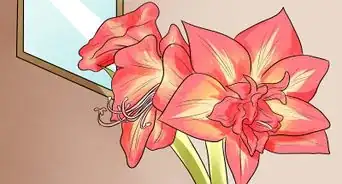
1You can force any spring-flowering bulb indoors. However, some are more difficult than others. Hyacinths and daffodils are some of the easiest bulbs to work with, while tulips can be a little tougher. Crocus, grape hyacinth, snowdrops, caladiums, and amaryllis are good options, too.[2]
- When you buy flower bulbs, look for large, good-sized bulbs that are free from mold and mildew.
- Nurseries are great places to buy bulbs.

Question 3
Question 3 of 6:How do you plant bulbs in soil?
-
1Fill a pot 1/3 of the way full with potting soil. Pick a clay or plastic pot with drainage holes that’s at least 6 inches (15 cm) deep. Fill it about 1/3 of the way up with commercial potting soil from a garden supply store.[3]
-
2Stand the bulbs up in the soil. Point the hairy root-end of the bulbs down into the soil with the pointed ends upwards. In a 6 in (15 cm) pot, you can plant about 6 tulip bulbs, 6 daffodil bulbs, 3 hyacinth bulbs, or 15 crocus bulbs.[4]
-
3Cover the bulbs with potting soil. Grab your potting soil and carefully pour it around the bulbs, making sure they stay upright. Keep pouring until the tip of the bulbs are just barely sticking out of the soil. Tap the pot on the ground to flatten out the potting soil, then water your bulbs until the soil is moist.[5]Advertisement

Question 4
Question 4 of 6:How long do you chill your bulbs?
-
1Chill the bulbs for 12 to 14 weeks. Find a spot in your home that’s between 35 to 48 °F (2 to 9 °C), like a garage, fridge, or basement. Place your pots in the chill area and leave them there to simulate the cold winter weather that the bulbs would normally go through.[6]
- If you put your bulbs in the fridge, cover the pots with plastic bags that have a few air holes poked in them.
- Water the bulbs every few days to keep the soil moist.

Question 5
Question 5 of 6:How do you force your bulbs to flower?
-
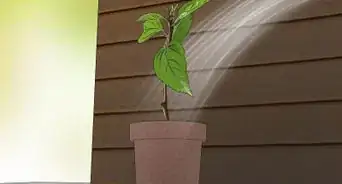
1Place the bulbs in a sunny spot after cold storage. The change in temperature will force your flowers to start blooming. Bring your pots inside and try to keep them around 50 to 60 °F (10 to 16 °C). In 3 to 4 weeks, your bulbs will flower![7]
- If you want to have flowers all year round, try planting your bulbs a few weeks apart. That way, you can bring them inside every few weeks for a continuous array of flowers.
- To prolong your bloom time, move the flowers to a cool spot in the house every night. It will simulate the natural bloom period of a flower and make them bloom for longer.
Advertisement

Question 6
Question 6 of 6:Will forced bulbs bloom again?
-
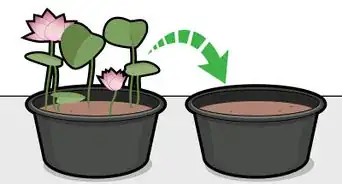
1No, they usually won’t. Bulbs forced indoors are usually a one and done process—when the flower dies, you can remove the bulb and throw it in your compost pile. Daffodils are the one exception to this rule: you can save the bulbs by planting them outdoors in the ground.[8]
- Bulbs are fairly inexpensive, so it won’t cost you much to replace them every year.







References
- ↑ https://extension.umn.edu/planting-and-growing-guides/growing-bulbs-indoors
- ↑ https://extension.missouri.edu/publications/g6550
- ↑ https://extension.umn.edu/planting-and-growing-guides/growing-bulbs-indoors
- ↑ https://extension.umn.edu/planting-and-growing-guides/growing-bulbs-indoors
- ↑ https://extension.umn.edu/planting-and-growing-guides/growing-bulbs-indoors
- ↑ https://www.canr.msu.edu/news/force_flower_bulbs_to_grow_indoors_to_battle_the_blues
- ↑ https://extension.missouri.edu/publications/g6550
- ↑ https://hortnews.extension.iastate.edu/faq/it-possible-save-tulip-bulbs-have-been-forced-indoors
About This Article