This article was co-authored by Dmitriy Fomichenko and by wikiHow staff writer, Danielle Blinka, MA, MPA. Dmitriy Fomichenko is the president of Sense Financial Services LLC, a boutique financial firm specializing in self-directed retirement accounts with checkbook control based in Orange County, California. With over 19 years of financial planning and advising experience, Dmitry assists and educates thousands of individuals on how to use self-directed IRA and Solo 401k to invest in alternative assets. He is the author of the book "IRA Makeover" and is a licensed California real estate broker.
This article has been viewed 11,951 times.
When you’ve switched jobs, transferring your 401k account is often low on your priority list. You may tell yourself that you’ll worry about it later, but once that day comes, sometimes it’s hard to locate your account details. If you’ve misplaced your old 401k, there’s no need to worry. You can find an old 401k through your old employer or the plan administrator. If you don’t know how to contact them, you can check national registries and databases. Once you’ve found the account, you have choices for how to access your funds.
Steps
Method 1
Method 1 of 3:Contacting Your Old Employer or Plan Administrator
-
1Find your old employers. 401k is a retirement plan.[1] The easiest way to find your plan is often to contact your old employer. However, first you need their contact information. Try looking the company up online to find the contact details, or go through your old paperwork to look for check stubs, old deposit information, or the information listed on your tax returns.
- Conduct an online search for a website or phone number.
- Look through your old paperwork. You may have an old pay stub, tax returns, or other documents that could jog your memory.
- Reconnect with former coworkers using social media sites like Facebook and LinkedIn to refresh your memory about your former coworkers’ employment history, which could help you remember old jobs you’ve had.[2] You can also use these sites to message your old coworkers.
-
2Talk to human resources at your former employer. Call human resources, the accountant, or the bookkeeper, depending on which is applicable for your case. Ask them to check their plan records to look for your account. If they can't find it, they can help you get in touch with the plan administrator.
- Be ready to provide your name, social security number, and employment dates. If you have it, information like your employee ID number could also be helpful in aiding them as they track down your account.[3]
Advertisement -
3Check an old 401k statement for the plan administrator’s contact information. Using the contact information, you can try to locate your plan. If the administrator has changed, the original administrator may be able to give you that contact information.
- If you’ve lost or shredded all of your plan statements, then talk to your former coworkers to see if they have an old statement they can check. Let them know that you don’t need to look at their personal information and just want the administrator’s contact information.
Advertisement


Method 2
Method 2 of 3:Searching the National Registry and Other Databases
-
1Search for the plan administrator on a government database. If your employer sponsored a plan, it’s required by law to file an annual report on the plan. This is called a Form 5500. Search for the name of your employer, and it should list the contact information for the plan administrator. You can call the administrator to ask about your account.
- Have your social security number ready when you call.
- You can try free websites like www.FreeErisa.com or www.BrightScope.com to search government databases.[4]
- Also, you can try searching through the Department of Labor: https://www.efast.dol.gov/welcome.html.
-
2Consult the National Registry of Unclaimed Retirement Benefits. Your company may have sent your account information to this national registry, which is a free service. You can search for your account using your social security number. If your accounts are listed, the registry will tell you who to contact to get your money.[5]
- You can search for your account here: https://www.unclaimedretirementbenefits.com/.
-
3Check with the Department of Labor to see if your plan was terminated. While this sounds scary, it just means that your employer no longer has their old retirement plan. This could be because they’ve closed or changed plans. Luckily, the Department of Labor hosts a database that you can search to find plans that have been terminated or are about to be terminated. It will give you the contact information for the person in charge of overseeing the process, who can help you find your account.[6]
- You can search the database here: https://www.askebsa.dol.gov/AbandonedPlanSearch/.
-
4Find out if your plan was converted into an IRA by your employer. This may have happened if your plan was worth between $1000 and $5000. If you employer contacted you to offer payout instructions but received no response, then they may have automatically rolled your account into an IRA. You can find out if this applies to you by either talking to your employer or conducting a search of www.FreeErisa.com.[7]
- You do need to create an account to use the search site.
Advertisement


Method 3
Method 3 of 3:Accessing Your Funds
-
1Verify your identity if necessary. You will likely need to confirm who you are in order to access your accounts. Ask your plan administrator what items you need to provide to demonstrate your identity, such as a government-issued ID.[8]
-
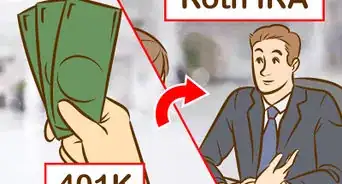
2Roll over your plan if you are still saving for retirement. You can roll your plan into your current 401k or IRA, or you can open up a new IRA account.[9] You will need to work with your plan administrator and/or your financial advisor to roll over your account.[10] Call your plan administrator and ask for a direct deposit into the account you’ve selected. When the check arrives, deposit it immediately.
- Once the funds appear in your account, adjust your investments unless your plan administrator does this for you.
- It’s important to specify you want a direct deposit, as this will avoid early withdrawal fees. All of the funds must be immediately returned to a qualified retirement account in order to avoid added fees.[11]
-
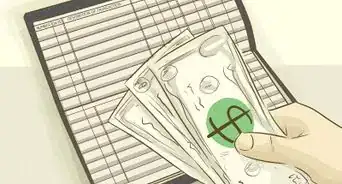
3Withdraw your funds if you’re over 59.5 or are willing to pay a fee. If you’re ready for retirement or need the money for a major expense, you can close your account and take a withdrawal.[12] If you are over 59.5, you can do this without paying a fee. However, individuals who are under 59.5 will owe a 10% early withdrawal fee on the funds.
- If you have a hardship such as a disability or massive medical bills, then you may qualify for a hardship exemption that will exempt you from paying the 10% fee.
- If you opt to take a payout, expect to pay income taxes on the funds.
- Some plans require you to start taking distributions by age 70.5.[13]
Advertisement


Community Q&A
-
QuestionWhat is solo 401k?
 Dmitriy FomichenkoDmitriy Fomichenko is the president of Sense Financial Services LLC, a boutique financial firm specializing in self-directed retirement accounts with checkbook control based in Orange County, California. With over 19 years of financial planning and advising experience, Dmitry assists and educates thousands of individuals on how to use self-directed IRA and Solo 401k to invest in alternative assets. He is the author of the book "IRA Makeover" and is a licensed California real estate broker.
Financial PlannerIt is a retirement plan for self-employed people and owners of small businesses. You do not require a custodian or middleman because it allows the client to act as a trustee. You can direct the investments yourself. -
QuestionWill I be eligible for solo 401k if I have employees?Dmitriy FomichenkoDmitriy Fomichenko is the president of Sense Financial Services LLC, a boutique financial firm specializing in self-directed retirement accounts with checkbook control based in Orange County, California. With over 19 years of financial planning and advising experience, Dmitry assists and educates thousands of individuals on how to use self-directed IRA and Solo 401k to invest in alternative assets. He is the author of the book "IRA Makeover" and is a licensed California real estate broker.
Financial PlannerIf you have part-time employees, you are eligible for solo 401k. That means the employees should work for less than 1000 hours in a year. -
QuestionWhy is solo 401k advantageous?Dmitriy FomichenkoDmitriy Fomichenko is the president of Sense Financial Services LLC, a boutique financial firm specializing in self-directed retirement accounts with checkbook control based in Orange County, California. With over 19 years of financial planning and advising experience, Dmitry assists and educates thousands of individuals on how to use self-directed IRA and Solo 401k to invest in alternative assets. He is the author of the book "IRA Makeover" and is a licensed California real estate broker.
Financial PlannerA solo 401k allows alternative investments. It offers a high contribution limit per year that helps to minimize your tax liability. For example, the contribution limit for the year 2020 per participant was $57,000. If you and your spouse work together in a business, you can shelter over $100,000 of your income from taxes.
Warnings
- Always check that a website is secure before you enter your personal information.Thanks!
- Don’t give out your information to someone who calls you out of nowhere.Thanks!
- You will have to pay early withdrawal fees if you withdraw your retirement funds before you’re 59.5.Thanks!


-Step-15.webp)





References
- ↑ Dmitriy Fomichenko. Financial Planner. Expert Interview. 30 June 2020.
- ↑ https://www.thestreet.com/story/12910195/1/the-forgotten-401k-5-ways-to-find-out-if-you-have-a-lost-retirement-plan.html
- ↑ https://www.newretirement.com/retirement/find-lost-401k-find-lost-money-unclaimed-retirement-benefits/
- ↑ https://www.thestreet.com/story/12910195/1/the-forgotten-401k-5-ways-to-find-out-if-you-have-a-lost-retirement-plan.html#2
- ↑ https://www.newretirement.com/retirement/find-lost-401k-find-lost-money-unclaimed-retirement-benefits/
- ↑ https://www.newretirement.com/retirement/find-lost-401k-find-lost-money-unclaimed-retirement-benefits/
- ↑ https://www.newretirement.com/retirement/find-lost-401k-find-lost-money-unclaimed-retirement-benefits/
- ↑ https://www.newretirement.com/retirement/find-lost-401k-find-lost-money-unclaimed-retirement-benefits/
- ↑ https://www.newretirement.com/retirement/find-lost-401k-find-lost-money-unclaimed-retirement-benefits/
- ↑ Dmitriy Fomichenko. Financial Planner. Expert Interview. 30 June 2020.
- ↑ https://www.irs.gov/retirement-plans/plan-participant-employee/401k-resource-guide-plan-participants-general-distribution-rules
- ↑ Dmitriy Fomichenko. Financial Planner. Expert Interview. 30 June 2020.
- ↑ https://www.irs.gov/retirement-plans/plan-participant-employee/401k-resource-guide-plan-participants-general-distribution-rules
About This Article



-Step-15.webp)









































