This article was co-authored by Trudi Griffin, LPC, MS and by wikiHow staff writer, Amy Bobinger. Trudi Griffin is a Licensed Professional Counselor in Wisconsin specializing in Addictions and Mental Health. She provides therapy to people who struggle with addictions, mental health, and trauma in community health settings and private practice. She received her MS in Clinical Mental Health Counseling from Marquette University in 2011.
This article has been viewed 4,832 times.
Having a baby can lead to a lot of different emotions, and many new moms experience mood swings, crying, and anxiety. If these feelings are severe, or if they last more than 2 weeks, you may be experiencing postpartum depression, or PPD. If you think you may be suffering from PPD, it can be very therapeutic to talk about your feelings in a support group. Once you are able to acknowledge the problem, you have taken the first, most important step towards overcoming postpartum depression.
Steps
Method 1
Method 1 of 2:Finding Support in Your Network
-
1Learn the symptoms of PPD so you can recognize them. Keep a journal every day and write down your emotions. In particular, you should watch for panic attacks, anxiety, anger, irritability, unexplained fear, extreme sadness or crying, and overwhelmed or hopeless feelings.
- Other symptoms may include irregular eating and sleeping patterns and losing interest in your partner, friends, or baby.
- Try to keep an open mind when listening to family and friends if they have noticed concerning changes in your mood postpartum.
-
2Check for PPD support group flyers in public areas of your town. Look for PPD support flyers whenever you go out of your house. Support groups are often held at community centers, birthing centers, public libraries, and houses of worship. You might even see flyers at your local supermarket.[1]Advertisement
-
3Call your birthing center or doctor to ask about local groups. If you don't see any flyers, or if you don't regularly go to areas where the meetings may be held, your birthing center or doctor can be a great resource for information about PPD support groups near you. Even if they can't direct you to a group, they will likely be able to give you the name and number of someone who can.
- Many communities, midwifery clinics, and hospitals also have postpartum depression resources for new mothers.
-
4Check online directories if you don’t want to call anyone. When you’re feeling depressed, it can be hard to leave the house, or even to pick up the phone and call someone. That’s okay. You can look online for directories of local meetings. Just keep in mind that smaller, independent groups in your area might not be listed online.[2]
- Postpartum Progress offers support groups in the United States in Canada. You can find a list of their support groups by visiting http://www.postpartumprogress.com/ppd-support-groups-in-the-u-s-canada.
- Postpartum Support International (PSI) has offers groups in the United States and around the world. For a directory of their U.S. support groups, visit http://www.postpartum.net/get-help/locations/united-states/
- For a list of PSI’s international meetings, including locations in South America, Australia, Europe, India, Africa, Asia, and the Middle East, visit http://www.postpartum.net/get-help/locations/international/
-
5Join a parenting group if you can’t find a PPD support group. If there’s not a group specializing in postpartum depression in your area, try joining a support group for new moms. It may help you just to be around other parents who are learning to navigate having a newborn too.[3]
- This can be a good way to make friends with other moms. Feeling connected to other people can be a powerful weapon against depression.
- You may be able to find parenting groups through your local hospital, children’s health clinic, social media or even toy stores and supermarkets.
-
6Turn to your family and friends for support. Having a new baby is overwhelming, and it can be even more so if you're suffering from PPD. Don't be afraid to reach out to your own community, including family, friends, coworkers, and neighbors. You'll probably find more help than you expect.[4]
- Ask a friend to come over and watch the baby while you shower, nap, or clean.
- You have enough to deal with right now, so turn to people you get along with who don't cause you stress or drama.
- It can be hard to ask for help, but take a deep breath and try saying something like, "I'm feeling really overwhelmed with everything. I remember you asked if you could do anything to help, and I was wondering if you would be willing to come over and help me with laundry?"
-
7Reach out online. Online support groups can be a great way to talk about how you feel without worrying about being judged. You can also find information from other moms who have been through PPD and learn about their coping strategies and other tricks that helped them overcome their depression.
- Postpartum Support International offers online weekly support meetings, including meetings in Spanish. You can find the next meeting by visiting http://www.postpartum.net/psi-online-support-meetings/.
- PSI has also teamed up with Smart Patients to create an online community where you can share openly in a private space. You can find their forum at https://www.smartpatients.com/partners/ppd.
- Another option is the Postpartum Mood Disorder community on the Tapatalk community platform, which includes forums for military moms, OCD, alternative and holistic treatments, and post-adoption depression. Visit their forum at https://www.tapatalk.com/groups/postpartumdepression/.
Advertisement


Method 2
Method 2 of 2:Getting Professional Help
-
1Talk to your doctor about your feelings. Your doctor can help you distinguish between baby blues and PPD. It’s always important to talk to your doctor about changes in your mood or thinking, but if you’re thinking about hurting yourself or your baby, call your doctor immediately.[5]
- Your doctor may ask you to fill out a questionnaire to screen you for depression, and they may order blood tests to see whether your symptoms are being affected by an underactive thyroid.
-
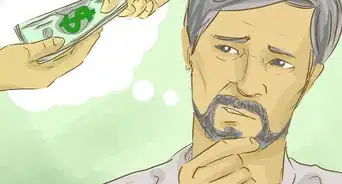
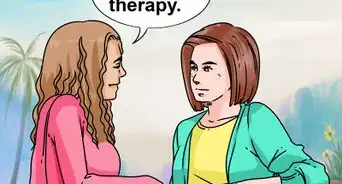
2Visit a therapist. Your doctor may refer you to a mental health provider, or you may choose to visit one yourself. It can help to talk through your concerns with a professional who can help you find healthy ways to cope with your feelings.[6]
- A therapist may also help you learn better ways to solve problems, as well as to set realistic goals.
- Your therapist may recommend that you participate in couples or family counseling as well.[7]
- You can find a therapist through your insurance, by asking family and friends for recommendations, or by looking online.
-
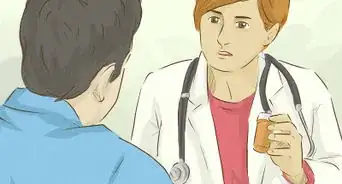
3Consider medication to help your PPD. If your symptoms are severe or you’re having trouble managing them, your therapist may recommend an antidepressant. If you're breastfeeding, there are some antidepressants you can take with little risk of side effects for your baby.[8]
- Do not stop taking your medication unless it is under your doctor's supervision, even if you’re feeling better. Changing or stopping your medication suddenly may lead to a relapse.
-
4If you feel like hurting yourself, call a crisis line immediately. Crisis lines are staffed by knowledgeable, understanding people who genuinely care about helping you, and they will give you the support you need to get through this.
- In the U.S., call the National Suicide Prevention Line at 1-800-273-TALK.
- If you don’t want to talk on the phone, message the American Foundation for Suicide Prevention’s Crisis Text Line to text with a trained Crisis Counselor. Just text HOME to 741741.
-
5Get immediate help if you have paranoia or hallucinations. This can be a sign of postpartum psychosis, which is rare but serious. Call your doctor or visit a hospital right away so you can start feeling healthier as soon as possible.[9]Advertisement


Warnings
- Call the National Suicide Prevention Line at 1-800-273-TALK if you feel like hurting yourself.Thanks!
- Call your doctor or visit a hospital immediately if you experience paranoia or hallucinations, which could be signs of postpartum psychosis.Thanks!











References
- ↑ https://www.postpartumdepression.org/support/groups/
- ↑ http://www.postpartumprogress.com/ppd-support-groups-in-the-u-s-canada.
- ↑ https://www.nhs.uk/conditions/pregnancy-and-baby/services-support-for-parents/
- ↑ https://www.todaysparent.com/baby/how-to-ask-for-help-with-your-new-baby/
- ↑ https://www.mayoclinic.org/diseases-conditions/postpartum-depression/diagnosis-treatment/drc-20376623
- ↑ https://www.mayoclinic.org/diseases-conditions/postpartum-depression/diagnosis-treatment/drc-20376623
- ↑ https://www.mayoclinic.org/diseases-conditions/postpartum-depression/diagnosis-treatment/drc-20376623
- ↑ https://www.mayoclinic.org/diseases-conditions/postpartum-depression/diagnosis-treatment/drc-20376623
- ↑ https://www.mayoclinic.org/diseases-conditions/postpartum-depression/diagnosis-treatment/drc-20376623














































Medical Disclaimer
The content of this article is not intended to be a substitute for professional medical advice, examination, diagnosis, or treatment. You should always contact your doctor or other qualified healthcare professional before starting, changing, or stopping any kind of health treatment.
Read More...