This article was co-authored by Amy Harrison, a trusted member of wikiHow's volunteer community. Amy Harrison has over five years of experience working directly with poultry. She has worked on a rural chicken farm built around marketing free-range eggs, where she managed the care for the poultry year-round. She has experience breeding chickens and quail, caring for newborn poultry, handling their health issues, and managing their dietary needs.
This article has been viewed 10,897 times.
Learn more...
Backyard chickens are becoming increasingly popular pets in many family households due to their benefits of producing plentiful of fresh eggs each morning. While chickens are largely known for their quality egg production, they also possess many other rewarding benefits. One of these benefits is their ability to consume a wide array of leftovers and table scraps; turning your garden into a living compost system. Below are some tips to get started on incorporating healthy table scraps into your chicken's diet.
Steps
Part 1
Part 1 of 3:Choosing the Right Foods
-
1Feed your chickens table scraps with caution. While chickens are fully capable of incorporating additional leftovers into their diet and digesting them, there are some risks that come with feeding a high-variety diet. Generally, feeding table scraps have the risk of over-feeding your chickens, which can lead to selective feeding and other feeding problems.[1]
- It's important to remember that table scraps should be fed in moderation, as they aren't a substitute for your chicken's daily feed. While vegetables and fruits are fine to feed chickens, it is possible to over-feed your chicken pantry foods, such as pasta, rice, and lentils, which furthermore discourages your chicken from eating their daily feed.
-
2Recognise which foods are toxic to chickens. Most human "junk foods" should be avoided, such as chocolate, candy, and crisps. This also applies to some pantry foods, fruits, and vegetables. Here's a small list of foods you should steer clear of:[2]
- Avocado (especially the pit and skin).
- Chocolate, candy or salted crisps/chips.
- Green or raw potatoes.
- Tomato stems and unripened tomato.
- Eggplant leaves.
- Dry beans.
- Caffeine, sugar and salt.
- Citrus fruits.
- Onion
- Rhubarb.
- Mushrooms.
Advertisement -
3Take note of which foods can be fed occasionally. Chickens can be fed fresh produce daily, such as vegetables, fruit, and herbs. Additionally, chickens can also be fed seeds and grains daily, such as wheat and corn.
- Mealworms should be limited to 1-2 pieces a day per chicken. These insects are treats that contain too much protein to amount to a large part of their diet.
- Most types of breads (including cakes, doughnuts, and bagels) should be limited in small amounts or only given 2-3 times a week. Large amounts of bread can lead to sour crop and should be fed in moderation as they have little nutritional value.[3]
- Chickens are actually lactose intolerant, so dairy products should be kept at a minimum. Chickens do not digest milk well; however, they can be fed small amounts of cultured dairy, such as yogurt and cheese. Yogurt has less lactose than milk.[4]
- Porridge should be kept at a minimum as oats are low in protein and fat, both of which chickens need. Too much porridge acts as a "filler" food, which can discourage your chicken from eating their daily feed.[5]
- Do not feed your chickens raw eggs. Boiled or cooked eggs are fine, as they provide essential proteins and nutrients. However, raw eggs can encourage your chicken to eat their own eggs, developing into a bad habit.[6]
- Avoid onions and garlic, including leeks and chives. In large amounts, onions can result in anemia. The primary reason you should avoid these vegetables is because they can alter the way your chicken's eggs taste.[7]
-
4Research which foods your chickens can eat. While there are some foods to avoid and feed in limited amounts, most fresh produce, wheats, and grains, can be provided on a daily basis. Here's a short list of healthy foods to feed your chickens, supplemented with their daily feed:[8]
- Vegetables that can be fed raw and cooked, such as corn, asparagus, broccoli, cauliflower, cabbage, brussels sprouts, carrots, cucumbers, lettuce, kale, spinach, and
- Fruits such as apple, bananas, berries, peach, pears, melon, watermelon, and seedless grapes.
- Cooked fruit and preserves such as applesauce, curd, sauces, jams, and spreads.
- Well-cooked beans, such as green beans and lima beans. Never dry.
- Dairy with low lactose, such as cheese (including cottage cheese) and yogurt.
- Eggs that are cooked well - boiled or scrambled.
- Wheats and grains such as bulgar, flax, wheatberry, oatmeal and corn kernels.
- Meat scraps of any kind, which includes cooked chicken.
- Pantry foods such as pasta, macaroni, and noodles.
Advertisement


Part 2
Part 2 of 3:Preparing the Right Foods
-
1Chop fresh produce and fruits. Being omnivores, chickens can consume most vegetables, with the exception of avocado and raw potatoes. Cutting your fruit and vegetables into cubes will make it easier to share among the flock.
- Chickens can consume corn, broccoli, carrots, cauliflower, cabbage, lettuce, bok choy, kale, spinach, chard, cucumber, pumpkin, squash, and tomatoes, to name a few.
-
2Thoroughly cook your eggs before feeding to your chickens. Eggs can be fed hard-boiled, scrambled, fried, or as an omelette. It's important to cook the eggs, including the yolk, all the way through to prevent bad habits, such as egg pecking.
-
3Cut meat into small pieces before feeding. Chickens can be fed all types of meats, including cooked chicken. Tough textured meat, such as beef, should be cut in cubes or slices before feeding to your chicken. This allows your chickens to share among the flock and makes it easier for them to eat.
- You can feed beef, pork, and ham raw. However, chicken must be cooked well to prevent your chickens from contracting salmonella.
-
4Feed potatoes cooked. Raw potatoes contain the alkaloid solanine, which is toxic to chickens. However, chickens can be fed potato cooked. A favourable method of cooking is to boil the potatoes and then mash them. Making them easier to distribute among the flock.
- Sweet potatoes belong to a different family, so can be fed raw.
-
5Cook pasta, lentils and beans. Dry beans are dangerous to chickens if fed raw, especially kidney beans, as they contain a toxin called phytohaemagglutinin, which is fatal to chickens.[9]
- While pastas aren't poisonous if fed raw, they are hard to eat. Pasta should always be served cooked so that they are softened.
Advertisement


Part 3
Part 3 of 3:Feeding Your Chickens
-
1Don't feed table scraps to baby chicks. Young chicks have a strict diet of chick crumble (or mash). Because they have a sensitive digestive system, they can't consume leftover foods as easily as adult chickens. Begin feeding your chicks table scraps once they have reached 2 months of age.[10]
-
2Feed table scraps sparingly. Table scraps are a form of treats for chickens and should therefore be treated as such.[11] Leftover foods should be supplemented with your chickens daily feed, rather than a substitute for it.
- It's recommended that table scraps, and any other treat, should only take up 10% of your chicken's diet.[12]
-
3Set up a feeding schedule. By establishing meal times, your chicken's diet can be better regulated. This is especially important to repel predators. Certain foods that you feed your chickens, such as meats, may give off a distinct scent that encourages predators into your garden.[13]
- Table scraps and other leftover foods are best given to chickens during the morning or midday. Anything that your chicken's do not eat should be discarded to throw off predators.[14]
-
4Serve table scraps in a trough or large feeding bowl. Providing your chicken's food on a type of serving platter will prevent them from becoming soiled or dirty. It also makes it easier for you to clean if your chickens decide to not eat any food.
-
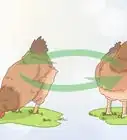
5Scatter wheat, grains, and corn on the ground. Chickens are omnivorous birds that love to forage. Scattering grains on the ground will allow your chicken to scavenge for their food as they would in the wild.
- This is a healthier alternative to placing your wheat and grains in a feeding trough. Encouraging your chickens to forage for their food promotes exercise, enrichment, and mental stimulation.
-
6Clean up after your chickens. Table scraps can attract predators, rodents, and insects. It's important to clean up after your chickens to repel unwanted pests from the garden.
- Hose down the floor if the table scraps were placed on the ground to get rid of any distinct smells.
Advertisement


Community Q&A
-
QuestionAre there any other foods that I can feed to chickens?
 Community AnswerOh, yeah. There are tons of foods chickens can have. Like rats, they can and will eat almost anything. If you can name a fruit, veggie, or meat, your chicken will 85% of the time be able to eat it. Just do a little research on the web first to be sure it isn't toxic.
Warnings
- Do not feed moldy bread to chickens.Thanks!
- Generally, anything that molds should not be given to chickens.Thanks!
- Chocolate causes heart problems and can kill your chicken within 24 hours of digestions, so never feed chocolate.Thanks!

References
- ↑ https://kb.rspca.org.au/knowledge-base/what-should-i-feed-my-backyard-hens/
- ↑ https://heritageacresmarket.com/what-chickens-can-and-cant-eat/
- ↑ https://piwakawakavalley.co.nz/3-things-you-should-not-feed-your-chickens/
- ↑ https://piwakawakavalley.co.nz/3-things-you-should-not-feed-your-chickens/
- ↑ https://piwakawakavalley.co.nz/3-things-you-should-not-feed-your-chickens/
- ↑ https://piwakawakavalley.co.nz/3-things-you-should-not-feed-your-chickens/
- ↑ https://piwakawakavalley.co.nz/3-things-you-should-not-feed-your-chickens/
- ↑ https://piwakawakavalley.co.nz/3-things-you-should-not-feed-your-chickens/
- ↑ https://www.raising-happy-chickens.com/what-chickens-should-not-eat.html
- ↑ https://www.backyardchickens.com/articles/table-scraps-and-leftovers-for-chickens.74549/
- ↑ https://www.backyardchickens.com/articles/table-scraps-and-leftovers-for-chickens.74549/
- ↑ https://www.backyardchickens.com/articles/table-scraps-and-leftovers-for-chickens.74549/
- ↑ https://www.backyardchickens.com/articles/table-scraps-and-leftovers-for-chickens.74549/
- ↑ https://www.backyardchickens.com/articles/table-scraps-and-leftovers-for-chickens.74549/