This article was co-authored by William Gardner, PsyD and by wikiHow staff writer, Madeleine Criglow. William Gardner, Psy.D. is a Clinical Psychologist in private practice located in San Francisco, CA’s financial district. With over 10 years of clinical experience, Dr. Gardner provides individually tailored psychotherapy for adults using cognitive behavioral techniques, to reduce symptoms and improve overall functioning. Dr. Gardner earned his PsyD from Stanford University in 2009, specializing in evidence-based practices. He then completed a post-doc fellowship at Kaiser Permanente.
There are 10 references cited in this article, which can be found at the bottom of the page.
This article has been viewed 9,649 times.
Though it's no fun, it's perfectly normal and even healthy to get angry when you're in a relationship. When you spend a lot of time with someone, conflicts come up, no matter how in love or happy you are. There's a lot of ways to let out your anger, and some are better than others. So long as you give yourself time to process the way you feel, use “I” statements to avoid putting your partner on the defensive, and come from a place of good faith and understanding, you should be fine. Read on for some tips on expressing your anger while maintaining a healthy, strong relationship.
Steps
Method 1
Method 1 of 10:Give yourself some time to calm down.
-
1It's easy to lash out in the heat of the moment. Take a moment to breathe. Go on a walk around the block. Meditate or watch an episode of a funny TV show. Regain control of your mind so it doesn't get carried away with anger.[1]
- By addressing the situation from a calmer mindset, you can figure out what's really upsetting you and determine the most respectful way to address it.
Advertisement

Method 2
Method 2 of 10:Clarify your feelings before expressing them.
-
1Understand why you're angry before confronting your partner.[2] Write down why you're upset in a journal to understand your emotions. Read back what you wrote to look for signs or triggers that may have set you off.[3] You can also try venting to a trusted friend or family member to get a better handle on what may have angered you.
- Processing your emotions first helps you come to the conversation with a clear head. That way, you can be specific about what's upsetting you.
- You may also realize that your anger is masking another underlying emotion, like hurt or rejection. If that's the case, share those feelings with your partner.[4]
- Sometimes, outside factors can impact how angry you feel, too—like being hungry, tired, or in pain.[5]

Method 3
Method 3 of 10:Tell them exactly what's on your mind.
-
1Communicate your feelings in a direct, respectful way. It's nerve-wracking to confront someone, but it gives your partner a chance to understand your point of view and even remedy the situation. Tell your partner how you feel and be specific. Avoid being passive-aggressive or waiting for them to notice you're upset.[6]
- Start the conversation with something like, "I wanted to let you know that I was pretty hurt by what you said the other day."
- Follow with specifics, like how their words made you feel. Maybe your partner was teasing you but what they said really stung. Try, "I know you were kidding, but what you said made me feel pretty disrespected."
- Try addressing the problem as soon as it comes up. That might help it from turning into full-blown anger.[7]
Advertisement

Method 4
Method 4 of 10:Use "I" statements to confront your partner.
-
1This helps you communicate your feelings without placing blame. Your partner may have messed up, but they'll understand better if you emphasize how their actions affected you. Try something like, "I am a really sensitive person, so when you spoke to me using that tone, I was really hurt and upset."[8]
- As tempting as it may be to yell or demean your partner, try to remain cool, calm, and collected. It'll get your point across more effectively and will minimize the damage the conflict could cause to your relationship.

Method 5
Method 5 of 10:Use a calm, compassionate tone of voice.
-
1Yelling and sarcasm can really hurt your partner's feelings. Even if you're angry, use a gentle tone of voice so that your partner can hear your words without getting defensive or hurt themselves. If you find yourself tempted to shout at your partner, try your best to exhibit self-control and communicate your feelings gracefully. It's hard work, but it helps you both get through the conflict with your love and respect for each other intact.[9]Advertisement

Method 6
Method 6 of 10:Listen to your partner's point of view.
-
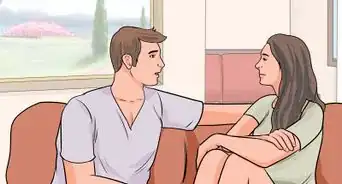
1Give your partner a chance to share their perspective. After sharing your feelings, ask your partner what they're thinking. Give them a chance to speak and really listen to them. Make eye contact while they speak and don't interrupt them.[10] Remember that relationships involve give and take. To work things out, listen to each other's points of view even when they differ.[11]
- Talking to your partner about their perspective helps you get closer to a mutual understanding. Maybe your anger is the result of a misunderstanding, or perhaps your partner made a mistake that they would really like to rectify.[12]

Method 7
Method 7 of 10:Empathize with their perspective.
-
1You can be compassionate and angry at the same time. Yes, maybe your partner really messed up when they snapped at you. That isn't excusable, but it could help you feel better if you understand what caused them to behave that way. Maybe they had a bad day or they're stressed out because of work. Understanding what's behind their behavior can help you take their actions a little less personally.[13]
- This doesn't mean you should ignore how you feel; your anger is still valid.
Advertisement

Method 8
Method 8 of 10:Work together to find a compromise.
-
1Decide what will work best to resolve your anger. It's hard to work past conflict, especially if you're pretty angry, but it's important for the relationship to continue. Work together to come up with a solution that works for both of you, like agreeing to consult each other before setting a date for big plans or events.[14]

Method 9
Method 9 of 10:Take a break if things get too heated.
-
1Stop the argument mid-conversation if you have to. Take time to calm down and get away for a while.[15] Return to the conversation when you know you can express your feelings in a healthy way.[16]
- Say something like, "I need some space right now to cool off. Can we take a few minutes and come back to this?"
Advertisement

Method 10
Method 10 of 10:Talk to a therapist if you're struggling.
-
1It's okay to get outside help if you need it. A therapist or counselor can give you tools to express your anger in a healthy way. Search online for a mental health professional in your area or get a referral from your doctor. If your anger is hurting your relationship or quality of life, getting therapy is a courageous, meaningful step towards improving both.[17]
- Anger issues can be a warning sign of mental health issues like depression, anxiety, or chronic stress.
- Anger management classes can be a helpful too.












References
- ↑ https://www.thehotline.org/resources/how-to-cool-off-when-youre-angry/
- ↑ https://www.psychologytoday.com/us/blog/feeling-it/201709/6-ways-the-most-emotionally-intelligent-people-handle-anger
- ↑ https://www.urmc.rochester.edu/encyclopedia/content.aspx?ContentID=4552&ContentTypeID=1
- ↑ https://www.thehotline.org/resources/how-to-cool-off-when-youre-angry/
- ↑ William Gardner, PsyD. Clinical Psychologist. Expert Interview. 26 March 2021.
- ↑ https://www.parents.com/parenting/relationships/staying-close/building-a-strong-relationship-resenting-your-spouse/
- ↑ William Gardner, PsyD. Clinical Psychologist. Expert Interview. 26 March 2021.
- ↑ https://www.psychologytoday.com/us/blog/feeling-it/201709/6-ways-the-most-emotionally-intelligent-people-handle-anger
- ↑ https://www.goodtherapy.org/blog/marriage-communication-voice-tone-emotional-control/
- ↑ https://psychcentral.com/lib/become-a-better-listener-active-listening#13-Steps-to-Better-Active-Listening-Skills
- ↑ https://www.goodtherapy.org/blog/anger-in-relationships-owning-yours-softening-your-partners-0919134
- ↑ https://www.parents.com/parenting/relationships/staying-close/building-a-strong-relationship-resenting-your-spouse/
- ↑ https://www.psychologytoday.com/us/blog/feeling-it/201709/6-ways-the-most-emotionally-intelligent-people-handle-anger
- ↑ https://www.parents.com/parenting/relationships/staying-close/building-a-strong-relationship-resenting-your-spouse/
- ↑ https://www.uofmhealth.org/health-library/uz2255
- ↑ https://www.helpguide.org/articles/relationships-communication/anger-management.htm
- ↑ https://www.helpguide.org/articles/relationships-communication/anger-management.htm
About This Article