X
wikiHow is a “wiki,” similar to Wikipedia, which means that many of our articles are co-written by multiple authors. To create this article, 20 people, some anonymous, worked to edit and improve it over time.
This article has been viewed 134,351 times.
Learn more...
Have you ever wanted to make a circuit board at home? Now you can, for use in all types of homemade electronic components.
Steps
-
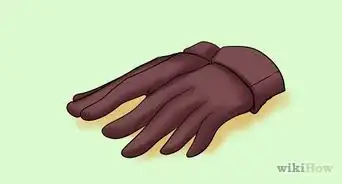
1Put on the goggles and gloves (non-optional!). Always remember safety first. You can easily blind yourself!
-
2Make sure the area is well ventilated before mixing. The chemicals will produce hazardous fumes. You can lose your sense of smell!Advertisement
-
3Use a non-metallic basin. Check if it can withstand the acid using a few drops.
-
4Gently pour one part hydrochloric acid into every two parts hydrogen peroxide (add acid to water). When mixed, they form a substance that is a severe skin irritant, and will produce toxic chlorine gas.
-
5Make enough of the solution to completely submerge the circuit board.
-
6Gently put in the circuit board and agitate it for about ten to fifteen minutes. The solution will get warmer and fume more. Don't put your face over it!
-
7Continue stirring until all copper has dissolved, and the solution has taken on a slight green tinge.
-
8For cleanup, make sure you are wearing gloves. Wash the board off in cold water to remove any etching solution. Then use a paper towel or rag to dry it off completely. Set it aside. Assure that there is no solution in the workspace or containers then remove the gloves and goggles.
-
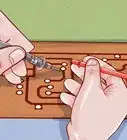
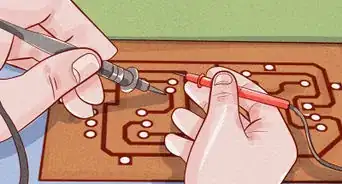
9Mix a one to one ratio of acetone and rubbing alcohol. Take a paper towel, dip it into the solution, and gently rub it over the surface of the board. The permanent marker will begin to come off. Continue rubbing until all the marker is gone. You should see that your circuit is now inscribed in the copper.
-
10The etching solution is toxic to fish and other water organisms. Don't pour it in the sink when you are done. It is illegal to do so and might damage your pipes.
- You can reuse the solution by adding a bit of Hydrogen Peroxide right before the next etch and a bit of acid when the solutions stops working (every 4 or 5 etches). Store the solution in a completely new and different container and not pour it back into the hydrogen peroxide or HCL container.
- If you have to dispose of it label it and give it to chemical waste facility.
- You can also fell out the copper (video) and then safely pour the remaining liquid in the sink.
Advertisement


Things You'll Need
- A non-metallic basin that is deep enough to submerge the circuit board
- Goggles
- Vinyl or Latex gloves
- A non-metallic device used to agitate the circuit board (a stick)
- Hydrochloric Acid ca. 30% (Muriatic Acid)
- Hydrogen Peroxide 3% (rest is distilled water)
- Rubbing alcohol
- Acetone or mineral spirits
Warnings
- The hydrochloric acid you are using is concentrated (12 molar), take care not to spill any on your skin, as it will cause SEVERE chemical burns.Thanks!
- Copper dust is toxic, wear a dust mask to prevent inhalation.Thanks!
- The etching solution is very dangerous, so always wear your gloves and goggles, and always work in an open area.Thanks!
Advertisement

About This Article
Advertisement