This article was co-authored by wikiHow staff writer, Janice Tieperman. Janice is a professional and creative writer who has worked at wikiHow since 2019. With both a B.A. and M.A. in English from East Stroudsburg University, she has a passion for writing a wide variety of content for anyone and everyone. In her free time, you can find her working on a new crochet pattern, listening to true crime podcasts, or tackling a new creative writing project.
There are 12 references cited in this article, which can be found at the bottom of the page.
This article has been viewed 18,357 times.
Learn more...
Dealing with constant stress at work can feel incredibly isolating. Quitting and finding a new career isn’t always an option, especially if you rely on your current job to help make ends meet. How are you supposed to make it through the day when the constant pressure and workload leave you drained and burnt out? Thankfully, you don’t have to deal with this alone. If you aren’t in a position to change careers, keep reading for some tips and strategies on how to handle a stressful job. If you’re ready to quit your position, we’ve still got you covered—scroll to the end of the article for advice on how to leave your job in a peaceful, productive way.
Steps
Method 1
Method 1 of 14:Divide big tasks into smaller chunks.
-
1It’s hard to be productive when you’re stressed and overwhelmed by a huge task. Write down whatever big job is taking up most of your to-do list and look for ways to split it into smaller tasks. This way, you can check more off your to-do list instead of having a large, seemingly impossible task burning a hole in your day.[1] For example, if you were writing an article for your company’s blog, your checklist might look like this:
- Pinpoint the target audience
- Identify the user intent
- Find authoritative sources to back up your writing
- Outline the article before fully writing it out

Method 2
Method 2 of 14:Delegate tasks to other people if you’re in a high enough position.
-
1Let the person know what needs to be done and when it needs to be done by. There’s absolutely nothing wrong with admitting that you need a little extra help with a project, assignment, or another task. Just make sure that your coworker understands everything involved, whether they’re doing a technical task or completing extra paperwork.[2] Here’s a way to delegate work without being overbearing:
- “Hey Kayla! I’m up to my ears in progress reports, and I don’t think I’ll have time to format the bi-weekly newsletter. When you have a spare moment, would you mind taking care of that for me? I can show you which template we use.”
- Think about your position in the organization—if you aren’t a manager or supervisor, you might not have many opportunities to delegate work.

Method 3
Method 3 of 14:Take breaks throughout the workday.
-
1Give yourself a breather once every 50-90 minutes. Working nonstop is a recipe for feeling burned out and stressed.[3] Keep an eye on the clock and try to take frequent breaks throughout your shift, whether you’re sitting behind a desk or standing behind a counter. Use your break time to:[4]
- Say hi to a coworker
- Go for a stroll outside
- Have a good stretch

Method 4
Method 4 of 14:Ask your boss to clarify your job’s requirements.
-
1Check that you and your boss are on the same page for what’s expected of you. Mention everything that’s on your current to-do list at work, and see if all the tasks line up with your job description. Point out any duties that definitely aren’t part of your job description—your boss might be willing to lighten your load a bit.[5] You might say:
- “Would you mind clarifying what my job description is as Administrative Assistant? I’ve had a lot of extra tasks added to my daily workload, and I don’t think a lot of them fall under my job description.”
- “Should a cook be handling customer complaints? I’ve been juggling a lot of customer service tasks lately that really don’t seem in my wheelhouse.”

Method 5
Method 5 of 14:Put in for a transfer.
-
1Switching departments could cut out some of your daily stressors. Meet with your supervisor or HR rep and see what kinds of openings or transfers are available within the organization. Depending on the situation, your boss might let you transfer to a new department or location.[6]

Method 6
Method 6 of 14:Request some time off.
-
1There’s nothing wrong with taking a break to clear your head. Check with your supervisor or HR rep and see how many personal or sick days you’re entitled to. Some organizations might even let you take a temporary leave of absence to help you clear your head and recover from burnout.[7]

Method 7
Method 7 of 14:Cool down with a cleansing breathing technique.
-
1This strategy can come in handy during a moment of intense stress. Start by pretending that you’re drinking a glass of water through a straw as you inhale. The air should feel nice and cool over your tongue as you breathe in. Then, exhale through your nose. Although this is a quick technique, it should give you enough time to collect your thoughts and emotions during a stressful time at work.[8]

Method 8
Method 8 of 14:Relax from immediate stress with progressive muscle relaxation.
-
1Start with your feet and continue up your legs and torso. Close your eyes and tighten all of the muscles in your feet for about 10 seconds. Then, relax your feet completely for 20 seconds. [9] Repeat this process with your other parts of your body, including your lower legs, thighs, hips and butt, stomach, back, chest, front neck, back neck, eyes and bridge of nose, forehead, shoulders, upper arms, wrists, forearms, and hands.[10]

Method 9
Method 9 of 14:Set boundaries between your personal and work life.
-
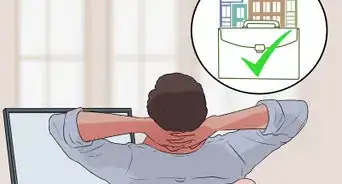
1Don’t respond to work calls or texts when you’re off the clock. Let your supervisor and coworkers know that you won’t be available off hours. Instead, use your time at home to relax and unwind from a tough day at work instead of bringing the job home with you.[11] You might:
- Only check work email at the office.
- Leave your boss’s texts unanswered until the next day.
- Silence your phone while you’re eating dinner or doing a relaxing activity.

Method 10
Method 10 of 14:Practice gratitude every day.
-
1Thankfulness and positivity can help balance out your stress. Each day, grab a notebook and jot down 3 positive things that happened throughout the day, or 3 things that you’re really grateful for. Use this time to reflect on the positive aspects of your day-to-day life, even if you aren’t the biggest fan of your job.[12] Here are some examples:
- I’m happy that I could unwind during my lunch break without being interrupted.
- I’m grateful for my friend who always sends me sweet texts and silly pictures.
- I’m thankful that I didn’t run into any rude customers while I was at the register.

Method 11
Method 11 of 14:
Practice mindfulness throughout the workday.
-
1Mindfulness helps you focus on the present instead of focusing on what’s weighing you down. Search for guided mindfulness meditation videos online, or download mindfulness apps to your phone. These resources can help you learn and hone mindfulness skills throughout your workday, which may help ease some of your stress.[13] Here are a few free mindfulness apps you can try:[14]
- Insight Timer
- Smiling Mind
- MyLife Meditation
- UCLA Mindful

Method 12
Method 12 of 14:Vent to a friend or loved one.
-
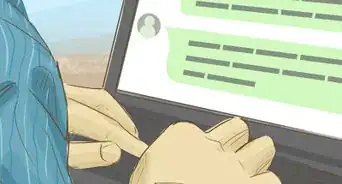
1A listening ear can be incredibly validating during a tough, stressful time. Text, call, or meet up with a loved one and let them know what’s been on your mind. Explain how your job is really weighing on you, and how you don’t know how to make it through the upcoming weeks and months. Getting to vent can be a huge emotional release; plus, your friend can offer some advice and help you weigh your options.[15]

Method 13
Method 13 of 14:Let your boss know 2 weeks before you plan on leaving.
-
1Leaving suddenly doesn’t look very professional, and isn’t fair to your coworkers. Instead, write out a two weeks’ notice letter so your supervisor and fellow employees can prepare. Limit your letter to one page, and explain when your last day will be. Then, finish off the message by thanking your boss for the experience and opportunity (even if you’re more than thrilled to be heading out the door).[16] Here’s an example of what that letter could look like:
- Dear Mr. Jones:
I wanted to let you know that I will be resigning from my job as Customer Service Associate. My last day will be on April 5, which is two weeks from today.
Thank you so much for the opportunity and experience you’ve given me during my tenure at this company. In the meantime, please let me know if I can help with the upcoming transition in any way.
- Dear Mr. Jones:

Method 14
Method 14 of 14:Help your workplace transition for your departure.
-
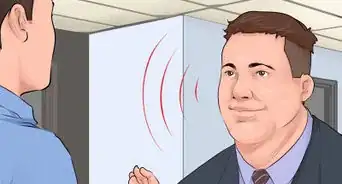
1Make sure that your co-workers understand what your workload involves. Let your boss know which projects and assignments you were working on, or what tasks you were mainly in charge of. Feel free to drop the names of coworkers who have the skillset and experience to take over some of your duties.[17] You might say:
- “Sara has a lot of experience closing up, and I think she could cover some of my shifts in the time being.”
- “Dan uses Adobe InDesign a lot, and I think he’d be a great replacement for my work on the newsletter.”

Warnings
- Steer clear of using cigarettes and alcohol to cope with your stress. While they may seem helpful in the moment, cigarettes actually boost your anxiety, and alcohol leaves you feeling worse as you sober up.[22]Thanks!











References
- ↑ https://www.helpguide.org/articles/stress/stress-in-the-workplace.htm
- ↑ https://my.clevelandclinic.org/health/articles/9573-stress--asthma
- ↑ https://www.inc.com/neil-patel/when-how-and-how-often-to-take-a-break.html
- ↑ https://www.helpguide.org/articles/stress/stress-in-the-workplace.htm
- ↑ https://www.helpguide.org/articles/stress/stress-in-the-workplace.htm
- ↑ https://www.helpguide.org/articles/stress/stress-in-the-workplace.htm
- ↑ https://www.helpguide.org/articles/stress/stress-in-the-workplace.htm
- ↑ https://www.forbes.com/sites/jennagoudreau/2013/03/20/12-ways-to-eliminate-stress-at-work/?sh=391cd44e7f29
- ↑ https://www.health.harvard.edu/blog/how-to-handle-stress-at-work-2019041716436
- ↑ https://www.uofmhealth.org/health-library/uz2225
- ↑ https://www.apa.org/topics/healthy-workplaces/work-stress
- ↑ https://www.nhs.uk/mental-health/self-help/guides-tools-and-activities/tips-to-reduce-stress/
- ↑ https://www.health.harvard.edu/blog/how-to-handle-stress-at-work-2019041716436
- ↑ https://www.mindful.org/free-mindfulness-apps-worthy-of-your-attention/
- ↑ https://www.apa.org/topics/healthy-workplaces/work-stress
- ↑ https://www.wsj.com/articles/how-to-give-two-weeks-notice-without-burning-bridges-11605894464
- ↑ https://www.cnn.com/2021/08/24/success/how-to-quit-your-job/index.html
- ↑ https://www.helpguide.org/articles/stress/stress-in-the-workplace.htm
- ↑ https://www.helpguide.org/articles/stress/stress-in-the-workplace.htm
- ↑ https://www.helpguide.org/articles/stress/stress-in-the-workplace.htm
- ↑ https://hbr.org/2021/08/how-to-quit-your-job-an-hbr-guide
- ↑ https://www.helpguide.org/articles/stress/stress-in-the-workplace.htm














































Medical Disclaimer
The content of this article is not intended to be a substitute for professional medical advice, examination, diagnosis, or treatment. You should always contact your doctor or other qualified healthcare professional before starting, changing, or stopping any kind of health treatment.
Read More...