This article was co-authored by Erik Kramer, DO, MPH and by wikiHow staff writer, Hunter Rising. Dr. Erik Kramer is a Primary Care Physician at the University of Colorado, specializing in internal medicine, diabetes, and weight management. He received his Doctorate in Osteopathic Medicine (D.O.) from the Touro University Nevada College of Osteopathic Medicine in 2012. Dr. Kramer is a Diplomate of the American Board of Obesity Medicine and is board certified.
There are 17 references cited in this article, which can be found at the bottom of the page.
This article has been viewed 104,042 times.
If you’re trying to shed a few pounds, you might be worried that you’ll have to stop eating all of the foods you love. However, cutting foods completely out of your diet actually increases your cravings and makes it tougher to manage your weight. By changing when and how you eat, you can still enjoy food in moderation. We’ll start with ways to adjust your meals and move on to other things you can do to control your hunger and help you achieve your weight loss goals!
Steps
Method 1
Method 1 of 16:Watch your portion sizes.
-
1Eating smaller portions controls your caloric intake better.[1] A majority of weight loss comes from your diet. Rather than filling up your plate and eating everything on it, pay attention to the portion recommendations and nutritional information on the packaging. You don’t have to cut foods completely from your diet, but aim to only have a single portion at a time.[2] After eating it, wait to see how your body feels before taking another serving. Healthy portion sizes include:[3]
- A serving of meat about the size of a deck of cards.
- A serving of fruit the size of a tennis ball
- A serving of vegetables around the size of a baseball
- A serving of carbs, like pasta or rice, the size of a hockey puck
- A serving of fats the size of a pair of dice


Method 2
Method 2 of 16:Eat more fiber and protein.
-
1Fiber and protein both help you feel fuller. Some good sources of fiber include whole-grain breads and pastas, broccoli, carrots, apples, and bananas.[4] You could also have chia seeds or basal seeds in smoothies or sauces for 7–11 grams of fiber per serving. For proteins, stick to lean meats, nuts, beans, and legumes since they’re the healthiest. Aim to get around 21–38 grams of fiber and between 46–56 grams of protein every day.[5]
- Incorporate some red pepper or spice into your dishes to help you reduce your appetite even more.
- Try to incorporate foods that have more than 3 grams of fiber per serving and no added sugars.

Method 3
Method 3 of 16:Pace yourself while eating.
-
1Slow down when you eat so you can sense when you’re full. As you’re eating, take smaller bites and set your fork down while you’re chewing so you don’t feel the urge to put more in your mouth. Check if you feel satisfied with how much you ate in between bites, and stop eating if you don’t feel hungry.[6] If there’s still food on your plate, just save it for later rather than forcing yourself to eat it.[7]
- It usually takes about 20 minutes before you feel full. If you want seconds, try taking a short break before eating more.[8]
- Take time to savor the taste of your food with each bite to help you feel more satisfied.
- Avoid watching TV or other distractions while you eat since you’ll forget to pay attention to whether or not you feel full.

Method 4
Method 4 of 16:Avoid eating when you’re bored.
-
1Only eat when you truly feel hungry. You tend to eat more when you’re emotional or bored since food makes you feel more comfortable. Take a moment to assess if you’re actually hungry and need food.[9] If you don’t feel like you need to eat, try going for a walk, calling a friend, or going to the gym instead to distract yourself.[10]
- Try chewing a piece of sugar-free gum when you’re bored to help get rid of any food cravings.
- Write down the food you’re craving and how you’re feeling at the time. Once you put it down on paper, you’re more likely to identify the triggers you have that cause you to overeat.[11]

Method 5
Method 5 of 16:Hide unhealthier options.
-
1Putting problem foods in hard-to-reach spots means you’ll eat them less. If you tend to snack on chips or cookies during the day, try putting them on a higher shelf or keeping them in a different cabinet. Keep healthier options, such as apples, bananas, or carrots, within reach so you’re more likely to grab them when you need a quick bite.[12]
- Transfer unhealthy refrigerated food into opaque containers or aluminum foil wraps, and keep healthy alternatives in clear plastic wrap. Since you can easily see the healthier option, you’re more likely to eat it instead.

Method 6
Method 6 of 16:Put food on a plate or in a bowl.
-
1You’re more likely to overeat if you do it straight from the package. It’s harder to track portion sizes and how much you’ve eaten when you snack directly from the container. Find the recommended serving size on the package and pour it out into a bowl or onto a plate instead. If you still feel a little hungry after having a portion, you can always put more on your plate later on.[13]

Method 7
Method 7 of 16:Use smaller plates.
-
1Filling your plate takes less food and helps you limit portions. Rather than finding the biggest plate you own and filling it completely, choose one that’s a little bit smaller or has a wider rim. Since your food takes up more space on the smaller plate, you won’t have as large of portion sizes so you are less likely to overeat.[14]
- Try putting unhealthier foods on a red plate since studies have shown that it could make you eat less food.[15]

Method 8
Method 8 of 16:Savor sweet treats.
-
1Take your time eating snacks to curb your cravings. It’s okay to treat yourself every now and then, but don’t rush through them quickly. Buy your favorite kind of treat, take small bites, really enjoy the flavors, and save some to have for later. That way, you’ll feel more satisfied when you eat them and won’t have cravings as often.[16]

Method 9
Method 9 of 16:Plan your meals ahead of time.
-
1Pick a few dishes to make so you can look forward to them. Look up a few recipes that you want to try during the week. Use a meal planner or notebook to write down what days you’ll have each meal so you don’t have to worry about figuring it out later on. Then, make a shopping list for all of the things you don’t have at home and only buy the things you need for the week.[17]
- You can always bulk cook all of your meals ahead of time so you can freeze the leftover portions to reheat later.
- Avoid going grocery shopping while you’re hungry since you’ll be more tempted to buy things that aren’t on your list.

Method 10
Method 10 of 16:Drink more water.
-
1Water before and during your meals can help you feel fuller. Avoid sugary drinks since they have a lot of calories that might counteract losing weight.[18] Before you sit down to have a meal, drink a full glass of water. Take small sips in between bites of food to help you feel satisfied more quickly.[19]
- It’s okay to have soda and sugary beverages in moderation, but try switching to plain water for most of your drinks during the day.

Method 11
Method 11 of 16:Do cardio for 30 minutes every day.
-
1Burn more calories than you eat to help shed some pounds. Find some time to do aerobic exercises during your day, such as walking, jogging, biking, or swimming. If you don’t have time for a full 30-minute session, split it up into 10-minute intervals throughout your day so you have a chance to burn off some of the calories you’ve eaten.[20]
- Try to find ways in your everyday life where you can burn calories. For example, take the stairs instead of riding in an elevator.

Method 12
Method 12 of 16:Do strength training 2 times a week.
-
1Muscle tissue burns calories faster than fat. Set aside 2 days every week where you do weightlifting, use resistance bands, or work on bodyweight exercises. Even though these exercises will build muscle more than they eliminate fat, they will help boost your metabolism so its easier to enjoy your regular diet.[21]
- Some easy exercises you can do at home include push-ups, sit-ups, squats, and bicep curls with dumbbells.
- Vary what groups you work out each time so you don’t feel fatigued or strain your muscles. For example, you might work your arms and upper body on one day and focus on your legs and core the next day.

Method 13
Method 13 of 16:Incorporate some fun new exercises.
-
1You don’t have to hit the gym if you want to lose weight. Look for physical activities or classes in your area that’ll get you moving and active. Check if there are any dance or Zumba classes so you can get fit along to fun music. You could also try things like rock climbing, ice skating, taekwondo, rollerblading, or playing a pick-up game of your favorite sport. There are so many opportunities, so just take a peek at options your local rec or community center has.[22]
- Just an hour of playing a game of basketball can help you burn 600–900 calories!

Method 14
Method 14 of 16:Stand up and stretch regularly.
-
1Prolonged sitting can slow down your metabolism. If you work at a desk or live a pretty sedentary lifestyle, try to stand up for a couple of minutes every hour to stretch your legs. Grab a glass of water, take a quick walk around the office, or do some quick office yoga so you feel refreshed.[23]
- Sitting down for a long time can stop your production of lipase, which helps break down fats in your body.

Method 15
Method 15 of 16:Practice stress relief.
-
1You’re more likely to overeat if you’re feeling stressed out. Avoid turning to comfort food whenever you’re a little bit stressed or anxious. Instead, determine the things that triggered your emotions and look for ways to avoid or manage them.[24] Try out some deep breathing techniques, self-massage, or yoga to clear your mind and relieve any stressful feelings you’re having.[25]
- An easy breathing exercise you can try is breathing in through your nose for 4 counts, holding your breath for 7 counts, and slowly exhaling through your mouth for 8 counts.

Method 16
Method 16 of 16:Get a good night’s sleep.
-
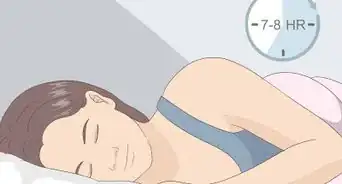
1Your body needs more food for energy when you stay awake. If you normally feel hungry at night, it might be a sign that you don’t have the energy to stay awake. Rather than giving in to your cravings, try going to sleep at a reasonable time every night.[26] Aim to get between 7–9 hours of sleep each night so you feel less stressed, more energetic, and less hungry.[27]

Expert Q&A
-
QuestionCan you eat junk food and still lose weight?
 Michele DolanMichele Dolan is a BCRPA certified Personal Trainer in British Columbia. She has been a personal trainer and fitness instructor since 2002.
Certified Fitness TrainerLosing weight requires an overall calorie deficit. Sure, you can eat a diet of two bags of chips a day and lose weight, but you won't get the vitamins, minerals, protein, healthy fats and carbohydrates your body needs and you will feel like junk. -
QuestionWhat should you eat if you want to lose weight?Michele DolanMichele Dolan is a BCRPA certified Personal Trainer in British Columbia. She has been a personal trainer and fitness instructor since 2002.
Certified Fitness TrainerLosing weight requires a calorie deficit. Eat whole foods, vegetables, fruits, grains, and protein. Avoid foods that come in a box or package, including drinks. -
QuestionCan you lose weight by eating three meals a day?Michele DolanMichele Dolan is a BCRPA certified Personal Trainer in British Columbia. She has been a personal trainer and fitness instructor since 2002.
Certified Fitness TrainerYes, as long as your overall calorie intake is less, you can lose weight while eating three meals a day. -
QuestionCan you lose weight even if you eat a lot?Michele DolanMichele Dolan is a BCRPA certified Personal Trainer in British Columbia. She has been a personal trainer and fitness instructor since 2002.
Certified Fitness TrainerYes, if you eat fewer calorie dense foods like vegetables, you can have lots to eat!
Warnings

-Step-18.webp)
References
- ↑ Tara Coleman. Clinical Nutritionist. Expert Interview. 22 October 2020.
- ↑ https://www.nhsinform.scot/healthy-living/food-and-nutrition/healthy-eating-and-weight-loss/how-to-lose-weight-safely
- ↑ https://www.mayoclinic.org/healthy-lifestyle/weight-loss/multimedia/portion-control/sls-20076148?s=1
- ↑ https://www.mayoclinic.org/healthy-lifestyle/nutrition-and-healthy-eating/in-depth/high-fiber-foods/art-20050948
- ↑ https://www.nytimes.com/2017/07/28/well/eat/how-much-protein-do-we-need.html
- ↑ Tara Coleman. Clinical Nutritionist. Expert Interview. 22 October 2020.
- ↑ https://www.cdc.gov/healthyweight/losing_weight/eating_habits.html
- ↑ https://kidshealth.org/en/teens/lose-weight-safely.html
- ↑ Tara Coleman. Clinical Nutritionist. Expert Interview. 22 October 2020.
- ↑ https://kidshealth.org/en/teens/lose-weight-safely.html
- ↑ Tara Coleman. Clinical Nutritionist. Expert Interview. 22 October 2020.
- ↑ https://www.inc.com/jeff-haden/how-to-lose-weight-without-dieting-8-simple-ways-b.html
- ↑ https://www.inc.com/jeff-haden/how-to-lose-weight-without-dieting-8-simple-ways-b.html
- ↑ https://pubmed.ncbi.nlm.nih.gov/24005858/
- ↑ https://pubmed.ncbi.nlm.nih.gov/22245725/
- ↑ https://www.nbcnews.com/better/health/i-m-doing-everything-right-i-m-still-not-losing-ncna866376
- ↑ https://www.nhsinform.scot/healthy-living/food-and-nutrition/healthy-eating-and-weight-loss/how-to-lose-weight-safely
- ↑ https://kidshealth.org/en/teens/lose-weight-safely.html
- ↑ https://www.arthritis.org/health-wellness/healthy-living/nutrition/weight-loss/8-ways-to-lose-weight-without-dieting
- ↑ https://www.mayoclinic.org/healthy-lifestyle/weight-loss/in-depth/metabolism/art-20046508
- ↑ https://www.mayoclinic.org/healthy-lifestyle/weight-loss/in-depth/metabolism/art-20046508
- ↑ https://diet.mayoclinic.org/diet/move/fun-ways-to-burn-calories
- ↑ https://www.nbcnews.com/better/health/i-m-doing-everything-right-i-m-still-not-losing-ncna866376
- ↑ Tara Coleman. Clinical Nutritionist. Expert Interview. 22 October 2020.
- ↑ https://www.mayoclinic.org/healthy-lifestyle/stress-management/expert-answers/stress/faq-20058497
- ↑ https://www.cnn.com/2014/04/29/health/upwave-weight-sleeping
- ↑ https://www.nbcnews.com/better/health/i-m-doing-everything-right-i-m-still-not-losing-ncna866376
- ↑ https://www.mayoclinic.org/healthy-lifestyle/weight-loss/in-depth/metabolism/art-20046508
- ↑ http://www.cnn.com/2010/HEALTH/04/20/crash.diets.harm.health/
About This Article

Medical Disclaimer
The content of this article is not intended to be a substitute for professional medical advice, examination, diagnosis, or treatment. You should always contact your doctor or other qualified healthcare professional before starting, changing, or stopping any kind of health treatment.
You can eat the things you want and still lose weight by giving yourself permission to eat high calorie foods in moderation. For example, it’s easier to eat things like pizza and beer on occasion than it is to completely cut them out of your diet forever and risk binging on them. Remember that your body craves things when you’re lacking nutrients, so make sure to eat plenty of fruits, vegetables, and fiber-rich foods to keep your cravings under control. Besides eating the right foods, you should drink plenty of water throughout the day since it’s easy to overeat when you’re dehydrated. To learn how to set a workout goal for yourself to lose weight, read more from our Trainer co-author!