This article was co-authored by Amy Chow. Amy Chow is a Registered Dietitian and the Founder of Chow Down Nutrition, a family and child nutrition consulting service in British Columbia (BC), Canada. With over nine years of experience, Amy has a special interest in pediatric nutrition, food allergy management, and eating disorder recovery. Amy holds a Bachelor’s degree in Nutritional Sciences from McGill University. She gained her clinical experiences at residential and outpatient eating disorder treatment programs as well as for BC Children’s Hospital before starting her own business. She has been featured on Find BC Dietitians, Dietitians of Canada, Food Allergy Canada, Recovery Care Collective, Parentology, Save on Foods, National Eating Disorder Information Centre (NEDIC), and Joytv.
There are 10 references cited in this article, which can be found at the bottom of the page.
This article has been viewed 2,322 times.
Eating healthy isn't necessarily about dieting—it's about giving your body the nutrition and energy it needs to function properly. Ultimately, whether you gain or lose weight comes down to the number of calories you consume. If you want to eat healthy without losing weight, just make sure you're eating at least as many calories as you burn each day. Here, we've compiled answers to all your most common questions about how to eat healthy and not lose weight.[1]
Steps
Question 1
Question 1 of 10:How can I make my diet more healthy?
-
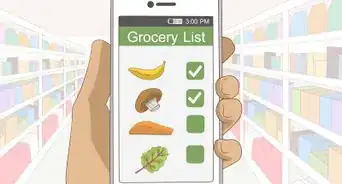
1Eat a variety of whole foods from all 5 food groups. With each meal, try to fill at least half of your plate with fruits and vegetables. Then, fill the other half of the plate with grains and proteins. Plant proteins, such as beans and legumes, are a good choice.[2]
- Limit foods with preservatives and added sugars, but don't be restrictive. Instead, try to find more healthy swaps for unhealthy foods you crave.
- Clean out your pantry and restock it with healthy snacks, such as trail mix and granola, that you can munch on without feeling guilty.
Question 2
Question 2 of 10:How many calories should I consume?
-
1Consume as many calories as you burn to maintain your current weight. If you burn more calories than you consume, you'll end up losing weight. If you want to eat healthy without losing weight, you might need to eat larger quantities of food than you're used to.[3]
- Keep in mind that if you end up consuming more calories than you burn in a day, you might end up gaining weight. Although this might not be too much of a problem at first, it'll build up if you don't monitor your weight and adjust what you eat.
- Cooking and eating at home as much as you can gives you more control over the calories and nutritional content in your food.[4]
- If you're having trouble getting enough calories during the day, try eating smaller, more frequent meals. For instance, you might eat 6 meals a day. Eating at routine times throughout the day can make it easier to remember to eat, as well.[5]

Question 3
Question 3 of 10:How do I know the calories I burn in a day?
-
1Multiply your weight in pounds by 15 to find your metabolic rate. While the actual equation to determine your metabolic rate is much more complex, this will get you the number of calories you burn in a day if you're moderately active. That means that every day, you get at least 30 minutes of moderately intense physical activity.[6]
- Getting physical activity doesn't mean going to the gym or otherwise engaging in dedicated exercise. You can include time you spend doing household chores, gardening, walking the dog, and other activities.
- If you use a smartwatch or fitness tracker, it might tell you the number of calories you consume through exercise, so you can get a better idea of the number of calories you burn in a day. This is especially helpful if you engage in more intense exercise.

Question 4
Question 4 of 10:What if my activity levels change during the week?
-
1Adjust your calorie range to account for changes in activity levels. Weigh yourself every morning when you first wake up. Then, look at the trend over the course of a week or so to see if your weight is staying about the same, increasing, or decreasing.[7]
- While it'll take some trial and error, you'll eventually get to the right balance that allows you to maintain your current weight within a few pounds.

Question 5
Question 5 of 10:Where can I find calorie counts for different foods?
-
1Check nutritional labels to find the number of calories in a serving of most foods. Most packaged foods that you buy have nutritional labels that tell you the number of calories as well as the number of various nutrients in that food. If you buy mostly whole and fresh foods, look up the calorie counts online.[8]
- To find the number of calories in an entire meal, add up the number of calories in each of the foods that you're eating. Remember to take the serving sizes into account! If you're having a double serving of broccoli, you're doubling the number of calories as well.

Question 6
Question 6 of 10:How can I add more calories to my meals?
-
1Top off your food with condiments and other extras. If you need a few more calories, adding cheese, mayonnaise, or salad dressings is one way to go. Hummus and avocado are a couple of other options that include healthy fats and extra calories.[9]
- Condiments and extras are also a good way to tweak your diet if you find that you're still losing weight. They add calories and flavor to the food you're eating without requiring you to revamp your entire menu.

Question 7
Question 7 of 10:What should I eat if I'm trying to build muscle?
-
1Choose high-protein meats to help you build muscle. Lean meats, such as chicken and turkey, give you the protein you need to build muscle without a lot of added fat and calories that you don't need. If you don't eat meat, look for high-protein alternatives, such as tofu. [10]
- Building healthy muscle helps keep you from losing weight, even if you're consuming fewer calories.

Question 8
Question 8 of 10:What if healthy meals don't fill me up?
-
1Add healthy carbohydrates to each meal so you'll feel fuller. The carbs in whole grains and brown rice help fill you up so you're less hungry between meals. They also give you energy to help you power through your day. Include these staples with every meal to avoid losing weight while eating healthy.[11]
- For example, you might have a chicken or turkey sandwich on whole-grain bread for lunch, along with some yogurt and cheese. For dinner, you could have salmon steak with brown rice and broccoli.

Question 9
Question 9 of 10:How can I keep off the weight I lost without losing anymore?
-
1Add calories gradually to maintain weight loss. If you've been dieting and recently reached your goal weight, congratulations! Start by adding about 200 calories a day and continue to monitor your weight. Stop adding calories when you're no longer losing weight.[12]
- Keep in mind that it's natural for your weight to fluctuate within a few pounds from day to day. Look at the overall trend through the week, not the numbers on the scale each day.
- Adding more calories gradually keeps you from suddenly regaining the weight you've worked so hard to lose. Be patient—it can take some time to get to the point where you don't have to monitor yourself so closely.

Question 10
Question 10 of 10:What exercises should I do to avoid losing weight?
-
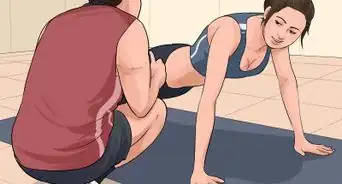
1Use strength training to build muscle and gain weight. Aerobic exercise, such as running or swimming, burns calories and can cause you to lose weight if you do too much of it. Strength training, on the other hand, helps you build muscle to become stronger and more healthy.[13]
- Lifting weights is a pretty standard way to build muscle, but body-weight exercises or practices such as yoga or pilates also help you build muscle.
- If you enjoy more aerobic activities, just keep track of the calories you burn while exercising and make sure you're eating as many calories as you burn to maintain your current weight.

Expert Q&A
Did you know you can get expert answers for this article?
Unlock expert answers by supporting wikiHow
-
QuestionHow do I eat more if I don't feel hungry?
 Amy ChowAmy Chow is a Registered Dietitian and the Founder of Chow Down Nutrition, a family and child nutrition consulting service in British Columbia (BC), Canada. With over nine years of experience, Amy has a special interest in pediatric nutrition, food allergy management, and eating disorder recovery. Amy holds a Bachelor’s degree in Nutritional Sciences from McGill University. She gained her clinical experiences at residential and outpatient eating disorder treatment programs as well as for BC Children’s Hospital before starting her own business. She has been featured on Find BC Dietitians, Dietitians of Canada, Food Allergy Canada, Recovery Care Collective, Parentology, Save on Foods, National Eating Disorder Information Centre (NEDIC), and Joytv.
Registered DietitianI would recommend having small, frequent meals or snacks—up to 6 times a day. It can also help to have a routine and schedule. For instance, you might set an alarm on your phone to remind you to eat.
Support wikiHow by unlocking this expert answer.



References
- ↑ https://www.heart.org/en/healthy-living/healthy-eating/eat-smart/nutrition-basics/how-to-eat-healthy-without-dieting
- ↑ https://www.upmcmyhealthmatters.com/healthy-eating-without-dieting/
- ↑ https://www.mayoclinic.org/healthy-lifestyle/nutrition-and-healthy-eating/expert-answers/underweight/faq-20058429
- ↑ https://www.upmcmyhealthmatters.com/healthy-eating-without-dieting/
- ↑ JoAnn Solomon. Master Beauty Consultant & Celebrity Makeup Artist. Expert Interview. 22 October 2020.
- ↑ https://www.health.harvard.edu/staying-healthy/calorie-counting-made-easy
- ↑ https://my.clevelandclinic.org/health/treatments/17633-weight-management-tips
- ↑ https://my.clevelandclinic.org/health/articles/16555-snack-ideas-for-weight-gain
- ↑ https://my.clevelandclinic.org/health/articles/16555-snack-ideas-for-weight-gain
- ↑ https://familydoctor.org/healthy-ways-to-gain-weight-if-youre-underweight/
- ↑ https://familydoctor.org/healthy-ways-to-gain-weight-if-youre-underweight/
- ↑ https://www.hopkinsmedicine.org/health/wellness-and-prevention/maintaining-weight-loss
- ↑ https://familydoctor.org/healthy-ways-to-gain-weight-if-youre-underweight/
- ↑ https://www.nia.nih.gov/health/maintaining-healthy-weight
- ↑ https://my.clevelandclinic.org/health/treatments/17633-weight-management-tips
- ↑ https://www.nia.nih.gov/health/maintaining-healthy-weight














































Medical Disclaimer
The content of this article is not intended to be a substitute for professional medical advice, examination, diagnosis, or treatment. You should always contact your doctor or other qualified healthcare professional before starting, changing, or stopping any kind of health treatment.
Read More...