This article was medically reviewed by Sarah Gehrke, RN, MS. Sarah Gehrke is a Registered Nurse and Licensed Massage Therapist in Texas. Sarah has over 10 years of experience teaching and practicing phlebotomy and intravenous (IV) therapy using physical, psychological, and emotional support. She received her Massage Therapist License from the Amarillo Massage Therapy Institute in 2008 and a M.S. in Nursing from the University of Phoenix in 2013.
There are 15 references cited in this article, which can be found at the bottom of the page.
wikiHow marks an article as reader-approved once it receives enough positive feedback. In this case, several readers have written to tell us that this article was helpful to them, earning it our reader-approved status.
This article has been viewed 528,972 times.
What does it take to become a sperm donor? If you’re looking to help others conceive a child or get paid for your donations, you’ll start by going through a screening process to make sure you’re healthy.[1] To help you prep and know exactly what to expect, we’ll walk you through the typical requirements to become a sperm donor including the health criteria, donation timeline, and average compensation.
Steps
Method 1
Method 1 of 13:Find a sperm bank or fertility clinic near you.
-
1Choose a location that’s within close driving distance. Once you’re an approved sperm donor, you’ll likely donate 1-2x per week during regular business hours, so convenience is important.[2] To make sure the sperm bank is trustworthy, check how long the bank has been in business and ask about their policies for protecting donor anonymity.[3]
- Some sperm banks may allow you to collect a sample at home and bring it to the bank within 1 hour.
- Visit https://www.spermbankdirectory.com/ to access a national directory of sperm cryobanks in the U.S.

Method 2
Method 2 of 13:Meet the age requirements.
-
1Most sperm clinics require donors to be between 18-39 years old. Each sperm bank and fertility clinic will have slightly different policies regarding age.[4] Some men produce completely healthy sperm beyond the age of 40, but many have lower sperm counts and reduced sperm motility, which makes their sperm less likely to lead to impregnation.[5] Lifestyle, diet and overall health are sometimes better indicators of sperm health than chronological age.
- The age limit for some facilities can be as low as 35 years.
- At the other end of the spectrum, the minimum age requirement is usually either 19 or 20 years.

Method 3
Method 3 of 13:Check the height requirements of your local clinic.
-
1Sperm banks typically look for men above 5’9” (1.75 m). Height doesn’t indicate fertility, it’s just that the recipients of the sperm typically request taller donors, so the sperm banks and fertility clinic comply with their wishes.[6] If you’re shorter than 5’9”, look around for another sperm bank. Some will accept donors who are 5’7” or taller.[7]
- Height requirements can also vary by ethnicity. For instance, due to the shortage of African American sperm donors, clinics may be more willing to accept shorter non-white men.[8]

Method 4
Method 4 of 13:Find out how much you’ll get paid for your donations.
-
1Sperm donors can get paid $40-$100 per sample. Once you’ve passed the 6-month screening process, you’ll get paid each time you make a donation, as long as that sample meets the sperm bank’s requirements for count and motility.[9] You can donate 1-2 times per week and make up to $1,000 a month. However, sperm banks will typically cut off the number of donations you can make after about 25 vials.[10]
- Premium sperm banks will pay closer to $100 or more per vial.
- Many premium sperm banks require an Ivy-League or elite education, and they look for rare physical feature combos like dark hair with blue eyes.
- While payment between sperm banks might vary, at any given sperm bank, all men are paid the same rate—regardless of ethnicity or education.[11]

Method 5
Method 5 of 13:Get tested for STIs.
-
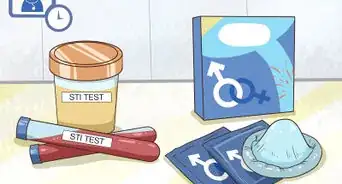
1You'll likely take both blood and urine tests to check for STIs. In addition, a staff member will interview you about your sexual history and drug use in order to assess your HIV risk. To move onto the next rounds, you must test negative for: HIV, hepatitis B and C, HTLV, syphilis, genital herpes and/or genital warts.[12]

Method 6
Method 6 of 13:Answer questions about your family’s medical history.
-
1Sperm banks and fertility clinics screen for genetic health issues. You’ll be asked to report your family’s health history back 3 or 4 generations. If your family has a history of hereditary diseases like cystic fibrosis or sickle cell anemia, you won’t be able to donate. Likewise, sperm clinics only accept donors without chronic diseases, like diabetes, cancer, and chronic fatigue. Those diseases can have a negative impact on sperm count and motility (how well the sperm move).[13]
- Additional hereditary diseases include hemophilia and inflammatory arthritis.
- People who are adopted are often disqualified from being a sperm donor because their family history cannot be substantiated or verified.
- Mental health can also sometimes be an issue because some conditions, such as schizophrenia and bi-polar disorder, may have genetic links.

Method 7
Method 7 of 13:Go through genetic screening.
-
1Undergo a blood test to see if you have carrier genes for diseases. Just like the family history screening, the genetic screening will look for markers of cystic fibrosis, sickle cell anemia, and other hereditary diseases.[14] Clinics will also assess the risk of your offspring having a birth defect. Since the natural rate for birth defects is 2-3%, they likely won’t accept your sperm if your risk rate is above that.[15]
- Clinics can’t screen for every known birth defect or genetic condition, and some may perform more intensive evaluations than others. Ask the sperm bank which tests you’ll have to pass.
- If you test positive for any genetic markers or diseases, the lab will notify you.[16]

Method 8
Method 8 of 13:Provide a sperm sample that’ll be tested in 6 months.
-
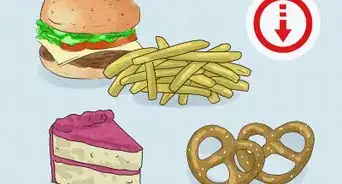
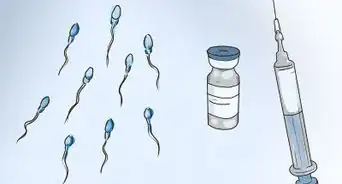
1The lab will evaluate your sperm based on sperm count, motility, and appearance. To prepare a sample that will pass the requirements, abstain from ejaculation (from sex or masturbation) for at least 3 days before giving a sperm sample in order to get the highest sperm count possible.[17] Prior to giving a sperm sample, get a good night's sleep, avoid alcohol and cigarette smoke, drink plenty of water, and eat a nutritious meal.
- After you give your sample, it’ll be frozen for a minimum of 6 months before it’s thawed and tested.[18]
- At sperm banks, sperm health is often defined as a sperm count of at least 70 million/ml, at least 70% motility and at least 60% normal in appearance (morphology).
- As a general rule, sperm health in sperm donors needs to be better than average because some sperm die or lose their motility in the freezing and thawing processes.
- Sometimes multiple samples are needed to best establish sperm count and motility rates.
- Supplements that may help improve the health of your sperm include zinc, selenium, folic acid, vitamin E, vitamin C, coQ10, and L-carnitine. Taking a combination of vitamin E, vitamin C, and coQ10 may be especially helpful for increasing your sperm count.[19]
- Most sperm banks and fertility clinics ask for weekly sperm deposits because it can take as many as 8 inseminations for a woman to become pregnant.

Method 9
Method 9 of 13:Prepare to provide proof of education.
-
1Some sperm banks require you to have a college degree or be in the process of getting one. While education doesn’t equal intelligence, sperm banks and fertility clinics use a college degree to show prospective clients that their donors are well-educated. If you didn’t go to college, check to see if the sperm bank accepts professional experience in lieu of a degree.[20]

Method 10
Method 10 of 13:Plan to take a few photos and make voice recordings.
-
1The people choosing your sperm will want to see you and get an idea of your personality. Sperm banks and fertility clinics often put together a portfolio of profile photos, videos, and voice recordings to show potential clients who donors are. The clinic might even ask you to write up a bit about what you like to do and your personal habits.[21]
- For instance, potential clients will want to know whether you’re outgoing or reserved, athletic or relaxed, etc.

Method 11
Method 11 of 13:Sign a contract if you’re accepted.
-
1Most sperm banks expect you to make a donation 1x or 2x per week. Because the screening process takes 6 months, almost no sperm banks or fertility clinics accept donors who’ll only go through the process once. Instead, most want a commitment in terms of frequency of visits (weekly or bi-weekly) and time (1-year contracts are common).[22] Most companies feel that commitment to their timetables represents stability, plus they have the opportunity to monitor and compare sperm samples for quality and evidence of poor health or bad lifestyle changes. For example, blood and sperm samples are routinely screened for illicit drug use, which can alter and damage sperm.[23]

Method 12
Method 12 of 13:Know what to expect when you make a donation.
-
1You’ll provide your sample by masturbating into a sterile container in a private room. To ensure that it's your sperm sample, most sperm banks and fertility clinics require you to ejaculate while on their premises.[24] Most facilities provide pornographic material to increase arousal, but you can't use any lubricants (even saliva or water) since lubricants have potentially negative effects on sperm health.[25]

Method 13
Method 13 of 13:Check how many times sperm banks will sell your donations.
-
1Individual clinics typically cut off your donations after 25-30 families have used them. However, legally, there is no restriction on the number of offspring your sperm can sire. Read the contract carefully before you sign it to make sure you're comfortable with the amount of offspring your sperm might produce.[28]
- You can choose to remain anonymous or allow the children to contact you when they turn 18.
- If you’d like the children you sire to be able to contact you, you can join the [Donor Sibling Registry https://donorsiblingregistry.com/].
- Sperm banks tend to be very protective of their donors' rights and confidentiality, and they have no legal rights or responsibilities for kids conceived from their sperm.

Expert Q&A
Did you know you can get expert answers for this article?
Unlock expert answers by supporting wikiHow
-
QuestionDo I have to ejaculate in the presence of anyone?
 Sarah Gehrke, RN, MSSarah Gehrke is a Registered Nurse and Licensed Massage Therapist in Texas. Sarah has over 10 years of experience teaching and practicing phlebotomy and intravenous (IV) therapy using physical, psychological, and emotional support. She received her Massage Therapist License from the Amarillo Massage Therapy Institute in 2008 and a M.S. in Nursing from the University of Phoenix in 2013.
Registered NurseNo. You are in a private room with only your participation. The thought of ejaculating in the presence of someone, specifically in the clinical environment, is likely a concern for many males.
Support wikiHow by unlocking this expert answer.
-
QuestionWhat is the height requirement for donating sperm?Sarah Gehrke, RN, MSSarah Gehrke is a Registered Nurse and Licensed Massage Therapist in Texas. Sarah has over 10 years of experience teaching and practicing phlebotomy and intravenous (IV) therapy using physical, psychological, and emotional support. She received her Massage Therapist License from the Amarillo Massage Therapy Institute in 2008 and a M.S. in Nursing from the University of Phoenix in 2013.
Registered NurseThere are different height requirements for different donation centers. 5'7" is an example of a minimum. You can contact your local clinic or do a quick search for one in your area, and then find the screening page or frequently asked questions for that specific clinicSupport wikiHow by unlocking this expert answer.





References
- ↑ https://www.mayoclinic.org/tests-procedures/sperm-donation/about/pac-20395032
- ↑ https://www.nytimes.com/2016/11/08/health/sperm-donor-facts.html
- ↑ https://www.spermbankcalifornia.com/blog/what_makes_sperm_bank_trustworthy.html
- ↑ https://www.mayoclinic.org/tests-procedures/sperm-donation/about/pac-20395032
- ↑ https://www.yourfertility.org.au/everyone/age
- ↑ https://www.nytimes.com/2016/11/08/health/sperm-donor-facts.html
- ↑ https://www.thespermbankofca.org/content/how-qualify-sperm-donor
- ↑ https://www.nytimes.com/2016/11/08/health/sperm-donor-facts.html
- ↑ https://web.stanford.edu/class/siw198q/websites/reprotech/New%20Ways%20of%20Making%20Babies/spermint.htm
- ↑ https://www.nytimes.com/2021/01/08/business/sperm-donors-facebook-groups.html
- ↑ https://scholars.org/brief/business-egg-and-sperm-donation
- ↑ https://www.thespermbankofca.org/comprehensive-donor-screening
- ↑ https://web.stanford.edu/class/siw198q/websites/reprotech/New%20Ways%20of%20Making%20Babies/spermint.htm
- ↑ https://www.mayoclinic.org/tests-procedures/sperm-donation/about/pac-20395032
- ↑ https://my.clevelandclinic.org/health/diseases/12230-birth-defects.
- ↑ https://www.mayoclinic.org/tests-procedures/sperm-donation/about/pac-20395032
- ↑ https://www.thespermbankofca.org/comprehensive-donor-screening
- ↑ https://www.mayoclinic.org/tests-procedures/sperm-donation/about/pac-20395032
- ↑ https://www.ncbi.nlm.nih.gov/pmc/articles/PMC5203687/
- ↑ https://www.spermbank.com/how-it-works/sperm-donor-requirements
- ↑ https://www.mayoclinic.org/tests-procedures/sperm-donation/about/pac-20395032
- ↑ https://www.thespermbankofca.org/content/how-qualify-sperm-donor
- ↑ https://www.spermbankcalifornia.com/find-sperm-donor.html#1
- ↑ https://www.mayoclinic.org/tests-procedures/sperm-donation/about/pac-20395032
- ↑ https://www.mayoclinichealthsystem.org/hometown-health/speaking-of-health/trying-to-get-pregnant-select-a-lubricant-that-is-most-helpful-for-sperm
- ↑ https://www.nytimes.com/2016/11/08/health/sperm-donor-facts.html
- ↑ https://www.mayoclinic.org/tests-procedures/sperm-donation/about/pac-20395032
- ↑ https://www.nytimes.com/2016/11/08/health/sperm-donor-facts.html
About This Article
If you want to donate sperm, you most likely will need to be younger than 40, at least average in height, college-educated, and clear of hereditary or sexually transmitted diseases. As a part of the clinic's screening and interview process, you'll likely need to complete a thorough medical history questionnaire about yourself and your immediate family. Once you've been approved, make an effort to provide a good sperm sample by abstaining from ejaculation for at least 2 days. You should also make sure to drink lots of water, get good sleep, eat nutritious meals, and avoid smoke or alcohol. Keep in mind that you will probably go through the process more than once, since many clinics will want a weekly or biweekly commitment that spans over 1 year. For more tips from our Medical co-author, like how to comfortably donate sperm in a clinical setting, read on!

















































Medical Disclaimer
The content of this article is not intended to be a substitute for professional medical advice, examination, diagnosis, or treatment. You should always contact your doctor or other qualified healthcare professional before starting, changing, or stopping any kind of health treatment.
Read More...