This article was co-authored by wikiHow staff writer, Hunter Rising. Hunter Rising is a wikiHow Staff Writer based in Los Angeles. He has more than three years of experience writing for and working with wikiHow. Hunter holds a BFA in Entertainment Design from the University of Wisconsin - Stout and a Minor in English Writing.
There are 9 references cited in this article, which can be found at the bottom of the page.
This article has been viewed 3,545 times.
Learn more...
If you’ve found ragged, irregular holes and shiny slime trails on the leaves of your plants, then you’re dealing with some pesky garden slugs. If you’re looking for a natural pesticide to get rid of your slugs, you may have considered using vinegar from your kitchen. While vinegar works well to kill slugs, there are a few things you should know beforehand. We’ll answer all of your most common questions so you can rid of these pests for good!
Steps
Question 1
Question 1 of 6:How does vinegar kill slugs?
-
1Vinegar is acidic and dissolves the slugs. Distilled white vinegar dissolves the mucus that covers a slug within a few seconds before it starts breaking down its body. Since slugs need to stay moist to survive, they’ll quickly die as soon as the vinegar eats through their slime. At most, it only takes a few minutes to kill the slugs.[1]Advertisement

Question 2
Question 2 of 6:Should I spray vinegar on slugs when they’re on my plants?
-
1No, vinegar damages and could kill your plants. Since vinegar is really acidic, it eats through the waxy coating on plant leaves and could leave burns or damage on the foliage. In worst-case scenarios, you could kill the entire plant. If you find a slug on one of your plants, pull it off by hand before killing it.[2]
- If you find slugs on weeds or plants you don’t care about, you’re safe to spray them. Just make sure you don’t overspray or contaminate your other plants.

Question 3
Question 3 of 6:How do I get slugs away from my plants?
-
1Lay cardboard down in your yard overnight to attract more slugs. Dampen a patch of soil or grass near the problem area in the early evening, and cover it with a large piece of cardboard. Weigh the edges down, but leave enough space for slugs to crawl underneath. In the morning, go check the underside of the cardboard to find some slugs. Then, you can just scrape or pick them off.[3]
- Slugs look for damp, shaded areas to hide in the morning to avoid the harsh sun.
- You can also do this with a piece of plywood.
-
2Look for slugs on your plants at night to hand-pick them. Water the area in the late afternoon and wait until it gets dark. Go outside with a flashlight and check the undersides of leaves to see if there are any slugs. If you find some, pinch and pull them off and collect them in a bag.[4]
- Even though slug slime is harmless, you may get an easier grip on slugs if you wear rubber or latex gloves.
Advertisement


Question 4
Question 4 of 6:How do I kill slugs with vinegar?
-
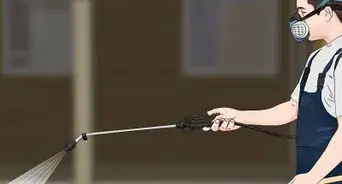
1Spray them directly with a 50/50 mix of vinegar and water. Combine equal parts of water and white vinegar in a spray bottle and shake it up.[5] Take all of the slugs you’ve collected and spray them directly with the solution. Within a few minutes, all the slugs will die and you can toss them into your trashcan.[6]
- If some of the slugs survive, try upping the vinegar concentration or using pure vinegar.

Question 5
Question 5 of 6:What natural alternatives are there besides vinegar?
-
1You can place beer traps in your yard to attract and kill slugs. Fill a shallow dish or cup with some beer and place them in the problem areas of your yard. Slugs are attracted to the scent of beer and will crawl in to investigate, but they’ll drown overnight. Check the container in the morning to get rid of the dead slugs.[7]
- Refill the containers every few days so you continue catching slugs.
- If you don’t want to use beer, try 1 teaspoon (3 g) of yeast mixed with 3 fluid ounces (89 ml) of warm water.[8]
-
2Apply some bran around your plants. Slugs love the taste of bran, but it makes them bloated and dehydrated so they aren’t able to escape predators. Sprinkle some bran directly in the soil around your plants so the slugs don’t destroy them. If it rains or the soil gets wet, reapply the bran again.[9]
- Bran doesn’t affect the composition of your soil, so it’s safe to apply directly near your plants.
-
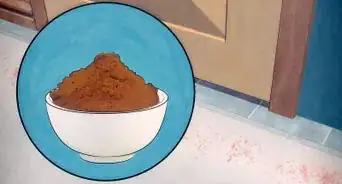
3Diatomaceous earth creates a barrier that slugs will avoid. Diatomaceous earth is a natural powder that cuts into slugs’ bodies as they move through it. Sprinkle a band of diatomaceous earth that’s 3 inches (7.6 cm) wide and 1 inch (2.5 cm) tall around the plants you want to protect to keep the slugs out.[10]
- Diatomaceous earth only works when it’s dry, so you’ll have to reapply it once it gets damp.
Advertisement


Question 6
Question 6 of 6:How do I prevent slugs in my garden?
-
1Water your plants in the morning so they have all day to dry. Slugs love moist environments, and your plants will stay wet through the night if you water late in the day. Try to water early in the morning so the sun has time to evaporate the water and keep your plants dry. While this won’t completely prevent slugs, it makes your plants less desirable.[11]
- Prune and space your plants apart so air flows through them and speeds up drying.
-
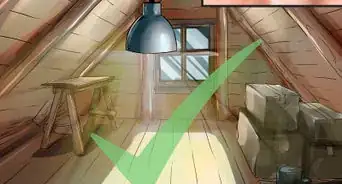
2Get rid of common hiding places around your plants. Slugs can’t tolerate the heat from the sun since it could dry them out. Prune any branches that are low to the ground so the sun hits the soil. Then, move any boards, containers, pavers, or stones away from the area so slugs don’t have a place to hide.[12]
- If you can’t move an object, then consider relocating your plants. For example, if you have slugs living underneath your deck, putting your plants on the other side of the yard makes it less likely the slugs will reach them.
Advertisement


Warnings
- Avoid using any baits or traps that contain metaldehyde if you have pets or children since it’s very poisonous.[14]Thanks!
References
- ↑ https://luv2garden.com/slugs.html
- ↑ https://www.bobvila.com/slideshow/9-natural-ways-to-kill-weeds-45747
- ↑ https://youtu.be/GL65oXHiVP8?t=454
- ↑ http://ipm.ucanr.edu/PMG/PESTNOTES/pn7427.html
- ↑ https://caramelandparsley.ca/2015/04/sowbugs-slugs-in-organic-gardening/
- ↑ https://luv2garden.com/slugs.html
- ↑ https://www.bobvila.com/articles/how-to-get-rid-of-slugs/
- ↑ https://extension.umn.edu/yard-and-garden-insects/slugs
- ↑ https://www.gardenersworld.com/plants/how-to-stop-slugs-eating-young-plants/
About This Article