X
This article was co-authored by wikiHow Staff. Our trained team of editors and researchers validate articles for accuracy and comprehensiveness. wikiHow's Content Management Team carefully monitors the work from our editorial staff to ensure that each article is backed by trusted research and meets our high quality standards.
Learn more...
Infective endocarditis (IE) is a blood-borne infection of the heart tissue that can quickly become serious. Fortunately, it’s also a fairly rare condition that can usually be treated successfully when diagnosed promptly. IE is usually diagnosed by observing symptoms (like fever), evaluating risk factors (like recent surgery), and doing blood cultures and echocardiograms.
Steps
Question 1
Question 1 of 9:What is infective endocarditis (IE)?
Question 1
-
1IE is a microbial infection of the inner chamber lining of the heart. IE happens when bacteria or fungi travel through the bloodstream and collect on the endocardium—the heart’s inner chamber lining. The infection often spreads from the endocardium to the heart’s valves, muscles, and blood vessels.[1]

Question 2
Question 2 of 9:What’s the difference between acute and chronic IE?
Question 2
-
1They’re the same condition, but acute IE becomes serious much faster. IE can develop very quickly or more slowly without rhyme or reason. Acute (fast-developing and quickly severe) IE can become a life-threatening condition within just a few days. Chronic (slow-developing and persistent) IE may take weeks or even months to appear, but can also become very serious.[4]
- Chronic IE is also called sub-acute IE.

Question 3
Question 3 of 9:What are the most common causes of IE?
Question 3
-
1Things that let microorganisms into the blood—like surgeries and infections—can cause IE. Harmful bacteria or fungi that get into the bloodstream anywhere in the body will end up in the heart, and can lead to IE. For example, surgeries that happen near the heart—like implanting a pacemaker—can be a cause. That said, anything from a cut in the mouth to a burn on the foot can lead to IE.[5]
- While IE is fairly rare, any invasive medical procedure can cause it. Other potential causes include poor dental care, intravenous drug use, recurring skin infections, and various infectious diseases, among other possibilities.[6]
- Structural and/or congenital heart diseases also make IE more likely.[7]

Question 4
Question 4 of 9:Who is most likely to develop IE?
Question 4
-
1Anyone can get IE, but heart issues and other medical conditions raise the risk. IE cuts across age, gender, racial, ethnic, and other lines. People who are born with a congenital heart disease are at higher risk, but no genetic predisposition for IE has been found. The likelihood of getting IE is primarily based on risk factors like the following:[8]
- Previous cases of IE
- Structural and/or congenital heart disease
- Invasive medical procedures
- Medical device implants
- Oral injuries or infections
- Skin injuries or infections
- IV drug use
- Lengthy hospital stays

Question 5
Question 5 of 9:What are the common signs and symptoms of IE?
Question 5
-
1Unexplained fever is the number-one sign of both acute and chronic IE. Acute IE usually presents with a rapid-onset fever of between 102 and 104 °F (39 and 40 °C), while chronic IE often presents with a mild fever in the 99 to 101 °F (37 to 38 °C) range. Other symptoms can include any or all of the following: fatigue, rapid heart rate, chills, profuse sweating, body aches, persistent coughing, leg or foot swelling, and anemia.[9]
- IE symptoms mimic those of many other conditions and can be easy to miss. Anyone who has risk factors for IE—such as recent surgery, IV drug use, or structural heart disease—should watch extra carefully for any possible IE symptoms.

Question 6
Question 6 of 9:How do medical experts test for IE?
Question 6
-
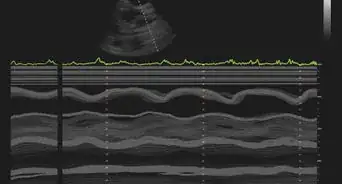
1Echocardiograms and blood cultures are critical to diagnosing IE. An echocardiogram (echo), which uses sound waves to create an image of the heart, is used to find the “vegetations”—bacterial or fungal growth—on the endocardium. Blood cultures, in which blood is drawn and tested for microorganisms, are used to identify bacteria or fungi present in the bloodstream.[10]
- A transthoracic echocardiogram (TTE) is often used first to look for vegetation, possibly followed by a transesophageal echocardiogram (TEE) if the TTE results are inconclusive.
- In some acute cases, IE may be diagnosed through risk factors and symptoms alone so that treatment can begin right away.

Question 7
Question 7 of 9:What are the “modified Duke criteria” for diagnosis?
Question 7
-
1They're a set of major and minor criteria used to diagnose IE. According to the modified Duke scale, there are 2 major criteria: 1) evidence of vegetation via echocardiogram; 2) a pair of positive, matching blood cultures. There are also 5 minor criteria: 1) fever; 2) pre-existing risk factor(s) for IE; 3-5) vascular, immunologic, and microbiologic phenomena that can’t otherwise be explained. If a patient has 2 major criteria, 1 major and 3 minor criteria, or 5 minor criteria, they should be diagnosed with IE.[11]
- While the modified Duke criteria are the current “gold standard” for diagnosing IE, they are not foolproof. As the name indicates, they have been modified before and are likely to undergo more modifications in the future.[12]

Question 8
Question 8 of 9:How is IE treated?
Question 8
-
1Antibiotics are the front-line treatment, followed by surgery if necessary. If treatment begins before the specific bacteria or fungi are identified, doctors usually prescribe antibiotics—like nafcillin or vancomycin and gentamicin—that target the most common IE causes. However, it’s much better to specifically target the bacteria or fungi with antibiotics whenever possible. Around 25-50% of IE cases also require surgery to remove the infected tissue and do any necessary valve repairs.[13]
- If IE is caused by MRSA, for example, the antibiotic treatment may include taking vancomycin for 6 weeks. If it’s MSSA instead, 6 weeks of nafcillin or oxacillin and 3-5 days of gentamicin might be used.[14]

Question 9
Question 9 of 9:Is IE usually curable?
Question 9
-
1Most cases can be treated, but the mortality rate is still at least 20%. While the diagnosis and treatment of IE is improving all the time, it remains a dangerous condition with a stubbornly-high mortality rate. In some cases, IE may be diagnosed too late, the bacteria or fungi might resist the antibiotics that are given, or any existing heart disease may make the extra damage caused by IE too severe for recovery. Early diagnosis and focused treatment are the critical factors in reducing the mortality rate.[15]
- The 1-year mortality rate may be 33% or even higher.[16]










References
- ↑ https://www.heart.org/en/health-topics/heart-valve-problems-and-disease/heart-valve-problems-and-causes/heart-valves-and-infective-endocarditis
- ↑ https://www.aafp.org/afp/2012/0515/p981.html
- ↑ https://www.ncbi.nlm.nih.gov/pmc/articles/PMC5648697/
- ↑ https://www.heart.org/en/health-topics/heart-valve-problems-and-disease/heart-valve-problems-and-causes/heart-valves-and-infective-endocarditis
- ↑ https://www.heart.org/en/health-topics/heart-valve-problems-and-disease/heart-valve-problems-and-causes/heart-valves-and-infective-endocarditis
- ↑ https://www.aafp.org/afp/2012/0515/p981.html
- ↑ https://journalofethics.ama-assn.org/article/diagnosing-and-treating-acute-infective-endocarditis/2010-10
- ↑ https://journalofethics.ama-assn.org/article/diagnosing-and-treating-acute-infective-endocarditis/2010-10
- ↑ https://www.heart.org/en/health-topics/heart-valve-problems-and-disease/heart-valve-problems-and-causes/heart-valves-and-infective-endocarditis
- ↑ https://journalofethics.ama-assn.org/article/diagnosing-and-treating-acute-infective-endocarditis/2010-10
- ↑ https://www.aafp.org/afp/2012/0515/p981.html
- ↑ https://www.ncbi.nlm.nih.gov/pmc/articles/PMC5648697/
- ↑ https://www.ncbi.nlm.nih.gov/pmc/articles/PMC5648697/
- ↑ https://journalofethics.ama-assn.org/article/diagnosing-and-treating-acute-infective-endocarditis/2010-10
- ↑ https://journalofethics.ama-assn.org/article/diagnosing-and-treating-acute-infective-endocarditis/2010-10
- ↑ https://www.ncbi.nlm.nih.gov/pmc/articles/PMC5648697/














































Medical Disclaimer
The content of this article is not intended to be a substitute for professional medical advice, examination, diagnosis, or treatment. You should always contact your doctor or other qualified healthcare professional before starting, changing, or stopping any kind of health treatment.
Read More...