This article was co-authored by Rebecca Tenzer, MAT, MA, LCSW, CCTP, CGCS, CCATP, CCFP and by wikiHow staff writer, Christopher M. Osborne, PhD. Rebecca Tenzer is the owner and head clinician at Astute Counseling Services, a private counseling practice in Chicago, Illinois. With over 18 years of clinical and educational experience in the field of mental health, Rebecca specializes in the treatment of depression, anxiety, panic, trauma, grief, interpersonal relationships using a combination of Cognitive Behavioral therapy, Psychodynamic therapy, and other evidence-based practices. Rebecca holds a Bachelor of Arts (BA) in Sociology and Anthropology from DePauw University, a Master in Teaching (MAT) from Dominican University, and a Master of Social Work (MSW) from the University of Chicago. Rebecca has served as a member of the AmeriCorps and is also a Professor of Psychology at the collegiate level. Rebecca is trained as a Cognitive Behavioral Therapist (CBT), a Certified Clinical Trauma Professional (CCTP), a Certified Grief Counseling Specialist (CGCS), a Clinical Anxiety Treatment Professional (CCATP), and a Certified Compassion Fatigue Professional (CCFP). Rebecca is also a member of the Cognitive Behavioral Therapy Society of America and The National Association of Social Workers.
This article has been viewed 1,168 times.
While it’s easy to see that physical abuse by a spouse is a major issue that needs immediate attention, you may be tempted to think that verbal abuse is “not a big deal” or just something you “have to live with.” In reality, spousal verbal abuse is every bit as wrong as physical abuse, and can have devastating impacts on your wellbeing. To combat the problem, you must calmly but assertively respond each time your spouse verbally abuses you. You should also seek counseling and closely consider the long-term health and sustainability of the relationship. In addition, don’t forget to work on your own emotional and physical health.
Steps
Method 1
Method 1 of 3:Responding to Verbal Abuse
-
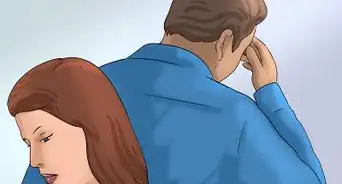
1Do not ignore their abusive statements. When you were a child, you may have learned that you should ignore a bully until they leave you alone. Unfortunately, an abusive spouse will likely see your silence as a justification for continuing their behavior. After all, if they were doing anything wrong, you’d say so, right?[1]
- They may take your silence as proof that they’re right. For instance, you say nothing when they belittle you for wasting money, so that must prove that you agree with their assessment.
- Remember: any communication in your relationship should be productive and positive, not hurtful.[2]
-
2Don’t respond angrily to their verbal abuse. Striking back verbally is perhaps the most natural reaction to being verbally abused. It may feel good for a second or two after you snipe back at them. However, doing so usually just gives them an excuse to continue and even escalate their abuse.[3]
- For instance, if they say, “You look chunky in that dress,” you might be tempted to reply with, “You’re one to talk with that beer gut hanging over your pants.” However, you’re just opening the door for them to insult you again.
- If your anger is boiling over, try to contain it just long enough to respond calmly, then leave the room.
-
3Respond calmly, clearly, and assertively. Unlike a passive or aggressive response, an assertive reply to verbal abuse provides a clear and calm rebuttal. By responding assertively, you don’t let them off the hook for their hurtful comments, and you also don’t give them an excuse to escalate things.[4]
- Pause for a couple seconds and take a deep breath before you speak. Make sure you are calm and focused. Look them straight in the eye.
-
4Tell them to “Stop” and identify the problem. Begin your response with “Stop” in order to be crystal clear that their abuse is wrong. Don’t shout it angrily or cry it plaintively, however—say it calmly but with conviction. Then, clearly identify their verbal abuse.[5]
- For example: “Stop calling me fat.”
- Or: “Stop it. I am not stupid.”
-
5Use an “I” statement to express your feelings. After telling them to stop, express clearly why and how their comments are so hurtful to you. Focus on yourself and your feelings here by using “I” statements, rather than starting with “You” and giving them an excuse to say you’re attacking them.[6]
- For example: “Stop calling me fat. I feel hurt when you comment on my weight.”
- Or: “Stop it. I am not stupid, and I feel unappreciated and disrespected when that word is used.”
-
6Leave the area if the verbal abuse continues. In the best-case scenario, your assertive response will open their eyes to the error of their ways and they will apologize to you. If they apologize sincerely, accept it and try to engage in a calm and productive discussion. However, if their verbal abuse continues, tell them calmly and clearly that you will not stay to hear more of it.[7]
- For instance: “I’ve asked you to stop, and I don’t want to listen to more. I’m going to take a walk.”


Method 2
Method 2 of 3:Managing a Pattern of Abuse
-
1Don’t ignore or downplay the seriousness of verbal abuse. Although physical abuse causes more obvious damage, verbal abuse can cause serious mental and emotional harm. Targets of verbal abuse may suffer from conditions like low self-esteem, depression, anxiety, and PTSD, among others. Do not minimize the impact that your spouse’s abuse has on you.[8]
- Verbal abuse isn’t something you “just have to live with” or the “trade-off” for the positive qualities you see in your spouse. It is wrong and it is damaging, and you have every right and reason to want it to stop.
-
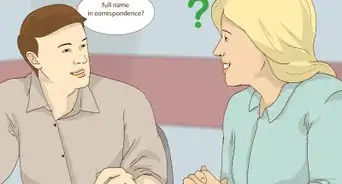
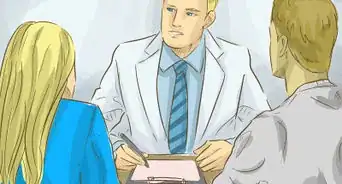
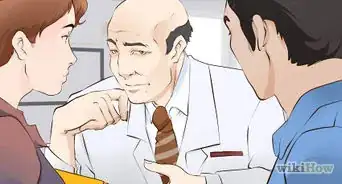
2Ask your spouse to attend couples therapy with you.[9] Some verbally abusive spouses will reject this request outright, because they refuse to accept that they’re doing anything wrong. If your spouse is aware of their abusive pattern and genuinely wants to do something about it, they may be willing to seek help together.[10]
- During a calm moment together, say something like, “I feel like we’ve gotten into a bad pattern of either saying hurtful things or not saying anything at all to each other. I think couples therapy could help us, and I really want you to join me.”
- You might, in some cases, use attending couples therapy as part of an ultimatum—“I am going to leave you if you won’t make the effort and come to therapy with me”—but therapy is unlikely to be effective if your spouse feels “forced” to go.
- Therapy isn't just about finding out the truth or getting answers—there's also an added piece in the process of rebuilding the relationship.[11]
-
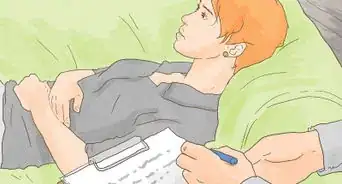
3Go to therapy yourself if they won’t come with you. If your spouse is verbally abusive due to narcissistic traits, for example, the odds are low that they’ll be willing to attend therapy with you. Whatever the reason for their refusal, however, attending therapy on your own can be beneficial for your mental, emotional, and even physical health.[12]
- Your therapist may use talk therapy to help you identify and describe your spouse’s abusive behaviors.
- They may also use techniques like cognitive behavioral therapy (CBT) to help you develop strategies for assertively responding to verbal abuse.
-
4Set clear boundaries for what you will and will not accept. As you become more aware of the nature and extent of your spouse’s verbal abuse, it’s important that you establish clear lines between what you will and won’t tolerate. During a time when you are both calm, clearly state your boundaries.[13]
- For example: “It is okay for you to offer your opinion on what I should spend money on. I will not, however, accept you calling me “stupid” or “wasteful” or a “spendaholic” because of what I choose to buy.”
- Or: “You can point out healthy food choices that we can both make. But I won’t let you say hurtful things like “that’s why you’re so chunky” to me.”
-
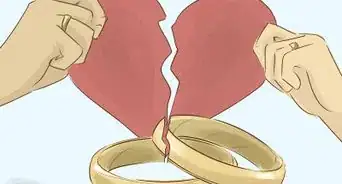
5Be willing to end the relationship if nothing changes. Leaving an abusive spouse is rarely easy, whether you’re dealing with physical abuse, verbal abuse, or both. If you know your spouse is unwilling to change and that your own wellbeing is being damaged, leaving may be your best choice.[14]
- Don’t keep threatening to leave and then giving them another chance. Clearly state your intention to leave if nothing changes, then follow through if nothing does change.
- Once you’ve decided to leave, start making legal, financial, and practical plans.
- If you feel safe doing so, tell them directly why you’re leaving: “I have decided to leave you because the cycle of verbal abuse has gone on for too long and caused me too much hurt.”
- If you fear that they may react violently, leave first and then inform them after you’re gone and safe.
- Sometimes, you have to end a relationship for the sake of personal growth.[15]


Method 3
Method 3 of 3:Taking Care of Yourself
-
1Accept that they are the problem and you aren’t. Even if your spouse blames you for everything as part of their verbal abuse, you are not to blame for their mistreatment of you. No one deserves to be belittled or demeaned, including you. Looking for ways to “fix” yourself will not solve the problem, no matter what your spouse tells you.[16]
- In nearly every case, verbal abuse is the result of the abuser’s own problems with anger, frustration, low self-esteem, feelings of inadequacy, narcissism, or other emotional or mental health issues.
- By accepting that you aren’t the problem, you can focus on doing what’s best and healthiest for you instead of trying to make changes for them.
-
2Rely on a support network of people you can trust. Everyone needs an outlet for their feelings, especially if they are regularly the target of verbal abuse. While you should work with a mental health professional if possible, it’s also important to have one or more trusted support people—like friends or relatives—to talk to.[17]
- Choose support people who are truly supportive. If they try to minimize what you’re feeling (“I think you’re making too much of this”) or justify your spouse’s behavior (“But I’m sure he doesn’t mean it”), confide in someone else.
-
3Engage in healthy behaviors that will improve your mental wellbeing. Do not neglect your physical health while trying to manage your mental and emotional health—it’s all interconnected. Healthy lifestyle choices will help you feel better about yourself and more capable of making good mental health choices. Focus on things like:[18]
- Getting regular exercise.
- Doing relaxation and stress-relief activities.
- Making sure you get enough sleep.
- Eating a healthy diet.
- Avoiding unhealthy behaviors like substance abuse.
-
4Get crisis help if you feel your life is at risk. If verbal abuse ever leads to physical abuse, it can quickly become life-threatening. And, even if the abuse remains verbal in nature, it may become so severe that you start to think about self-harm or even suicide. In either case, seek help right away.[19]
- Call the police or emergency services if you have been physically abused or are being threatened with it.
- Call a crisis hotline or suicide prevention hotline if you are thinking about self-harm or ending your life.


Community Q&A
-
QuestionHow do you know if someone is controlling in a relationship?
 Rebecca Tenzer, MAT, MA, LCSW, CCTP, CGCS, CCATP, CCFPRebecca Tenzer is the owner and head clinician at Astute Counseling Services, a private counseling practice in Chicago, Illinois. With over 18 years of clinical and educational experience in the field of mental health, Rebecca specializes in the treatment of depression, anxiety, panic, trauma, grief, interpersonal relationships using a combination of Cognitive Behavioral therapy, Psychodynamic therapy, and other evidence-based practices. Rebecca holds a Bachelor of Arts (BA) in Sociology and Anthropology from DePauw University, a Master in Teaching (MAT) from Dominican University, and a Master of Social Work (MSW) from the University of Chicago. Rebecca has served as a member of the AmeriCorps and is also a Professor of Psychology at the collegiate level. Rebecca is trained as a Cognitive Behavioral Therapist (CBT), a Certified Clinical Trauma Professional (CCTP), a Certified Grief Counseling Specialist (CGCS), a Clinical Anxiety Treatment Professional (CCATP), and a Certified Compassion Fatigue Professional (CCFP). Rebecca is also a member of the Cognitive Behavioral Therapy Society of America and The National Association of Social Workers.
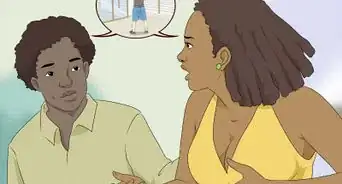
Clinical Therapist & Adjunct ProfessorClinical Therapist & Adjunct ProfessorExpert AnswerYour partner prioritizes having their needs met before yours. They may also ask you to do things you don't want to do, like making you participate in undesirable sexual activities. In some cases, you might even isolate yourself from your friends and family members as you work to meet the needs of your partner.


References
- ↑ https://www.mentalhelp.net/advice/best-way-to-deal-with-verbal-abuse/
- ↑ Rebecca Tenzer, MAT, MA, LCSW, CCTP, CGCS, CCATP, CCFP. Clinical Therapist & Adjunct Professor. Expert Interview. 19 August 2020.
- ↑ https://www.mentalhelp.net/advice/best-way-to-deal-with-verbal-abuse/
- ↑ https://www.psychologytoday.com/us/blog/the-mysteries-love/201612/the-most-effective-way-put-end-verbal-abuse
- ↑ https://www.healthyplace.com/abuse/verbal-abuse/5-ways-of-dealing-with-verbally-abusive-relationships
- ↑ https://www.mentalhelp.net/advice/best-way-to-deal-with-verbal-abuse/
- ↑ https://www.psychologytoday.com/us/blog/the-mysteries-love/201612/the-most-effective-way-put-end-verbal-abuse
- ↑ https://www.crisistextline.org/fast-facts/emotional-abuse
- ↑ Rebecca Tenzer, MAT, MA, LCSW, CCTP, CGCS, CCATP, CCFP. Clinical Therapist & Adjunct Professor. Expert Interview. 19 August 2020.
- ↑ https://www.mentalhelp.net/advice/best-way-to-deal-with-verbal-abuse/
- ↑ Rebecca Tenzer, MAT, MA, LCSW, CCTP, CGCS, CCATP, CCFP. Clinical Therapist & Adjunct Professor. Expert Interview. 19 August 2020.
- ↑ https://www.mentalhelp.net/advice/best-way-to-deal-with-verbal-abuse/
- ↑ https://www.healthyplace.com/abuse/verbal-abuse/5-ways-of-dealing-with-verbally-abusive-relationships
- ↑ https://psychcentral.com/blog/in-an-emotionally-abusive-relationship-5-steps-to-take/
- ↑ Rebecca Tenzer, MAT, MA, LCSW, CCTP, CGCS, CCATP, CCFP. Clinical Therapist & Adjunct Professor. Expert Interview. 19 August 2020.
- ↑ https://psychcentral.com/blog/in-an-emotionally-abusive-relationship-5-steps-to-take/
- ↑ https://www.healthyplace.com/abuse/verbal-abuse/5-ways-of-dealing-with-verbally-abusive-relationships
- ↑ https://www.crisistextline.org/fast-facts/emotional-abuse
- ↑ https://www.psychologytoday.com/us/blog/the-mysteries-love/201612/the-most-effective-way-put-end-verbal-abuse
About This Article