This article was co-authored by wikiHow staff writer, Hannah Madden. Hannah Madden is a writer, editor, and artist currently living in Portland, Oregon. In 2018, she graduated from Portland State University with a B.S. in Environmental Studies. Hannah enjoys writing articles about conservation, sustainability, and eco-friendly products. When she isn’t writing, you can find Hannah working on hand embroidery projects and listening to music.
This article has been viewed 3,798 times.
Learn more...
If you have beautifully blooming marigolds in your yard or garden, you might be contemplating whether or not to deadhead them. Deadheading, or removing flowers as they die off, has both pros and cons, so you can decide for yourself whether or not you’d like to do it. With the right techniques and a little patience, you can deadhead your marigolds all season long for beautiful, bright flowers.
Steps
Question 1
Question 1 of 6:Should I deadhead my marigolds?
-
1Yes, if you want to control where the marigolds grow. When marigold flowers die and dry out, they release seeds onto the ground. When you leave the flowers on the bush, they’ll naturally fall off and replant their own seeds to create new plants. If you’d like to keep your marigolds contained to one area, it’s best to deadhead them regularly throughout the season.[1]
-
2Yes, if you want to freshen up the look of your flowers. Old, dead flowers aren’t very attractive, and they can take away from the overall feel of your marigolds. If you aren’t a fan of crispy, brown flowers, you can deadhead your marigolds to keep them looking fresh.[2]Advertisement
-
3No, if you’d like your marigolds to reseed all over your garden. If you don’t mind marigolds taking over your yard in the next growing season or you like the look of a more scattered landscape, feel free to leave them be. Marigolds technically don’t need deadheading, and they’ll bloom just fine without it.[3]Advertisement


Question 2
Question 2 of 6:How do you keep marigolds blooming?
-
1Deadhead them often throughout the whole growing season. If you’d like your marigolds to flourish even throughout the summer, deadheading may help. Try to remove the flowers as they get old to let your plant put more energy into new blooms on that particular plant.[4]
- This won’t always extend your season, but you can usually get flowers a few weeks longer than if you didn’t deadhead.

Question 3
Question 3 of 6:When should you deadhead marigolds?
-
1Whenever the flowers start looking dead. There’s no specific timeline for how soon or how often you should deadhead—if you see a flower starting to look dead or crispy, it’s time to remove it. Marigolds bloom throughout the spring and into the summer, so you may be deadheading for a few months. The faster your remove spent blooms, the sooner the plant will produce new ones.[5]Advertisement

Question 4
Question 4 of 6:What’s the best way to deadhead marigolds?
-
1Snap off dead flowers with your fingers. This is a super easy way to deadhead quickly and without any equipment. Take 2 fingers and follow the flower stem down to the first set of leaves. Pinch the stem in between 2 fingers, then snap it off.[6]
-
2Snip off the stem with a pair of pruners. If you notice a flower stem is looking a little dead and brown, grab some pruners and make a cut right beneath the dead area. This removes the dying stem as well as the flower, which may be a more effective way to deadhead.[7]
- There is some debate in gardening circles about whether you should snip the stem or not while deadheading. Marigolds are fairly rugged, so they’ll bounce back no matter what.
Advertisement


Question 5
Question 5 of 6:Do marigolds like sun or shade?
-
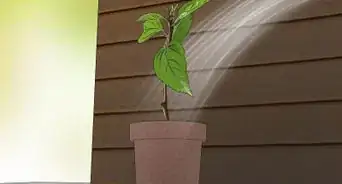
1They prefer full to partial sun. You can plant them on the west-, east-, or south-facing side of your home. Once they start growing, they usually aren’t too fussy, and you don’t need to do much to take care of them as they bloom.[8]
- Marigolds prefer chalky, loamy soil that’s well-draining.

Question 6
Question 6 of 6:How long do marigold plants last?
-
1Most marigolds only last one growing season. Marigolds are almost always annuals, meaning they’ll die off in the winter and won’t come back. If you allow the flowers to reseed (meaning you don’t deadhead them), they may replant themselves in your garden and come back next year.[9]
-
2A few types will die off and come back every year. Some species of marigolds are perennials, meaning they come back once a year without replanting. If the stalks of your flowers are more woody, there’s a good chance they’re perennials.[10]Advertisement











References
- ↑ https://extension.oregonstate.edu/news/should-you-deadhead-your-flowers
- ↑ https://www.rhs.org.uk/advice/profile?PID=129
- ↑ https://aces.nmsu.edu/ces/yard/archives/101318.html
- ↑ https://extension.oregonstate.edu/news/should-you-deadhead-your-flowers
- ↑ https://www.rhs.org.uk/advice/profile?PID=129
- ↑ https://northerngardener.org/should-you-still-deadhead/
- ↑ https://northerngardener.org/should-you-still-deadhead/
- ↑ https://www.rhs.org.uk/plants/62350/Calendula-officinalis/Details
- ↑ https://www.rhs.org.uk/plants/62350/Calendula-officinalis/Details
About This Article